ReactIn vs Gojiberry (2026): AI Black Box or Full Control Over Your Outreach?
Gojiberry is an AI SDR black box. ReactIn gives you intent signals with full workflow control: AI columns, editable templates, campaign ponderation, $69/mo per sender.
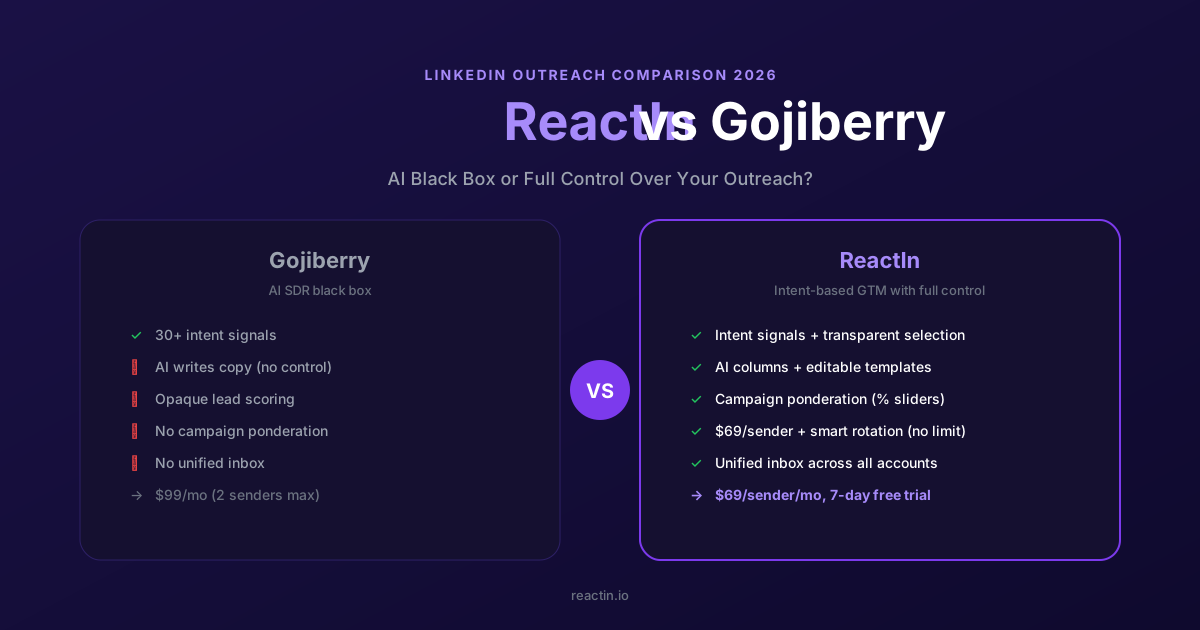
Gojiberry has carved a name for itself in the AI SDR space by automating LinkedIn outreach end-to-end. It monitors 30+ intent signals - funding rounds, job changes, competitor engagement, hiring surges - scores every prospect against your ICP, and fires off AI-written connection requests and follow-ups. Positioned as a done-for-you service that manages outreach all the way to the booked meeting, it sounds like the dream for founders and solo SDRs who want to set-and-forget their LinkedIn pipeline. But once teams scale past the first campaign, the cracks start to show.
ReactIn starts from the same premise - intent beats cold lists - but takes the opposite design approach. Where Gojiberry wraps everything inside an AI black box that decides what gets sent and when, ReactIn puts you in the driver's seat with transparent AI columns, fully editable message templates, campaign ponderation sliders, and a unified inbox that keeps every conversation visible. There is no done-for-you conversational management: outbound stays data-driven and personalized, but never out of your hands.
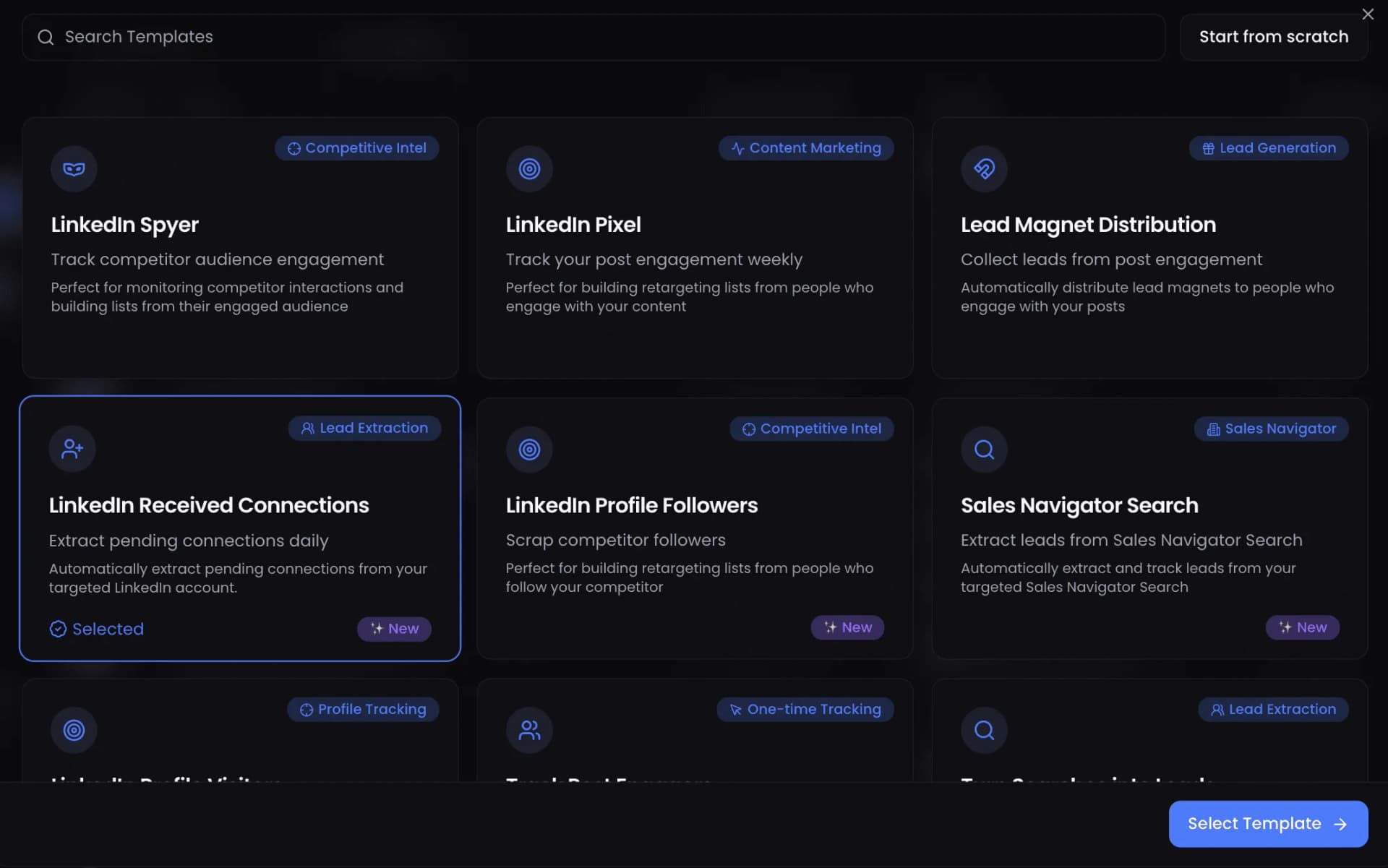
| Feature | Gojiberry | ReactIn |
|---|---|---|
| Intent signal detection | 30+ AI-scored signals (funding, job changes, competitor engagement) | 20+ signals (post likers, commenters, event attendees, job changes, webinars, Stripe, Calendly…) |
| Message personalization | Fully AI-generated - no preview or edit before send | AI columns + editable templates - full preview and control |
| Campaign control | AI decides sequence, copy, and timing | You build sequences, edit templates, and set ponderation weights |
| Multi-campaign coordination | Sequential execution, no weighting | Campaign ponderation with % sliders across shared accounts |
| Multi-sender support | 2 senders on Pro ($99/mo), more on custom plan | No sender cap on the per-sender tiers, Basic $29/mo or Growth $69/mo each, agency plan $999/mo up to 50 senders |
| Unified inbox | No | Yes - all replies, all accounts, one place |
| Pricing | From $99/mo (Pro, 2 senders included) | Basic $29/mo (invitations only) or Growth $69/mo (messaging, rotation, lead management) per sender, agency plan $999/mo up to 50 senders, 7-day free trial |
What Gojiberry does well
Credit where it's due: Gojiberry helped shift the LinkedIn automation conversation from volume-based blasting to intent-based targeting. While most tools were still sending generic connection requests to static CSV lists, Gojiberry built its product around the idea that when you reach out matters as much as who you reach out to. Monitoring funding rounds, executive hires, competitor engagement, and technology adoption signals to time outreach is a fundamentally better model than spray-and-pray.
The onboarding experience is streamlined. You define your ICP criteria, select which intent signals matter to your business, and Gojiberry starts surfacing warm prospects within hours. For solo founders, early-stage SDRs, or small teams that don't have time to build complex workflows, this low-friction entry point is a genuine advantage. The AI handles prospect research, message drafting, and send scheduling - all you need to do is connect your LinkedIn account and describe your ideal customer.
Gojiberry also bundles email waterfall enrichment from 15+ data providers, which means outreach isn't limited to LinkedIn. If a prospect doesn't accept your connection request, the system can fall back to email. For teams that want a single platform to source intent-driven leads and find multiple contact channels, this is a useful convenience - especially at the $99/month price point that includes unlimited campaigns and warm lead sourcing.
Where Gojiberry falls short
Gojiberry's core limitation is the one thing that makes it easy to start: the AI black box. The platform generates your messages, structures your sequences, and decides how intent signals get referenced in copy - but you never see the full logic behind those decisions. You can't preview the exact message a specific prospect will receive before it goes out. You can't fine-tune how the AI weighs a job change signal versus a funding round. As one user in a top French growth community noted: "It's 100% AI managing your copy, so it's impossible to know what you'll say and how it handles the variables you give it." For teams that care about brand voice, messaging consistency, and compliance, this opacity is a serious risk.
The scoring model compounds this problem. Gojiberry assigns intent scores to prospects, but the weighting behind those scores isn't transparent or adjustable. A casual LinkedIn like and a deep engagement signal - like attending a competitor's webinar or commenting on a pain-point post - might receive similar scores. Without the ability to inspect and tune scoring logic, data-driven teams find themselves trusting a model they can't validate. And when AI misfires, you don't know until a prospect replies with confusion or frustration at a message that missed the mark.
Multi-campaign coordination is the third gap. Gojiberry runs campaigns sequentially under a daily ceiling with no concept of campaign weighting. If you're running an intent-based campaign alongside a cold outreach campaign on the same LinkedIn account, you can't allocate 70% of your daily quota to warm leads and 30% to cold. And with only 2 senders included on the Pro plan at $99/month, scaling across multiple LinkedIn accounts pushes you to the custom enterprise tier. There's no unified inbox either - replies from different campaigns and accounts don't converge in one place, making follow-up coordination a manual chore.
Why sales teams choose ReactIn over Gojiberry
ReactIn and Gojiberry agree on the fundamental insight: intent-driven outreach outperforms cold prospecting. The difference is architectural. Gojiberry builds an AI agent that acts on your behalf, all the way to the booked meeting. ReactIn builds an AI-augmented workspace where you remain in command. Every signal, every enrichment data point, every message draft is visible, editable, and auditable before it reaches a prospect's inbox. A built-in GTM coach reads your own data and suggests the next best outreach move, so you get the speed of AI without surrendering the judgment calls that separate good outreach from spam.
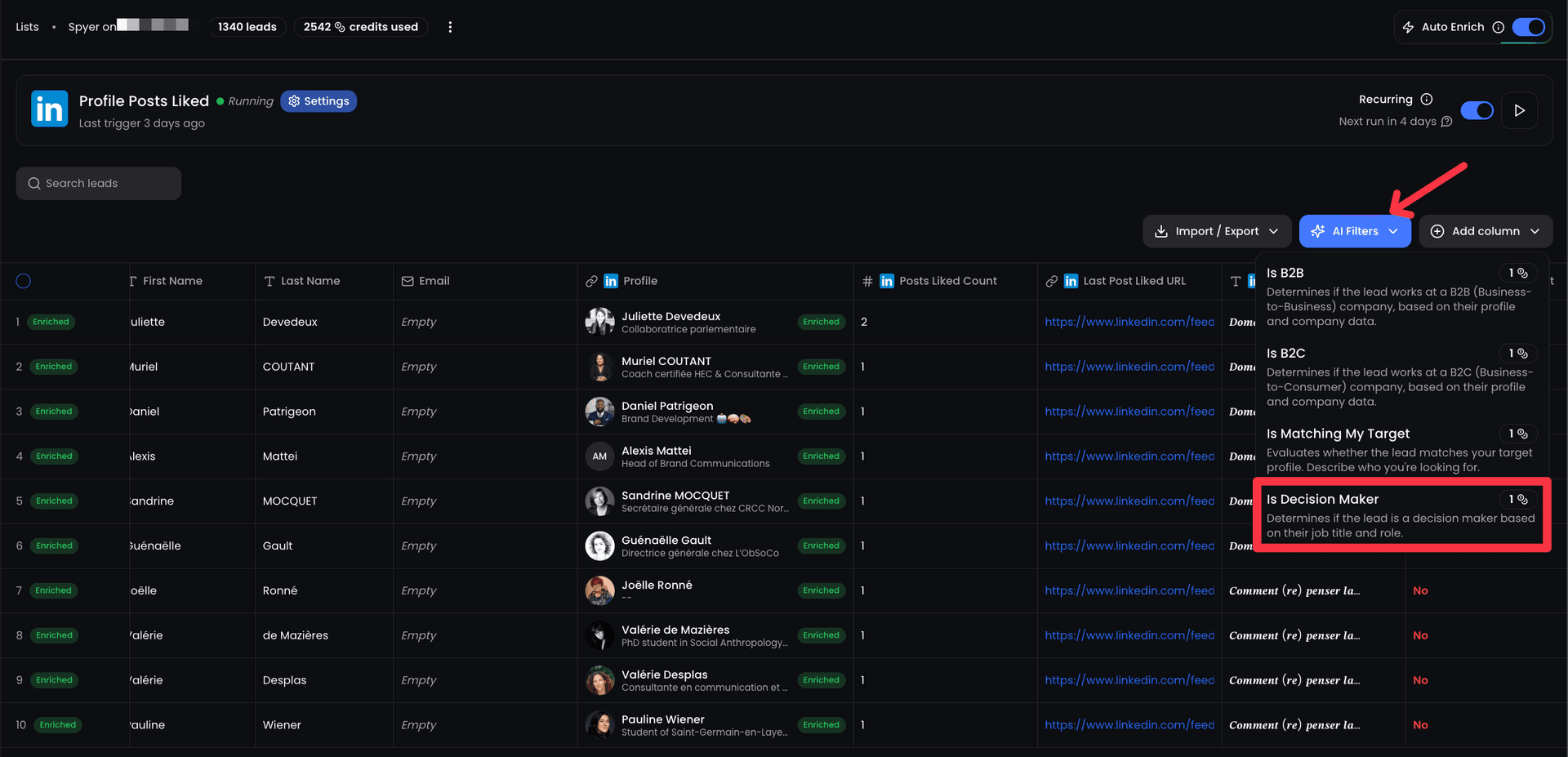
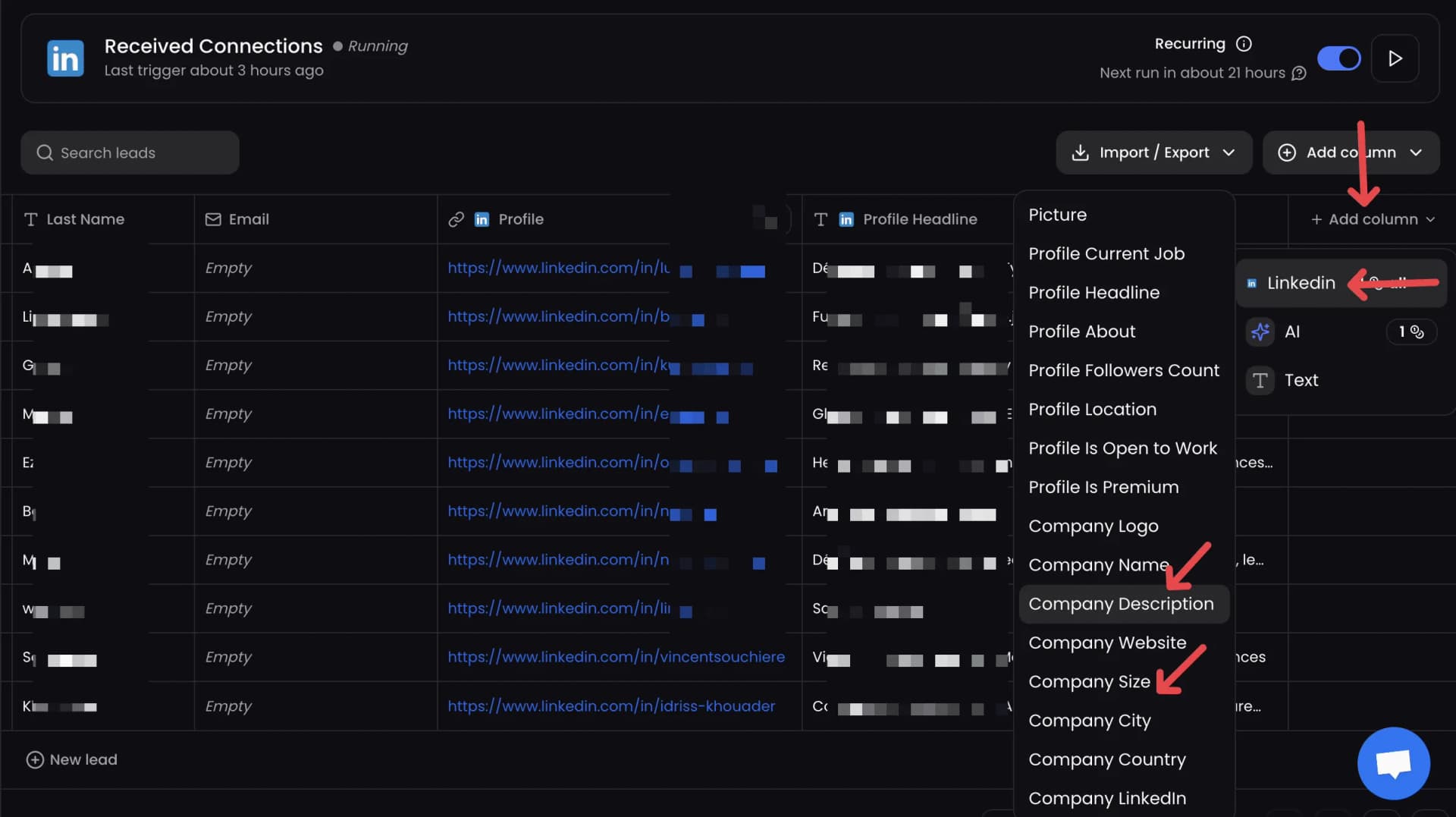
AI columns are where this philosophy becomes tangible. Instead of a black box that generates messages you can't inspect, ReactIn lets you add columns to your SmartLists that pull specific data: a prospect's last 3 LinkedIn posts summarized, a custom icebreaker based on their job change, an ICP fit score computed against your own criteria. These columns are visible in a spreadsheet-like interface, editable if you want to refine them, and they flow directly into your message templates as variables. ReactIn also scores each lead's temperature, cold, medium, or warm, so prioritization is transparent by design, the exact opposite of Gojiberry's opaque scoring. If the AI-generated icebreaker isn't quite right, you tweak it - no guessing, no black box.
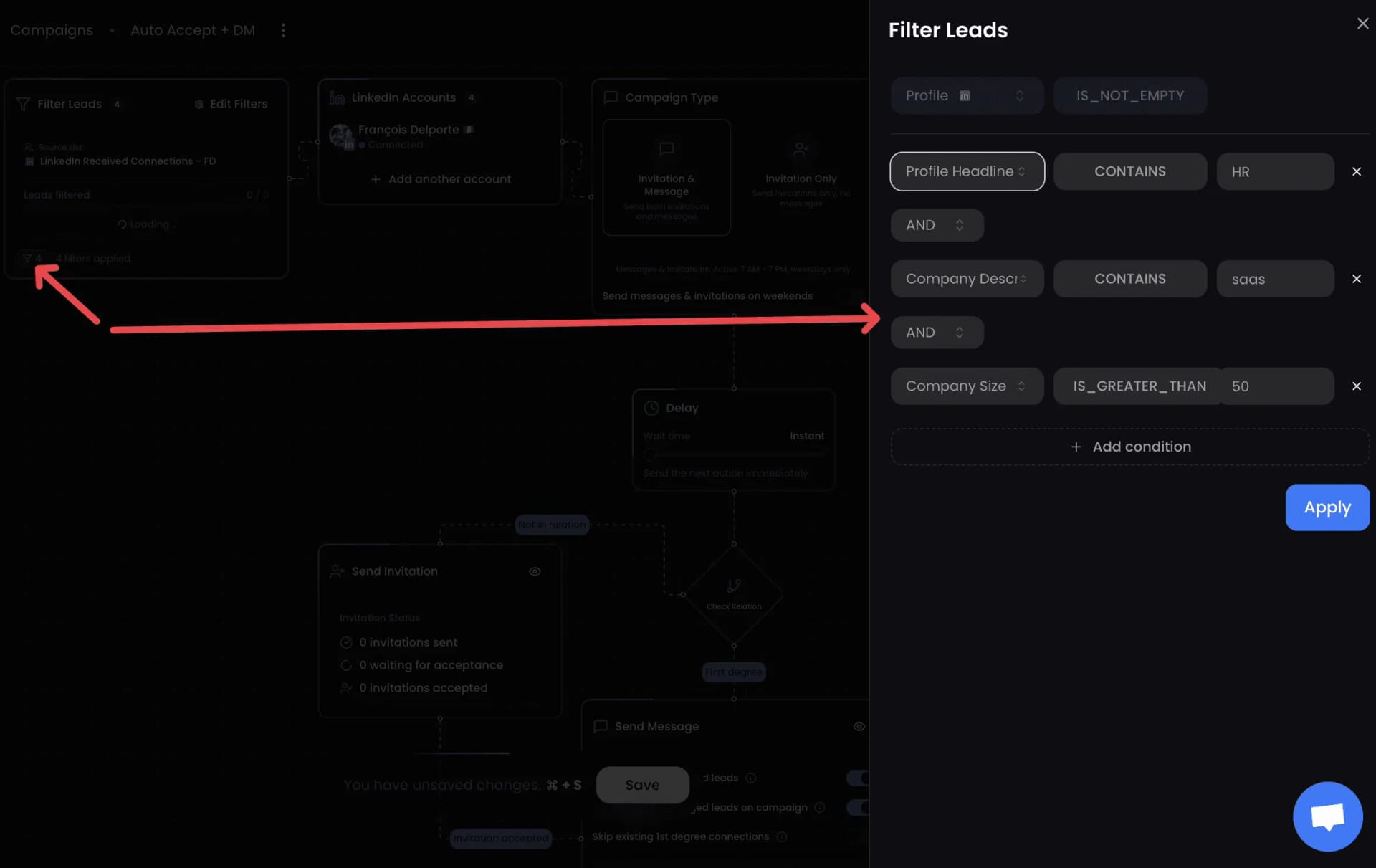
Campaign ponderation solves the multi-campaign problem that Gojiberry ignores. When you're running 3 campaigns on the same LinkedIn account - say, event attendees at 50%, job changers at 30%, and post commenters at 20% - ReactIn distributes your daily quota accordingly with simple percentage sliders. When one campaign exhausts its list, the system automatically rebalances quota to the remaining campaigns. This means your highest-intent prospects always get priority, and your LinkedIn account stays within safe daily limits without manual juggling.
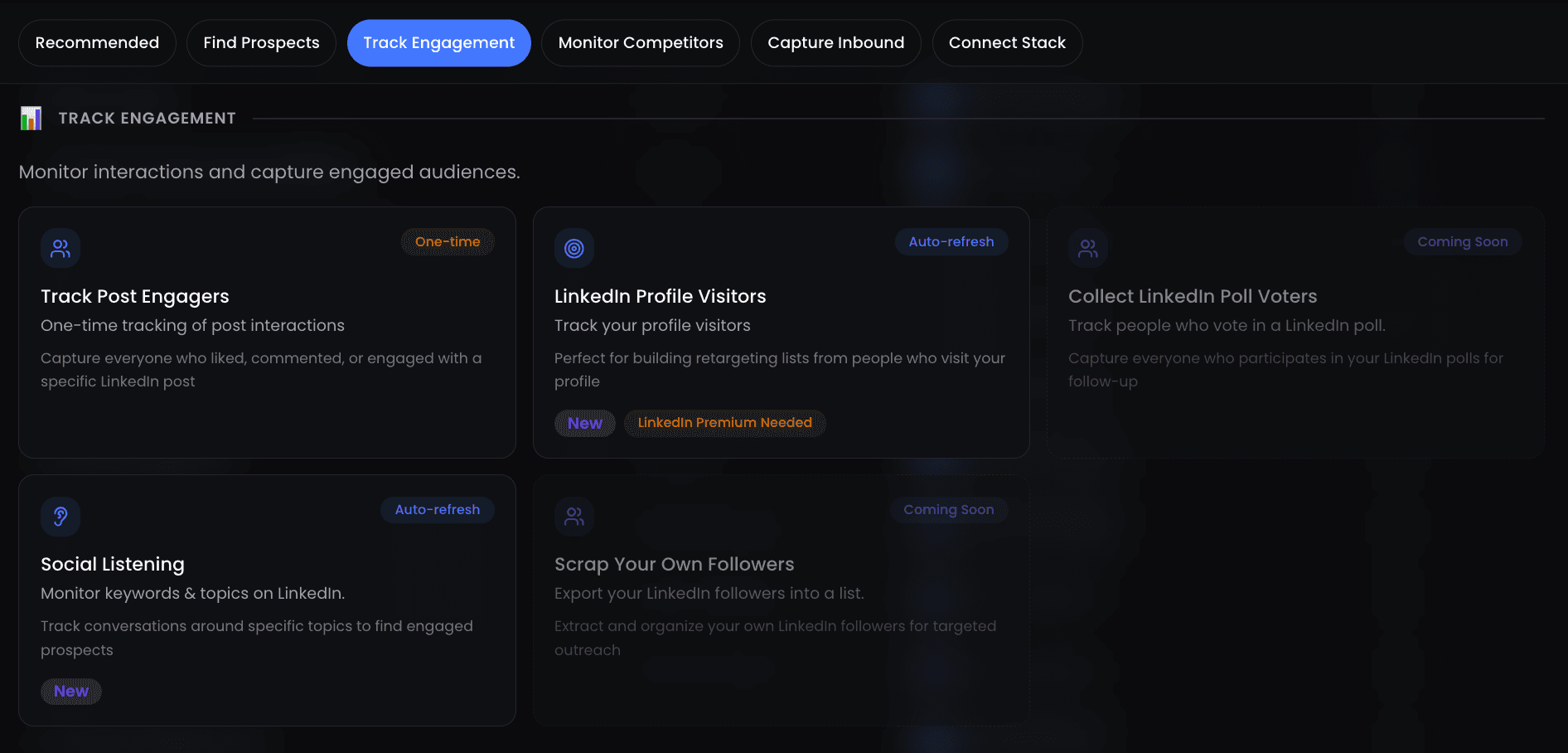
Pricing is straightforward: two per-sender tiers with no cap on senders, plus an agency plan at $999/month for up to 50 senders. Basic at $29/month sends connection invitations, and Growth at $69/month adds message automation, sender rotation and lead management. Both tiers carry the same intelligence layer: the Spyer that weekly-scrapes a competitor's or influencer's post engagers, the LinkedIn Pixel for advanced targeting, lead temperature scoring, campaign ponderation, SmartLists and 2,000 enrichment credits. Compare that to Gojiberry's $99/month Pro plan that caps you at 2 senders and lacks both campaign weighting and a unified inbox. Pricing on both sides verified August 2026. ReactIn offers a genuine 7-day free trial with no credit card required, so you can start building campaigns today, not after a sales call.
See how every tool stacks up in our complete ReactIn Alternatives & Comparisons guide for 2026.
Both tools are built on intent, so it helps to know how intent-based automations work. For a SaaS-specific shortlist, see the best LinkedIn outreach tool for B2B SaaS.
Frequently Asked Questions
Sources & Further Reading
- Gartner has identified the rise of AI SDR tools as a key trend in B2B sales. Read their analysis on AI-driven sales development to understand where tools like Gojiberry fit in the landscape.
- LinkedIn has published clear guidelines on what automation is acceptable. Review the LinkedIn Professional Community Policies to ensure your outreach stays compliant.
Related Articles
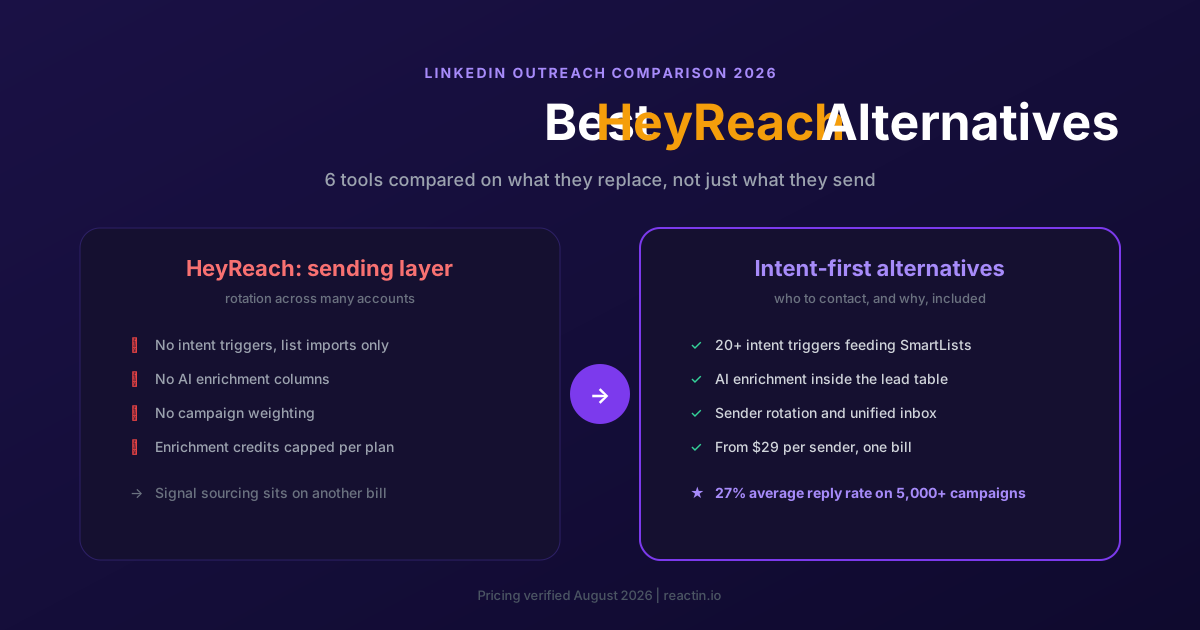
The 6 Best HeyReach Alternatives in 2026 (Priced and Compared)
HeyReach scales sending across many accounts, but it does not tell you who to contact. Here are the 6 best alternatives for 2026, with verified pricing and the cost of the stack HeyReach does not include.
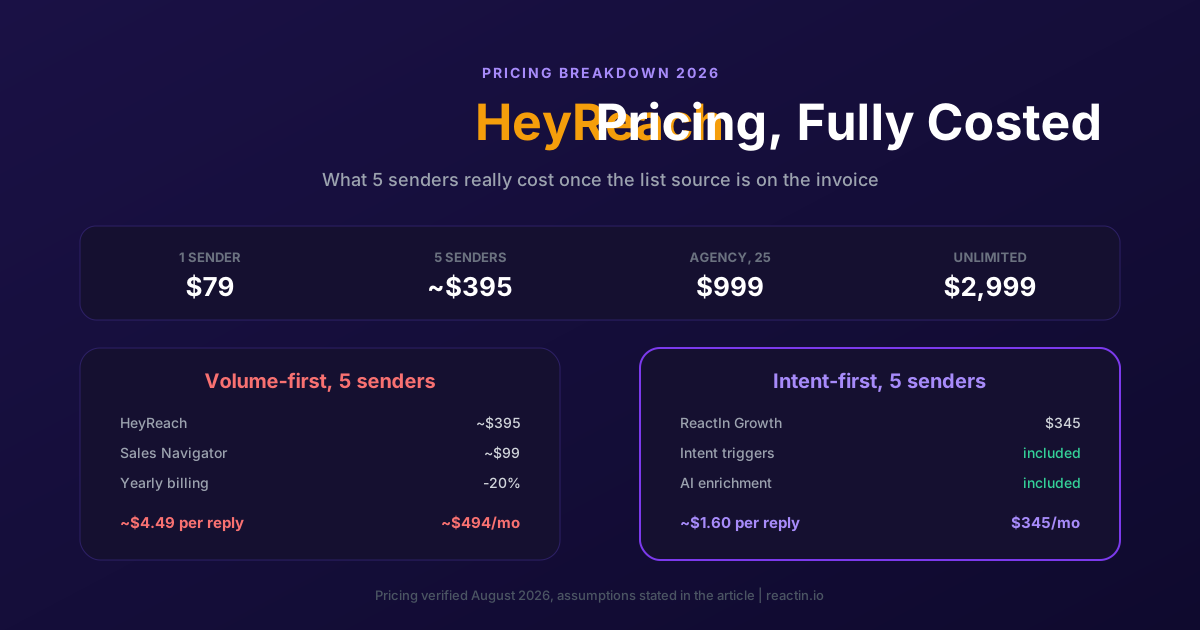
HeyReach Pricing in 2026: Real Cost per Sender and 5 Cheaper Alternatives
HeyReach Growth starts at $79 per sender, Agency is $999 for 25 senders and Unlimited is $2,999. Here is every plan, what the price includes and leaves out, and how to compare cost per reply instead of cost per seat.
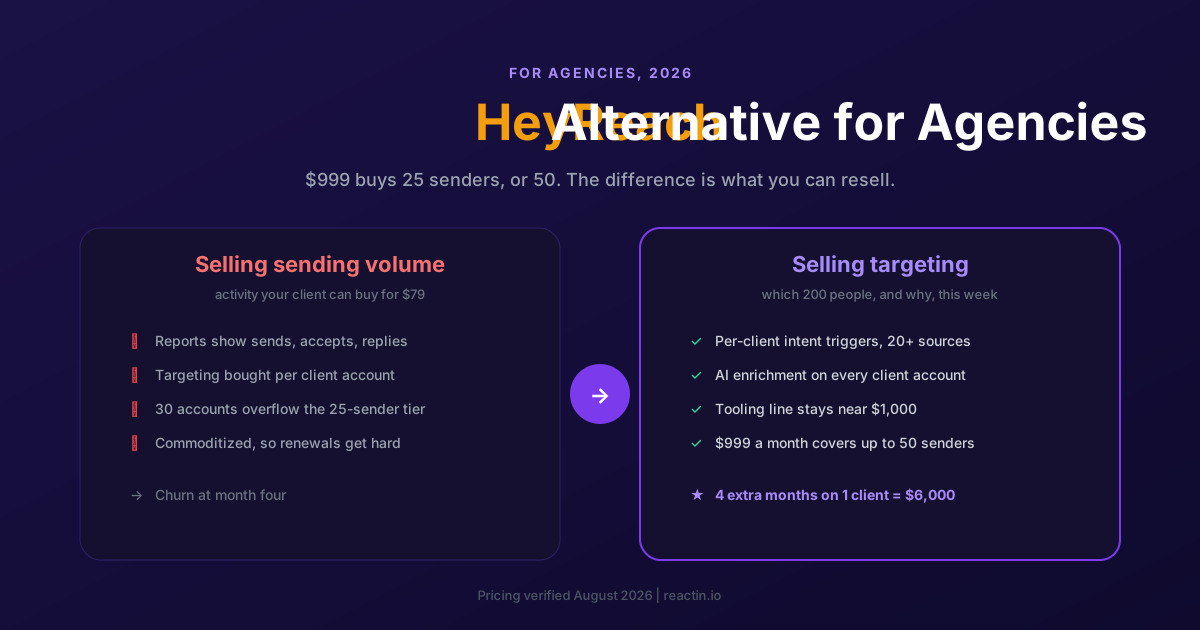
The Best HeyReach Alternative for Agencies in 2026 (5 Options Compared)
Agencies rarely leave HeyReach because the sending broke. They leave because volume services get commoditized. Here are 5 options compared on margin per client and months retained.
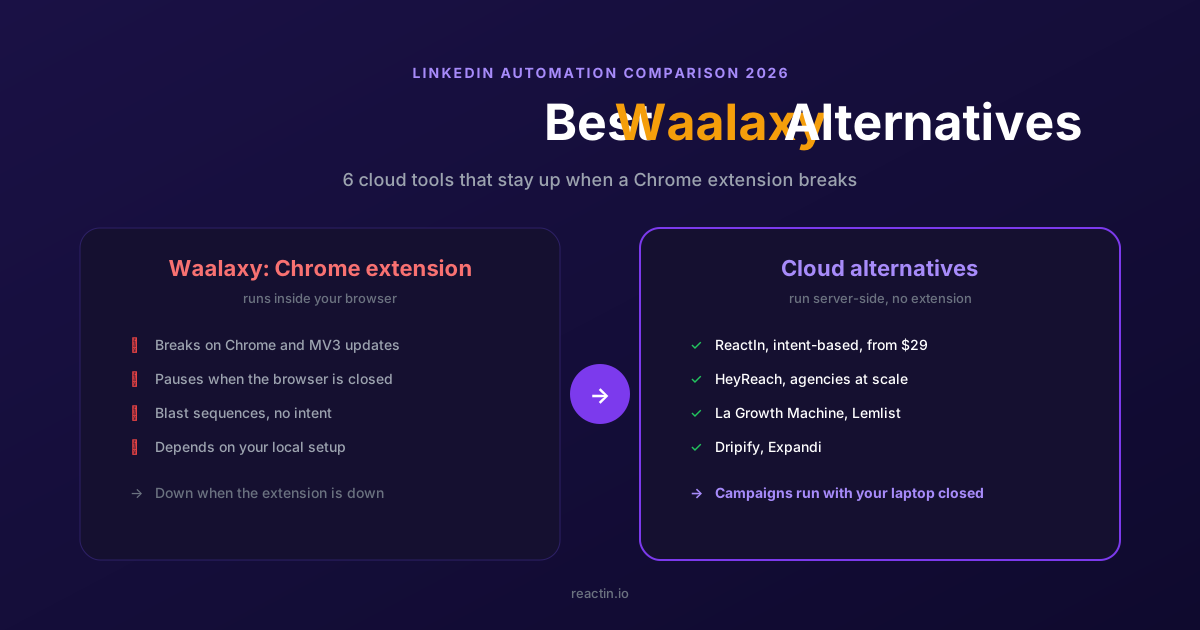
The 6 Best Waalaxy Alternatives in 2026 (Cloud Tools, No Extension)
Waalaxy runs as a Chrome extension that pauses when the browser breaks. Here are the 6 best cloud-based alternatives for 2026, with verified pricing and the right pick for your motion.
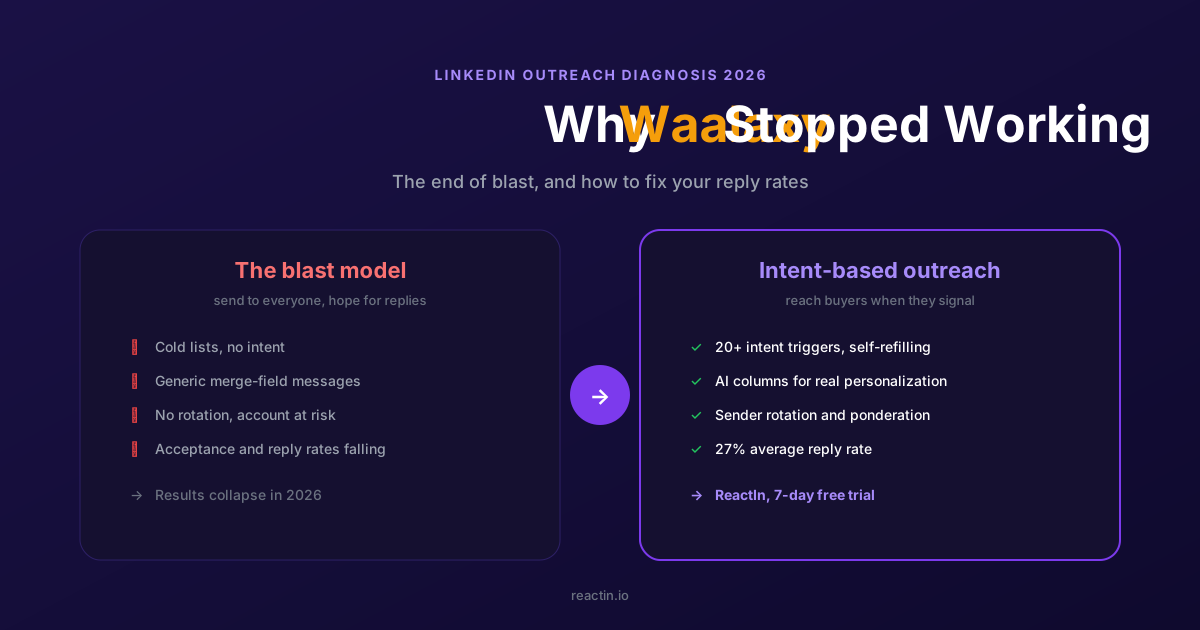
Why Waalaxy Stopped Working in 2026 (And How to Fix Your Reply Rates)
Your Waalaxy reply rates cratered in 2026 and you cannot tell why. Here is what changed, why blast outreach stopped working, and how intent-based prospecting brings double-digit reply rates back.
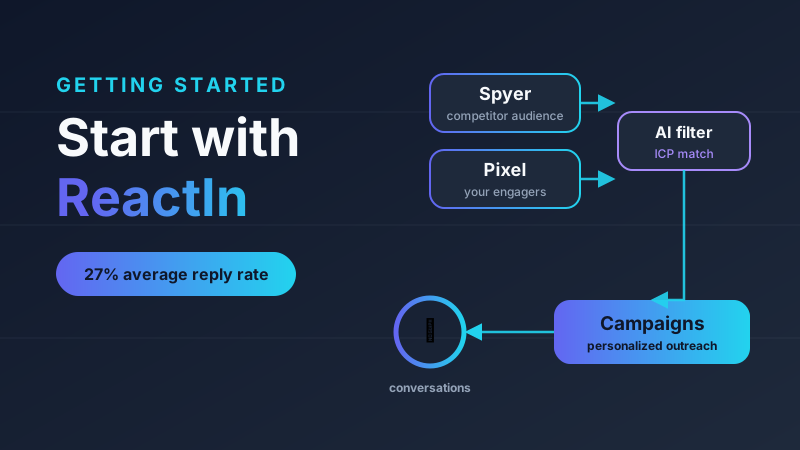
How to Get Started with ReactIn: The Complete Starter Pack (2026)
New to ReactIn? Learn what Spyer, Pixel, and campaigns do, and follow a layer-by-layer starter pack to build an intent-based LinkedIn pipeline that runs on autopilot.
Best Software Affiliate Programs in 2026 (Ranked by Category)
Your software stack costs hundreds a month and earns you nothing. The best software affiliate programs for 2026 fix that, ranked by commission, recurring value and category. ReactIn leads for B2B and LinkedIn audiences, next to Notion, NordVPN, Semrush, HubSpot, Systeme.io and Hostinger.
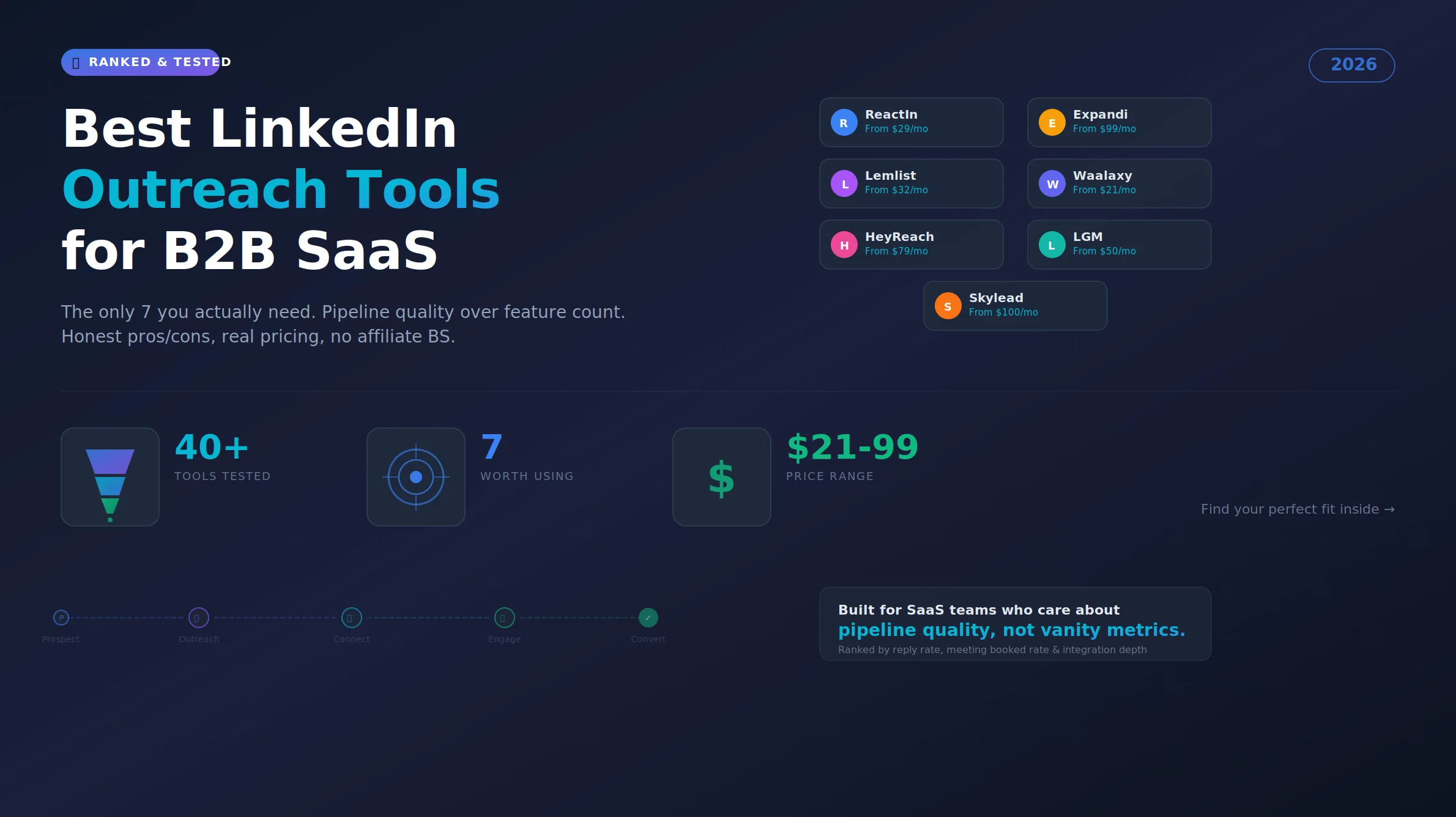
Best LinkedIn Outreach Tool for B2B SaaS in 2026 (Ranked by Pipeline Quality, Not Feature Lists)
The 7 best LinkedIn outreach tools for B2B SaaS in 2026, ranked by pipeline quality and true cost. ReactIn replaces 3-4 tools ($69/mo vs $500+/mo stack) with intent signals, AI enrichment, and automated campaigns. Full 5-seat cost comparison included.
LinkedIn Prospecting Guide 2026: Build Pipeline With Signal-Based Targeting
The complete LinkedIn prospecting guide for 2026. ICP definition, lookalike audiences, SmartList building, and signal-based targeting. Turn LinkedIn into your #1 pipeline source.
ReactIn Alternatives & Comparisons 2026: Find the Right LinkedIn Tool
Compare ReactIn with every major LinkedIn automation tool in 2026. Head-to-head comparisons with BeReach, Gojiberry, Phantombuster, Waalaxy, and more. Find the right tool for your use case.
Free LinkedIn Tools 2026: 4 Tools to Preview, Scrape, Hook & Coach
4 free LinkedIn tools by ReactIn - no signup required. Preview your posts pixel-perfect, scrape post likers into lead lists, generate scroll-stopping hooks with AI, and get GTM coaching. The complete free toolkit for B2B professionals.
Best LinkedIn Tools 2026: The Complete B2B Stack Guide
The definitive guide to LinkedIn tools in 2026. Automation, scraping, AI sales tools, and CRM integrations - compared and ranked. Build your ideal LinkedIn tech stack at any budget.
Affiliate Marketing Guide 2026: From First Commission to Passive Income
The complete affiliate marketing guide for 2026. Choose your niche, find the best programs (B2B, SaaS, recurring), build your funnel, and scale to passive income. Includes links to our ranked program lists.
LinkedIn Outreach Playbook 2026: From Warmup to Closed Deals
The complete LinkedIn outreach playbook for 2026. Account warmup, connection request strategies, DM copywriting rules, multi-touch sequences, and optimization tactics. Based on data from 5,000+ campaigns.
Best LinkedIn Automation Tool for Agencies in 2026 (Ranked by Total Cost, Not Feature Lists)
The 7 best LinkedIn automation tools for agencies in 2026, ranked by true cost at scale. ReactIn replaces 3-4 tools ($69/mo vs $300+/mo stack) with intent signals, AI enrichment, and unified inbox. Full "True Cost for 10 Accounts" comparison included.
Best Marketing Affiliate Programs in 2026 (Ranked by Niche)
You recommend marketing tools every week and earn nothing. The best marketing affiliate programs for 2026 fix that, ranked by recurring rate, cookie and niche. ReactIn leads for B2B and LinkedIn marketers, next to AWeber, Semrush, GetResponse, Leadpages, Unbounce and Moosend.
Best B2B Affiliate Programs in 2026 (Ranked for Business Audiences)
The best B2B affiliate programs for 2026, ranked by value per business referral and audience fit. ReactIn leads for B2B, LinkedIn and GTM creators with 30% recurring for life, compared against HubSpot, Pipedrive, monday.com, ClickUp, ActiveCampaign and Semrush.
Best SaaS Affiliate Programs in 2026 (Ranked by Recurring Commission)
The best SaaS affiliate programs for 2026, ranked by recurring economics and audience fit. ReactIn leads for LinkedIn, GTM and agency creators with 30% recurring and lifetime attribution, compared against Systeme.io, GetResponse, ActiveCampaign, HubSpot, Kit and Semrush.
Best Recurring Affiliate Programs 2026: Top 7 Ranked (No Upfront Cost)
The best recurring affiliate programs for 2026, ranked by recurring quality, lifetime attribution over 12-month caps. ReactIn leads for B2B, LinkedIn and GTM creators with 30% recurring for life, compared against Systeme.io, Kit, GetResponse, Cloudways, HubSpot and Teachable.
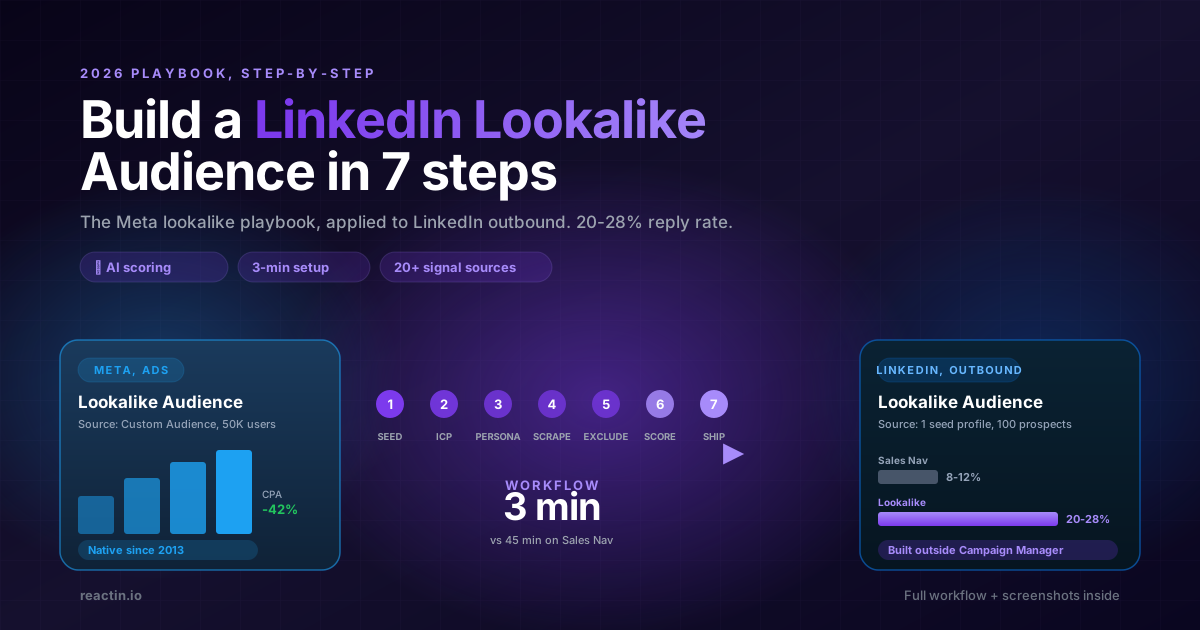
How to Build a LinkedIn Lookalike Audience in 2026 (Full Workflow + Screenshots)
LinkedIn never shipped a native Lookalike Audience for outbound. Here is the full 2026 workflow: pick the seed, write your ICP, run the waterfall scrape, ship a 50-lead audience in under 5 minutes that hits 20-28% reply rates.
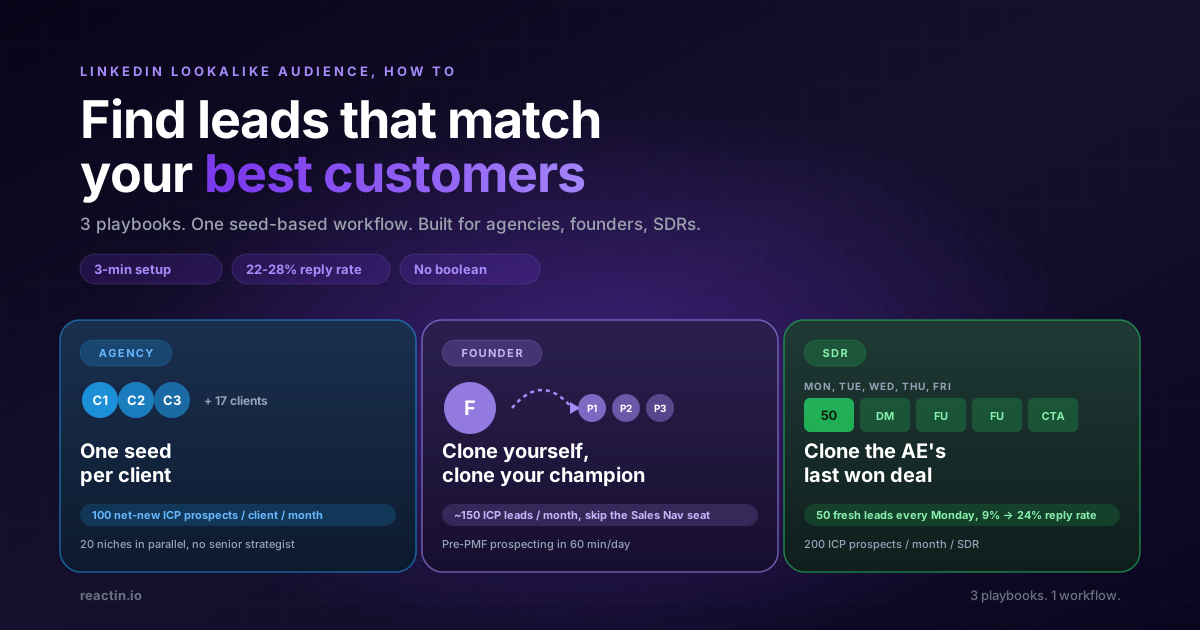
LinkedIn Lookalike Audience: How to Find Leads That Match Your Best Customers (2026)
LinkedIn never shipped a native lookalike audience for outbound. Here is how to build one in 3 minutes, with 3 detailed playbooks for agencies, founders, and SDRs hitting 22-28% reply rates.
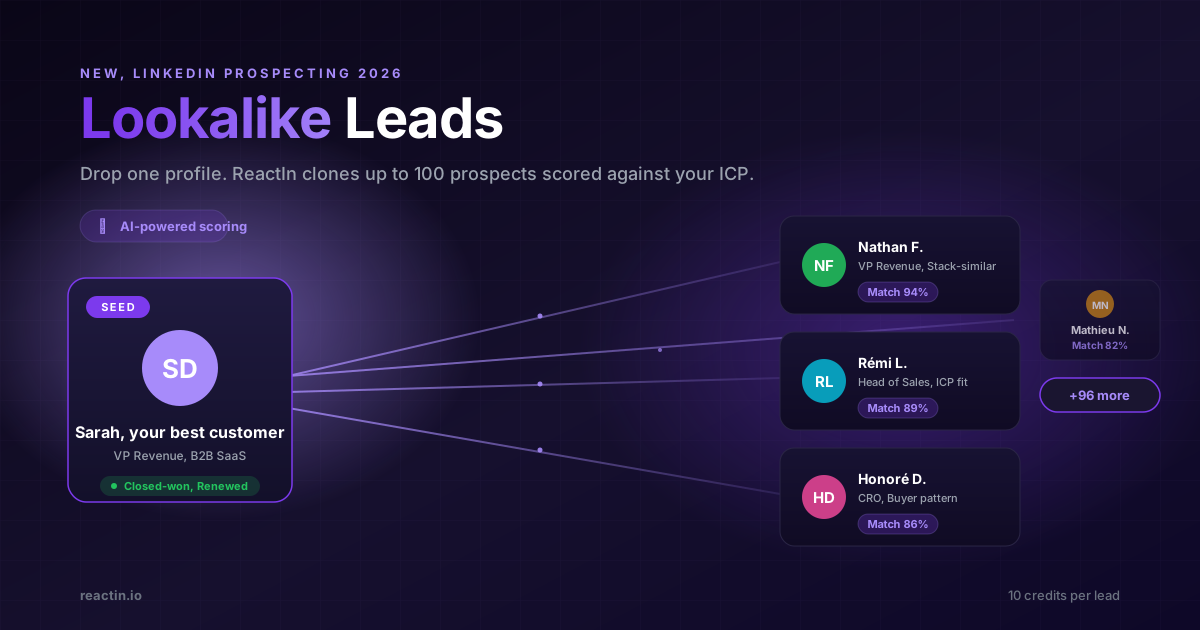
LinkedIn Lookalike Leads: Clone Your Best Customers in 3 Minutes (2026)
Drop one LinkedIn profile, describe your ICP and persona, and ReactIn returns up to 100 prospects who match. The Meta Lookalike playbook, applied to B2B prospecting. 22% reply rates vs 8% from Sales Nav.
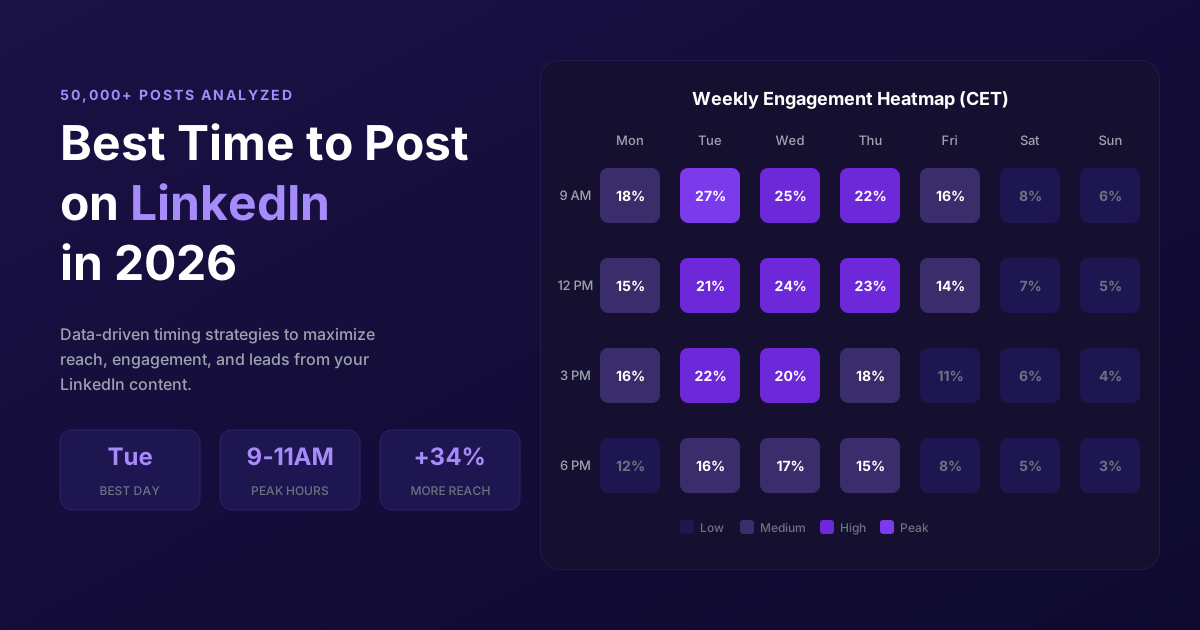
Best Time to Post on LinkedIn in 2026 (50,000+ Posts Analyzed)
When should you post on LinkedIn for maximum engagement? Analysis of 50,000+ posts reveals the best times, days, and strategies to maximize reach in 2026.
LinkedIn Connection Request Note Character Limit 2026: Official Limit, Rules & Templates
The official LinkedIn connection request note limit in 2026 is 300 characters, on every plan. But notes between 120 and 180 characters win on acceptance rate. Full breakdown, 10 templates, and the difference with InMail and DM limits.
LinkedIn Connection Requests: With or Without a Note? (2026 Data)
Should you add a note to LinkedIn connection requests? 80,000+ requests analyzed. No-note invites get 55-68% acceptance vs 28-45% with notes. See when each approach wins.
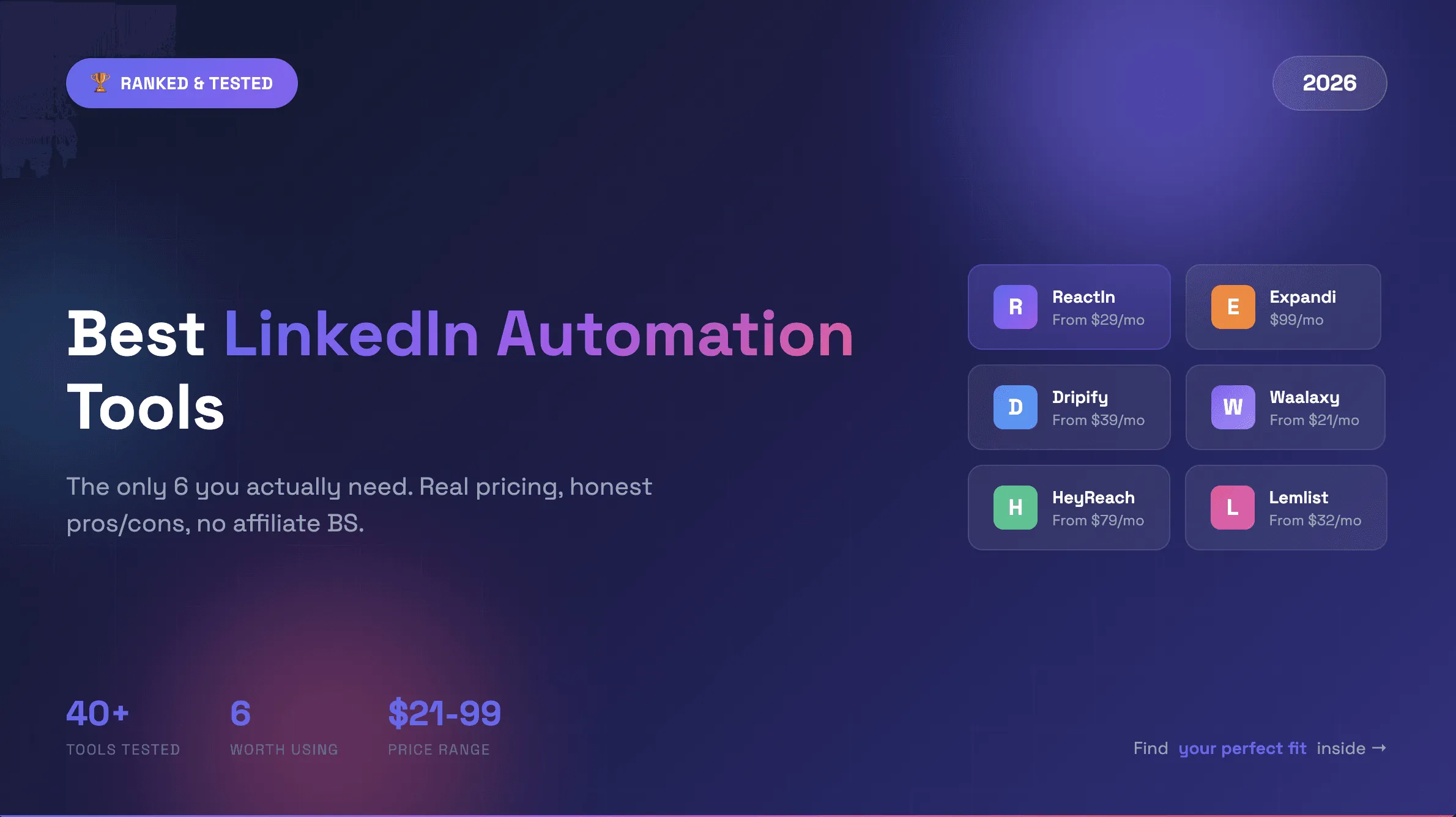
Best LinkedIn Automation Tools 2026 - Top 6 Ranked (Safest & Cheapest)
Honest comparison of the 6 best LinkedIn automation tools in 2026, tested hands-on with real campaigns. Ranked by ban risk and results, with full pricing, the free plans that actually exist, and where AI SDRs fit.
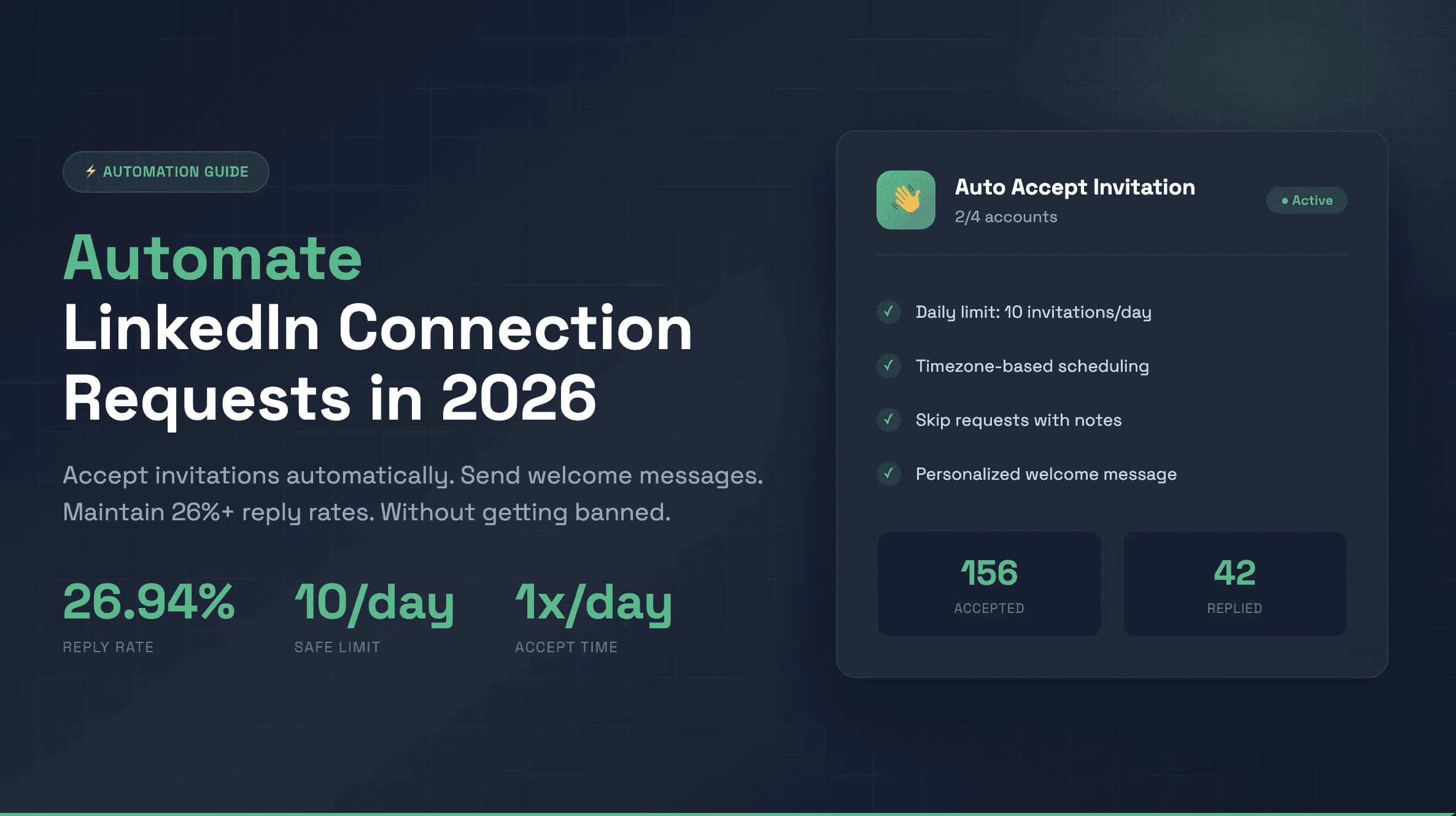
How to Automate LinkedIn Connection Requests: 5 Rules for 26% Reply Rates (2026)
Stop losing leads. 5 proven rules to automate LinkedIn connection requests safely and hit 26%+ reply rates with personalized welcome messages.
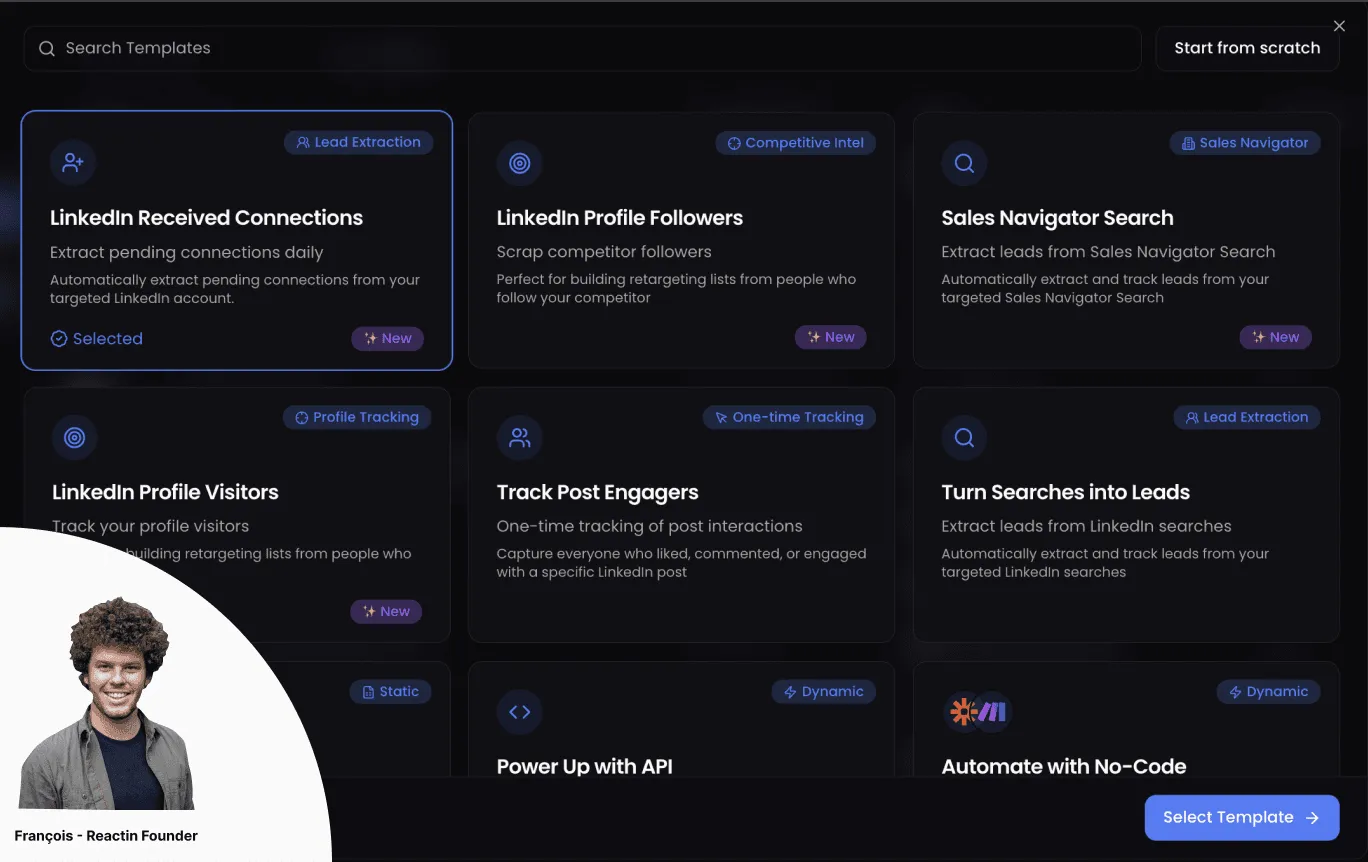
How to Automatically Accept LinkedIn Connection Requests (and Send a Welcome DM)
Learn how to automatically accept LinkedIn connection requests and send personalized welcome DMs. Step-by-step ReactIn setup, compare 5 tools, and maintain 26%+ reply rates safely.
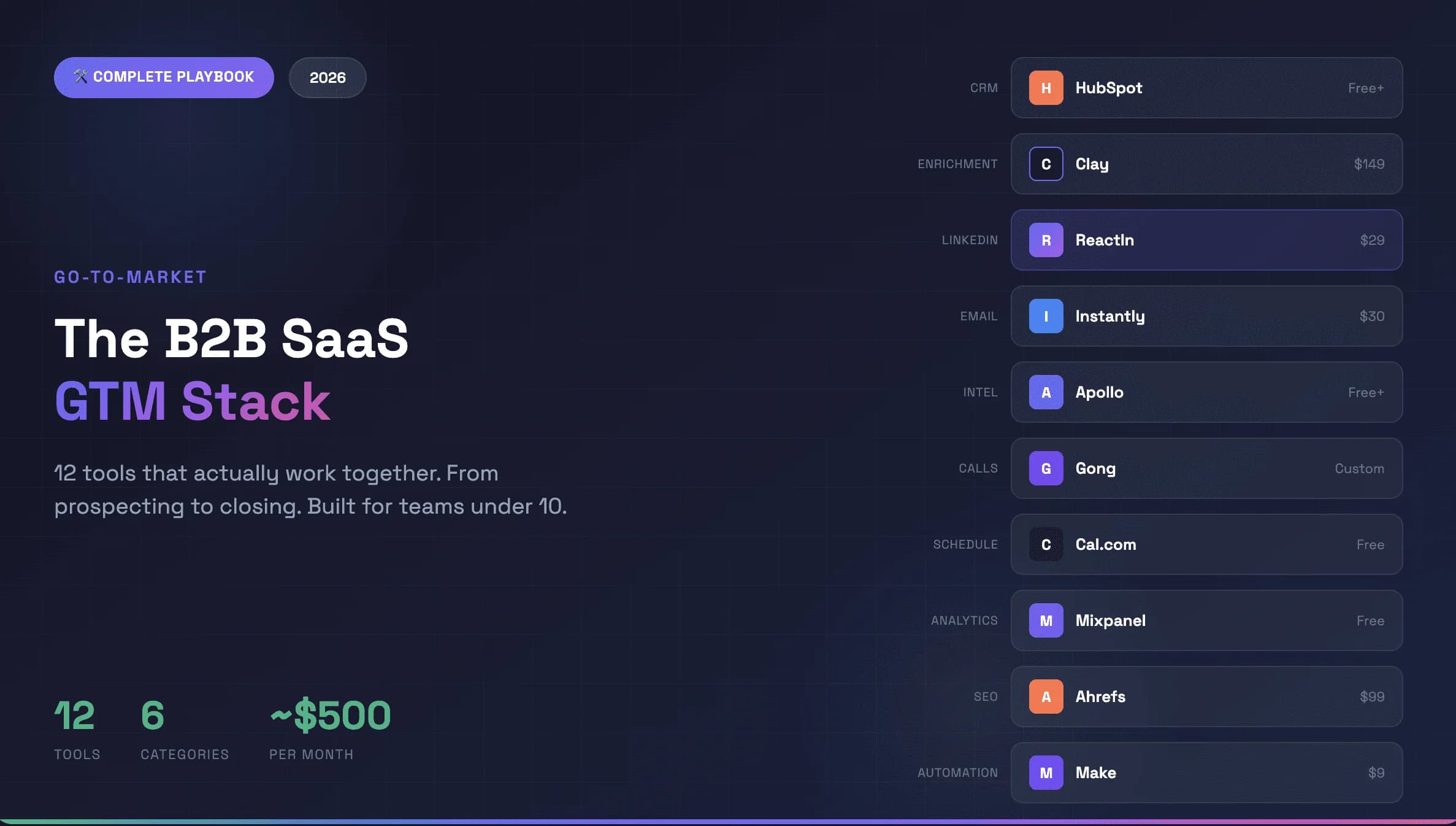
Best Go-to-Market Tools for B2B SaaS 2026: The 12-Tool GTM Stack
The best go-to-market tools for B2B SaaS in 2026. A complete 12-tool GTM stack with automation platforms that actually integrate - from prospecting to closing, built for scaling SaaS businesses. ~$500/month total.
How to Warm Up a LinkedIn Account Safely Before Scaling Outreach (2026)
Step-by-step 4-week plan to warm up your LinkedIn account safely. Daily limits, organic engagement strategy, and how to scale outreach without getting restricted.
Top LinkedIn Scraping Tools for B2B Growth (2026 Review)
Honest comparison of the best LinkedIn scraping tools in 2026. ReactIn, PhantomBuster, Captain Data, Evaboot, and Prospeo ranked by features, safety, and pricing.
LinkedIn Automation Guide: The Complete 2026 Playbook
The definitive guide to LinkedIn automation in 2026. 5 intent-based workflows, 10 messaging rules, safety limits, and tool comparisons. 27% average reply rate across 5,000+ campaigns.
The 7 Best AI Sales Tools to Close More Deals in 2026
Discover the best AI sales tools in 2026. Top AI-powered tools for closing deals: ReactIn for LinkedIn outreach, Allo as the best AI phone agent, Clay for prospecting, Attio for CRM, and more.
Intent-Based Marketing Automations in 2026: The Complete Guide to 3x Reply Rates
Stop blasting the same message to every lead. Intent-based marketing automations use buyer signals to reach the right person at the right moment - delivering 3x higher reply rates. 5 workflows, benchmarks, and step-by-step setup inside.
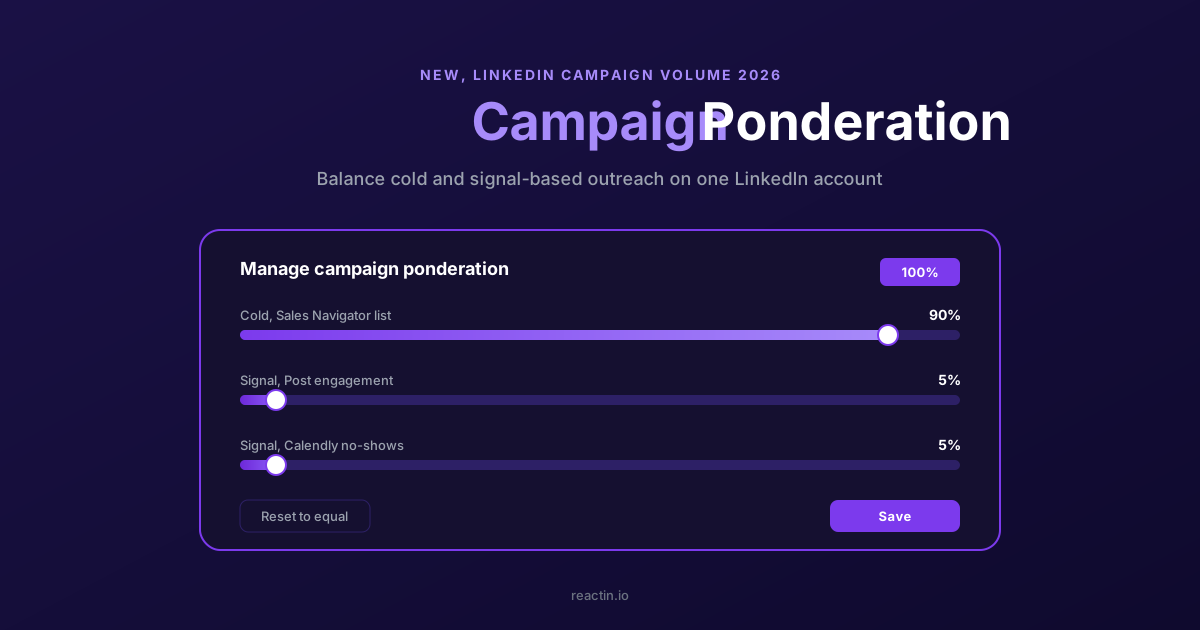
How to Balance LinkedIn Campaign Volume Across Tools (Waalaxy, HeyReach, Expandi, Dripify, LGM, PhantomBuster, Gojiberry vs ReactIn)
Most LinkedIn automation tools force you to pick: one big cold campaign, or none. Here is how Waalaxy, HeyReach, Expandi, Dripify, LGM, PhantomBuster and Gojiberry actually let you split daily volume between campaigns - and how ReactIn’s new Campaign Ponderation finally lets you run a 90/5/5 mix of cold + signal-based outreach.
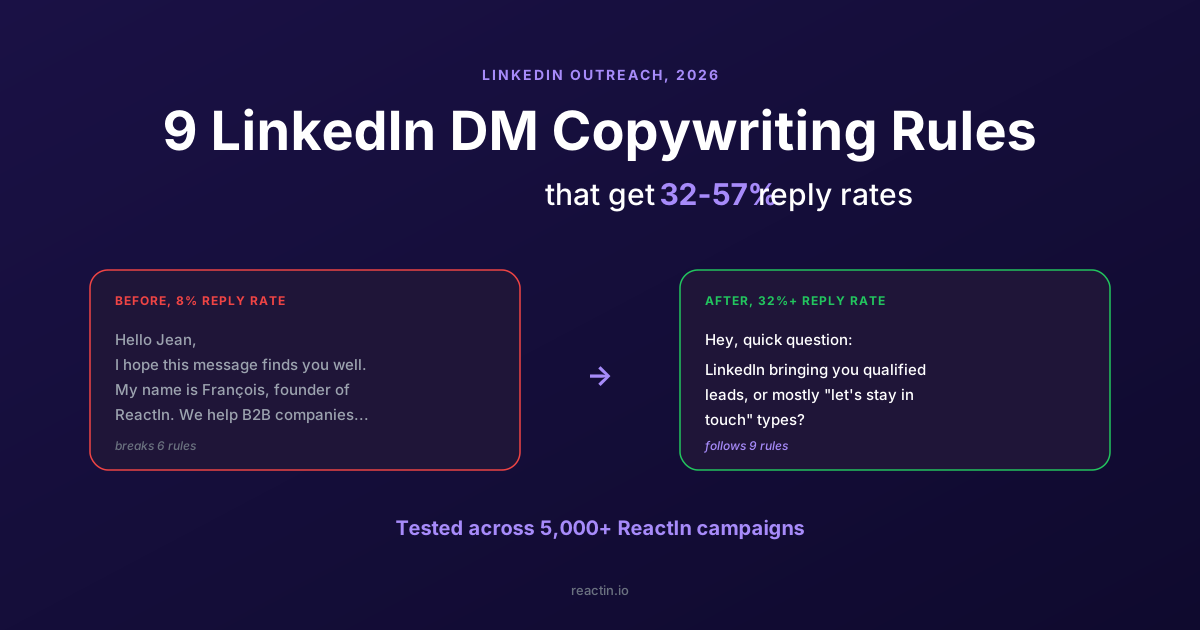
9 LinkedIn DM Copywriting Rules That Get 32-57% Reply Rates (2026)
The average LinkedIn direct message response rate is 8-12%. Our campaigns hit 32-57%. 9 tested copywriting rules, the 5-3-2 rule explained, and how to turn replies into meetings.
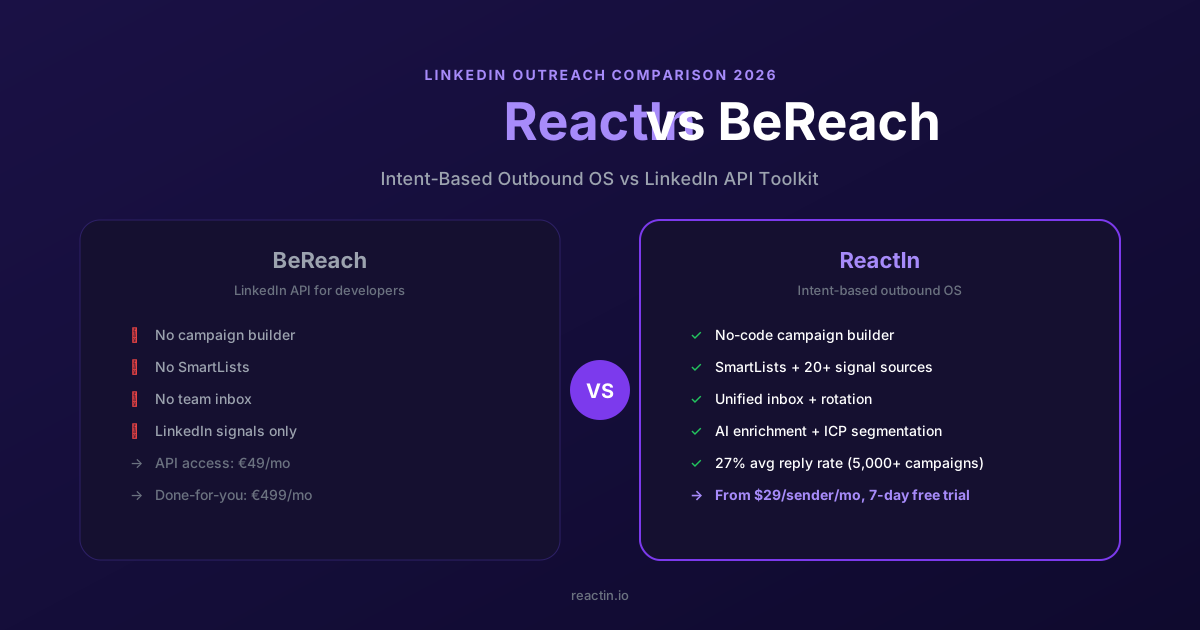
ReactIn vs BeReach (2026): Intent-Based Outbound OS or LinkedIn API Toolkit?
BeReach is a LinkedIn API for developers. ReactIn is an intent-based outbound OS for sales teams - 20+ signal sources, SmartLists, AI enrichment, and 27% reply rates out of the box. Full feature-by-feature comparison.
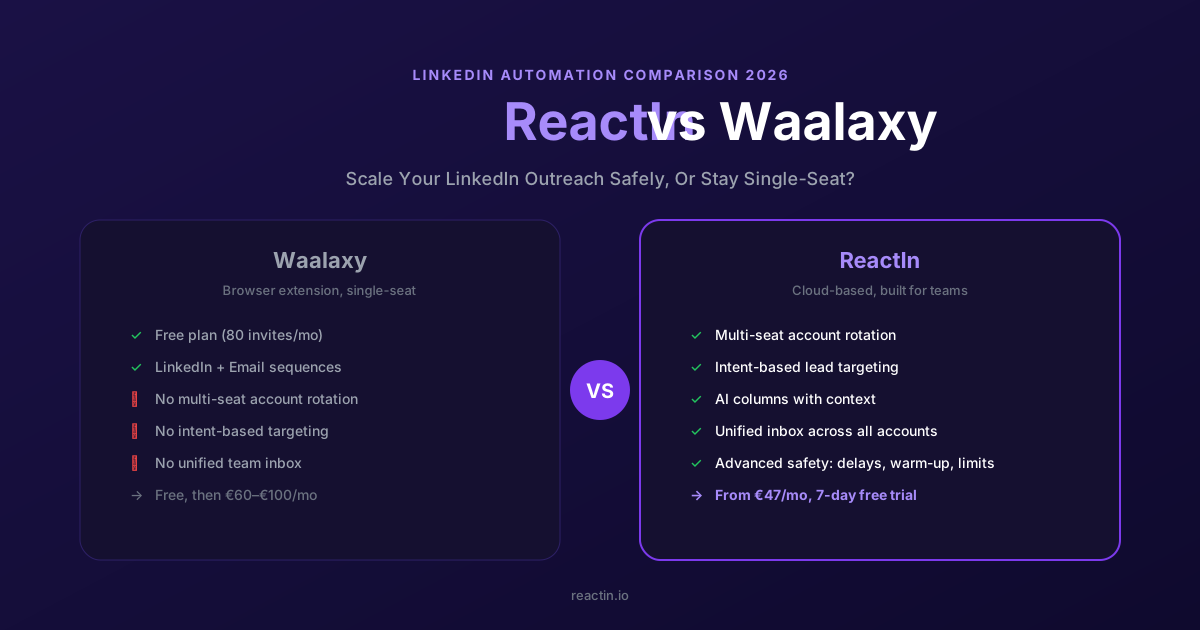
ReactIn vs Waalaxy (2026): Blast Campaigns or Intent-Based Outreach?
Waalaxy is built for mass LinkedIn campaigns. ReactIn is built for intent-based outreach with 20+ signal sources, AI columns, and campaign ponderation. Full comparison inside.
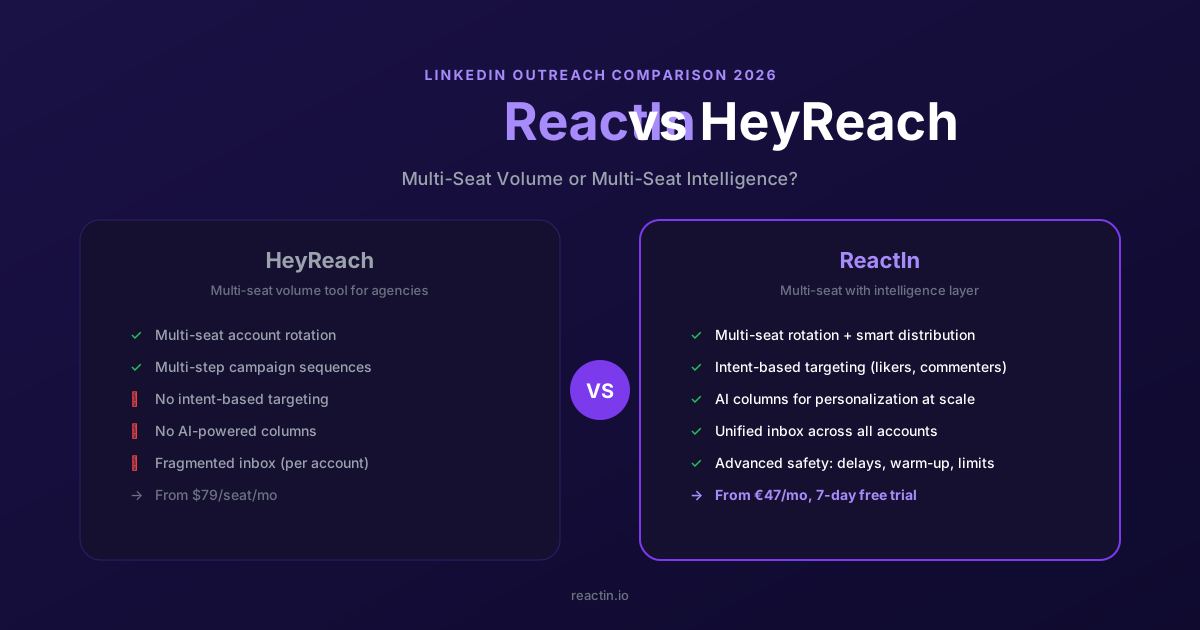
ReactIn vs HeyReach (2026): Volume Rotation or Intent-Driven Outreach?
HeyReach focuses on multi-sender rotation for agencies. ReactIn combines smart rotation with 20+ intent signals, AI columns, and campaign ponderation - all at $69/mo per sender.
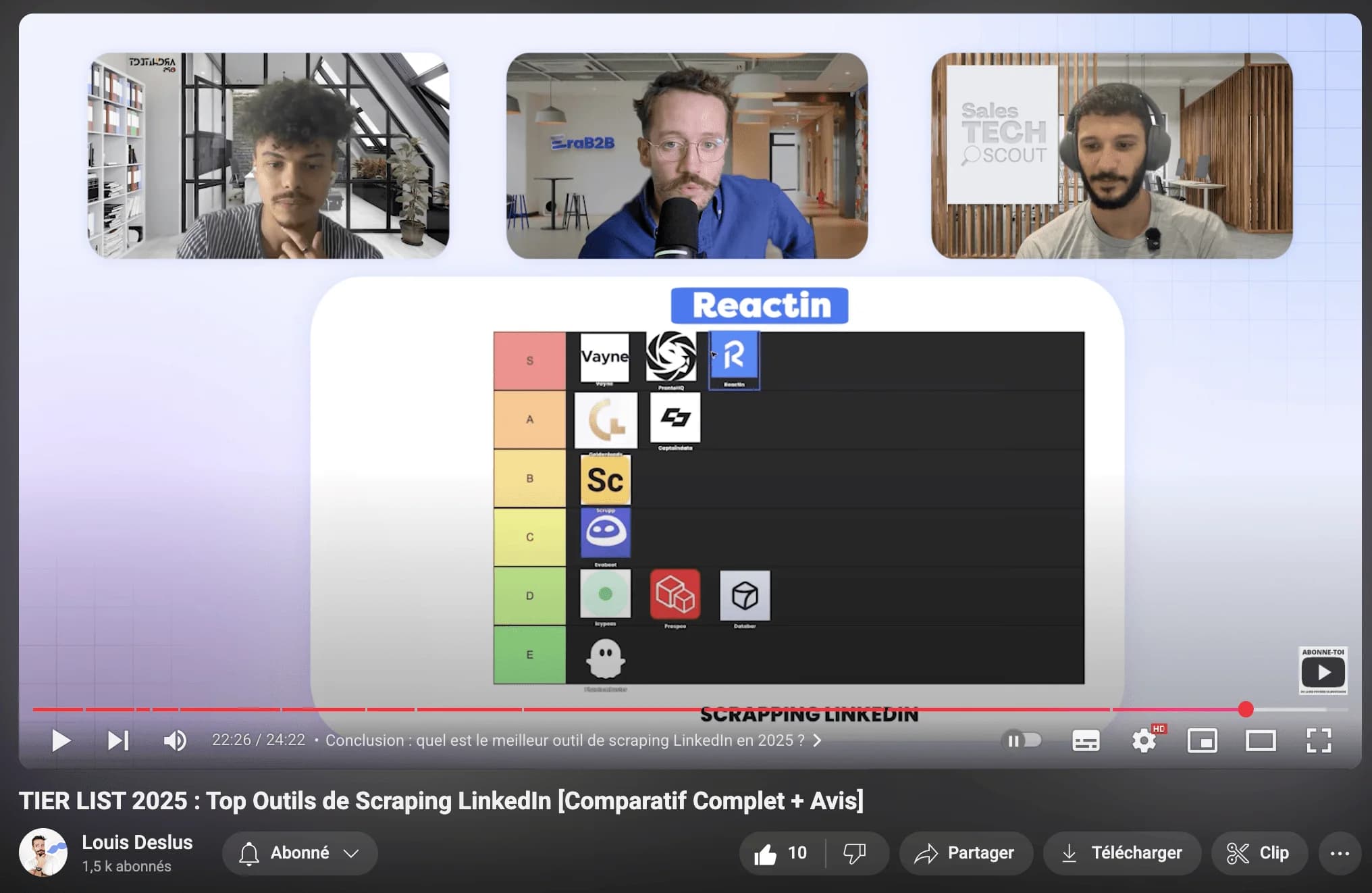
How to Scrape LinkedIn Comments: Tools, Policy & Lead Gen Guide (2026)
Learn how to scrape LinkedIn comments safely in 2026. Best tools compared, LinkedIn scraping policy explained, and step-by-step guide to turning commenters into qualified leads.
Discover the Secret to Maximizing LinkedIn Engagement with Perfect Timing
A data-driven guide to LinkedIn engagement timing in 2026. Best times and days by region, content type timing, weekend strategies, LinkedIn Ads scheduling, and peak activity hours.
How to Automate LinkedIn Connection Requests in 2026 (Safe Method)
The safe method to automate LinkedIn connection requests in 2026. Daily limits by plan (20-50/day), 300-character note limit, best practices, step-by-step ReactIn setup, and safety comparison of top tools.
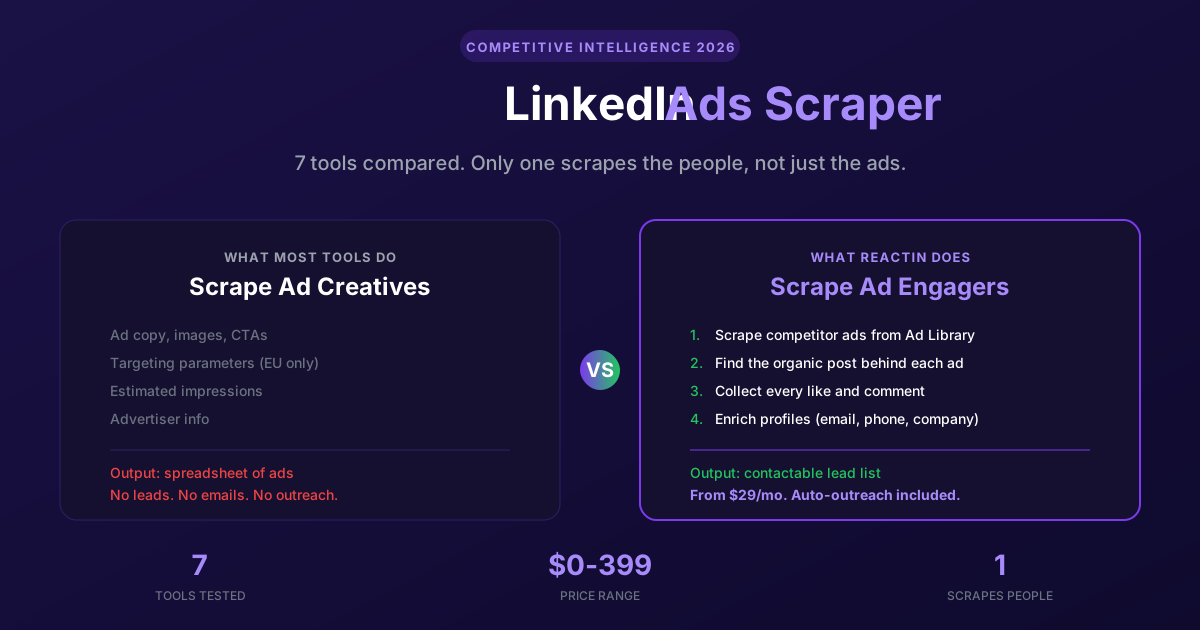
LinkedIn Ads Scraper in 2026: 7 Tools to Spy on Competitor Ads (and Steal Their Audience)
The 7 best LinkedIn ads scrapers in 2026, from ad library extractors to engagement scrapers. Most tools stop at ad creatives. ReactIn goes further: it scrapes the people who engage with competitor ads and turns them into a contactable lead list. Full pricing and feature comparison included.