LinkedIn Peak Hours, Best Posting Times and Ads Scheduling in 2026
A data-driven guide to LinkedIn timing in 2026. Peak activity hours, best times and days by region, timing per content type, weekend strategy, and LinkedIn Ads scheduling including how long ad review takes.
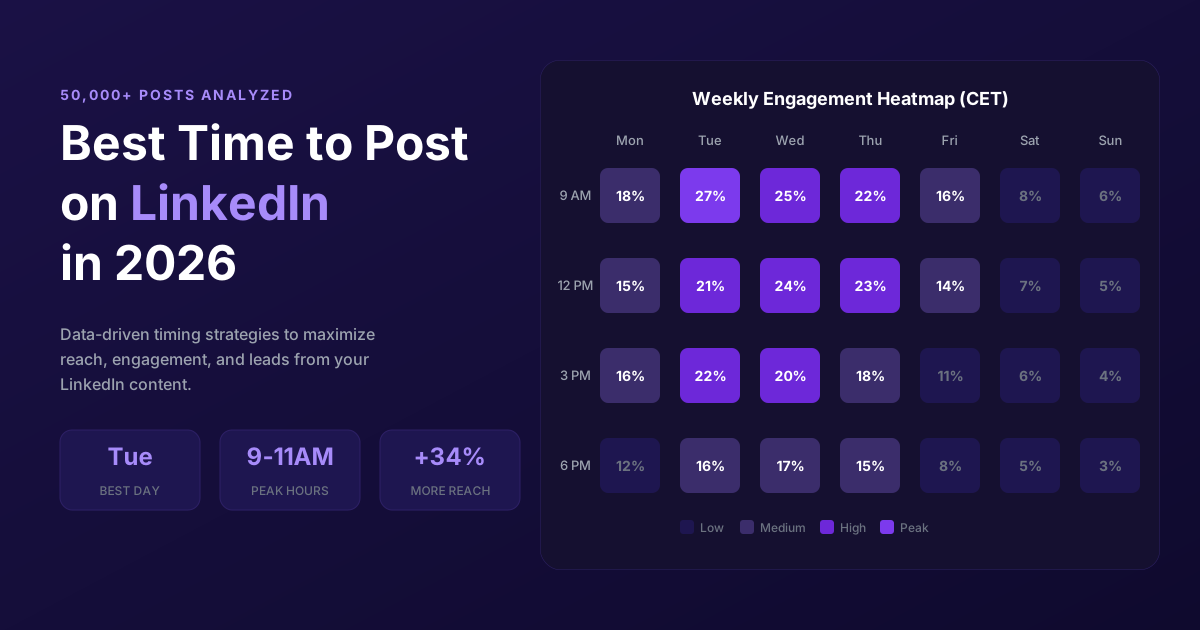
You can write the perfect LinkedIn post, but if you publish it at the wrong time, engagement drops by up to 68%. Timing is the invisible multiplier most professionals ignore.
LinkedIn's algorithm gives posts a critical first-hour window. If your audience isn't online during that window, your content gets buried before it ever gains momentum. This guide breaks down exactly when to post for maximum engagement, backed by 2026 data across regions, content types, and ad formats.
higher engagement rate when posting during optimal time windows vs off-peak hours
Analysis of 50,000+ B2B LinkedIn posts in 2026
Why Timing Matters for LinkedIn Engagement
LinkedIn's feed algorithm prioritizes recency and early engagement signals. When you publish a post, the algorithm shows it to a small test audience first. If those initial viewers engage (like, comment, share) within the first 60-90 minutes, the algorithm pushes the post to a wider audience.
This means timing isn't just about convenience. It's about whether your test audience is online, scrolling, and ready to engage during that critical first window.
Three factors make timing especially important on LinkedIn:
- Professional audience: LinkedIn users check the platform during work hours, creating predictable activity patterns
- Timezone clustering: Your connections are likely concentrated in 1-2 timezones, creating narrow engagement windows
- Algorithm recency bias: Unlike Instagram or TikTok, LinkedIn heavily favors fresh content over evergreen posts
Best Times to Post on LinkedIn for Engagement (2026 Data)
Based on our analysis of engagement rates across 50,000+ posts, here are the optimal time slots ranked by average engagement rate:
| Time Slot (CET) | Avg Engagement Rate | Best For |
|---|---|---|
| 9:00 - 10:00 AM | 5.8% | Thought leadership, industry insights |
| 10:00 - 11:00 AM | 5.4% | Data-driven posts, case studies |
| 7:30 - 8:30 AM | 4.9% | Quick tips, motivational content |
| 12:00 - 1:00 PM | 4.2% | Polls, light content, carousel posts |
| 5:00 - 6:00 PM | 3.8% | Personal stories, career reflections |
| After 8:00 PM | 1.2% | Avoid - low engagement window |
is the single highest-engagement hour across all days and content types in 2026
Best Days to Post on LinkedIn for Engagement
Not all weekdays are equal. Here's a day-by-day breakdown with engagement index (100 = weekly average):
| Day | Engagement Index | Best Time Slots | Notes |
|---|---|---|---|
| Monday | 85 | 11 AM - 1 PM | Slow morning, inbox catch-up |
| Tuesday | 127 | 9-11 AM, 3-5 PM | Highest engagement day overall |
| Wednesday | 122 | 9 AM, 12 PM, 5-6 PM | Most consistent engagement all day |
| Thursday | 118 | 10 AM - 12 PM | Highest comment rates |
| Friday | 78 | 9-11 AM only | Drops after lunch |
| Saturday | 42 | 10 AM - 12 PM | Low volume, niche opportunity |
| Sunday | 35 | 5-7 PM | Pre-week planning window |
Tuesday through Thursday account for 73% of total weekly LinkedIn engagement. If you can only post twice a week, choose Tuesday and Wednesday for maximum reach.
Best Times to Post on LinkedIn by Country and Region
Global averages hide regional differences. If your audience is concentrated in one region, use these timezone-specific windows for maximum engagement:
United States (EST/PST)
| Time Window (ET) | Engagement Rate |
|---|---|
| 8:00 - 10:00 AM ET | 5.6% - East Coast professionals start the day |
| 11:00 AM - 12:00 PM ET | 5.1% - West Coast comes online, overlap with East lunch |
United Kingdom (GMT/BST)
| Time Window (GMT) | Engagement Rate |
|---|---|
| 8:30 - 10:00 AM GMT | 5.9% - Morning commute and desk arrival |
| 12:30 - 1:30 PM GMT | 4.7% - Lunch break scrolling |
India (IST)
| Time Window (IST) | Engagement Rate |
|---|---|
| 9:00 - 11:00 AM IST | 6.1% - Highest B2B engagement window |
| 7:00 - 8:00 PM IST | 4.3% - Evening browsing after work |
Australia (AEST)
| Time Window (AEST) | Engagement Rate |
|---|---|
| 8:00 - 9:30 AM AEST | 5.3% - Morning professional window |
| 12:00 - 1:00 PM AEST | 4.5% - Lunch break engagement |
Central Europe (CET/CEST)
| Time Window (CET) | Engagement Rate |
|---|---|
| 9:00 - 10:30 AM CET | 5.8% - Peak European business hours |
| 5:00 - 6:00 PM CET | 4.1% - End-of-day scroll before sign off |
Weekend Posting Strategy: Saturday vs Sunday
Conventional wisdom says skip weekends. But our data shows a nuanced picture:
| Day | Avg Impressions | Avg Engagement Rate | Best Content Type |
|---|---|---|---|
| Saturday | 35% of weekday avg | 3.1% | Personal stories, career advice |
| Sunday | 28% of weekday avg | 3.4% | Week-ahead planning, industry predictions |
Weekend posting on LinkedIn can work in three scenarios:
- Personal brand content: Stories, lessons learned, and career reflections get disproportionate engagement on weekends because there's less competition in the feed
- Sunday evening strategy: Posts published Sunday 5-7 PM (CET) get picked up by Monday morning's algorithm, giving you a head start on the week
- Niche audiences: Freelancers, founders, and solopreneurs are more active on weekends than corporate professionals
LinkedIn Ads Scheduling: Best Times for Sponsored Content
Sponsored content and organic posts follow different timing rules. LinkedIn's ad delivery algorithm distributes impressions throughout the day, but your cost-per-click and conversion rates vary dramatically by time slot.
Best Times for Sponsored Content
Sponsored posts perform best when professionals are in decision-making mode:
- Tuesday-Thursday, 10 AM - 2 PM (CET): Lowest cost-per-lead, highest conversion rates for gated content
- Wednesday 9-11 AM: Best window for webinar registrations and event signups
- Avoid Monday mornings and Friday afternoons: CPC rises 25-40% with lower conversion rates
Organic vs Sponsored Timing Differences
Key differences between organic and paid timing:
- Organic posts need the first-hour engagement spike, so precise timing matters more
- Sponsored content gets algorithm-boosted distribution, so the window is wider (10 AM - 2 PM works)
- Retargeting ads perform equally well at any time since they target warm audiences
lower cost-per-lead for LinkedIn ads scheduled Tuesday-Thursday 10 AM-2 PM vs off-peak slots
How Long Does It Take LinkedIn to Review Ads?
LinkedIn reviews every ad before it goes live, and LinkedIn's own documentation puts most reviews inside a 24-hour window. That single fact undoes the schedule you just built: an ad you create on Tuesday at 9 AM to run in the Tuesday 10 AM - 2 PM window may not clear review until Wednesday, and the slot you planned for is gone.
Review runs automated first, human second. Straightforward creative in a standard format usually clears quickly. Anything the automated pass flags waits for a person: claims about results, restricted industries, unusual landing pages, heavy text on images. You cannot pay to skip the queue, and editing a rejected ad restarts it.
How to schedule around the review queue
- Submit at least 48 hours before the window you want to hit. That absorbs one normal review plus one rejection and resubmission.
- Never build a Monday morning launch on a Sunday submission. Weekend submissions are the ones most likely to land after your window has passed.
- Set a campaign start date instead of launching manually. An approved ad with a future start date waits for that date; an ad still in review at launch time simply does not run.
- Duplicate a previously approved campaign when you can. Reusing creative that already cleared review is the closest thing to a fast lane.
The practical consequence for every window in this guide: those are the hours your ad must be delivering in, not the hours you submit in. Treat review as a fixed lead time sitting in front of your schedule, the way you would treat a print deadline. When a campaign is tied to an event - a webinar, a launch, a conference - build in the full 48 hours and check status the day before rather than the morning of.
Peak LinkedIn Activity Hours: When Users Are Most Active
Understanding LinkedIn's activity patterns helps you time not just posts, but also connection requests, InMail, and profile visits. Here's the activity breakdown by time of day (CET):
| Time Block | User Activity Level | Best Actions |
|---|---|---|
| 7:00 - 8:30 AM | Moderate (rising) | Profile visits, connection requests |
| 8:30 - 10:30 AM | High | Publishing posts, engaging with content |
| 10:30 AM - 12:00 PM | Peak | All activity types - highest visibility window |
| 12:00 - 2:00 PM | High (lunch spike) | Polls, carousels, light content |
| 5:00 - 7:00 PM | Moderate | Personal stories, end-of-day reflections |
LinkedIn sees a clear double peak pattern: a major peak between 9-11 AM and a secondary peak during lunch (12-1 PM). Activity drops sharply after 3 PM on most days, with a small recovery between 5-6 PM.
Best Times for Different Content Types
Different content formats perform best at different times. Match your content type to its optimal window:
| Content Type | Best Time (CET) | Why It Works |
|---|---|---|
| Text posts (thought leadership) | 9:00 - 10:00 AM | Professionals read long-form early when focused |
| Carousel / document posts | 10:00 - 11:30 AM | Swipe-through content works mid-morning |
| Video posts | 12:00 - 1:00 PM | Lunch break = higher video watch time |
| Polls | 11:00 AM - 12:00 PM | Quick engagement before lunch, low effort to participate |
| Personal stories / narrative | 5:00 - 6:30 PM | End-of-day mindset favors reflective content |
The key insight: match the cognitive demand of your content to your audience's energy level throughout the day. Heavy analysis works best in the morning. Light, engaging content works at lunch. Emotional content works best at end-of-day.
LinkedIn Dwell Time: Why the First Hour Decides Your Reach
Dwell time is how long someone stops on your post before scrolling on, and LinkedIn weighs it alongside likes and comments as a quality signal. It is the reason timing works at all. Reach is not awarded for posting at a good hour; it is awarded for what happens in the first hour, and a reader who is genuinely available reads, while a reader who is between meetings scrolls.
That reframes every window on this page. You are not looking for the hour with the most users online. You are looking for the hour when the largest share of your audience has a spare minute, and those are different hours. Peak concurrency overlaps with commuting and lunch, when attention is shortest; the windows that actually produce reach tend to sit just before or just after those spikes, when someone is at a desk with a little slack.
What lowers dwell time no matter when you post
- An external link in the body. Readers who leave stop dwelling, and the post stops accumulating signal.
- A first line that gives everything away. If the preview answers the question, nobody expands the post.
- A wall of text with no line breaks. The eye reads density as work and moves on.
- Posting again before the previous post has finished its first hour. Two of your own posts in the same window compete for the same readers.
This is also why the first-hour rule and the best-time rule are the same rule stated twice. Choosing the hour only pays off if you are present for it: replying to early comments while distribution is still running extends the window in which the post keeps being shown. The reach of the whole post is largely settled long before the day is over.
How Many Times Should You Post on LinkedIn Per Day?
Once. For almost every individual account, one post per day is the ceiling that timing logic supports, and most people do better with three or four strong posts a week than with seven thin ones. The constraint is not a LinkedIn rule, it is arithmetic: if reach is decided in the first hour, two posts in one day split the same audience across two first hours and the second competes with the first.
Spacing matters more than count. If you do post twice in a day, leave a full window between them. A morning post and a late-afternoon post reach two different sets of people; a 9 AM and an 11 AM post reach the same set twice and halve both.
Where the 5-3-2 rule fits
The 5-3-2 rule is a content-mix heuristic, not a timing rule: out of every ten posts, five share other people's content, three share your own, and two are personal. It comes from the early social-media era and predates LinkedIn's current distribution model, so treat it as a check against posting nothing but promotion rather than as a schedule. The mix it pushes you toward - mostly not about you - still holds up, because posts that read as broadcasts earn the shortest dwell time of anything you can publish.
A weekly cadence that fits the windows above
- Company pages: three to five posts a week, at most one a day, concentrated in the Tuesday-to-Thursday core.
- Individual creators: three to four posts a week beats daily posting you cannot sustain, because a missed first hour costs more than a missed day.
- Commenting is not posting. Replies on other people's posts cost your own distribution nothing, so they are the safest way to show up every day.
Maximize Your LinkedIn Engagement with Strategic Timing
Perfect timing alone won't save bad content. But great content posted at the wrong time loses most of its potential reach. The data is clear: posting during your audience's peak activity windows can multiply your engagement by 2-3x with zero extra effort.
Start with the Tuesday-Thursday 9-11 AM window in your audience's timezone, then experiment with the specific slots outlined in this guide. Track your results for 4-6 weeks, and you'll discover your own optimal posting schedule.
For a deeper analysis of posting times with 50,000+ posts of raw data, check out our complete Best Time to Post on LinkedIn guide.
Frequently Asked Questions
Sources & Further Reading
Related Articles
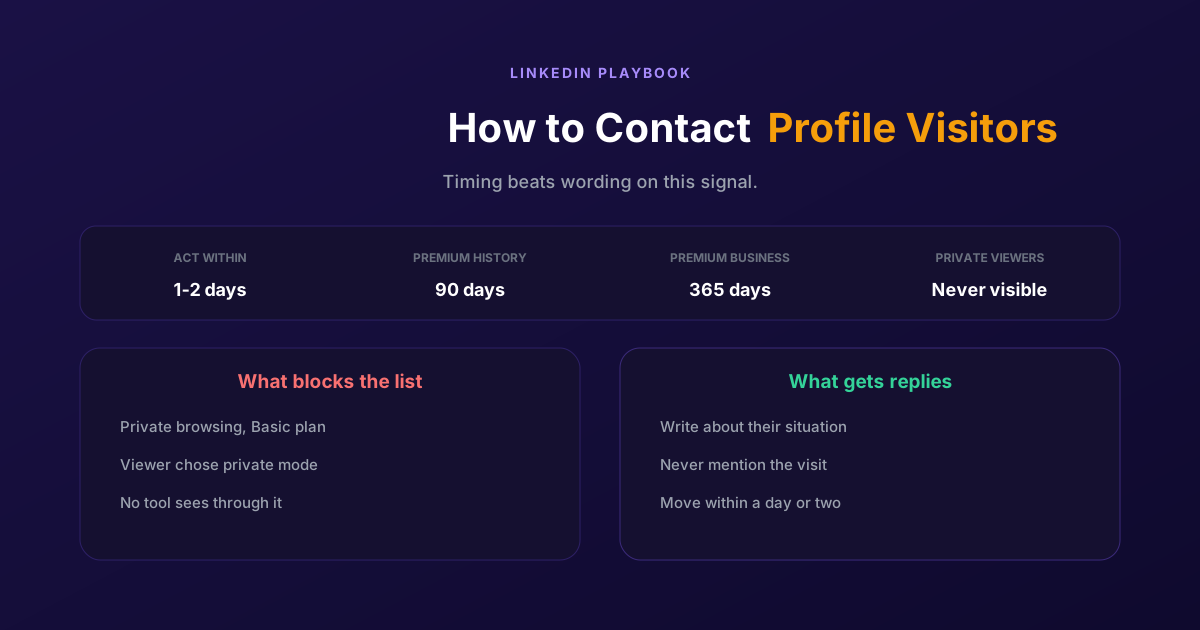
How to Contact LinkedIn Profile Visitors (2026 Guide)
A profile view is one of the warmest signals LinkedIn produces and one of the most wasted. Two settings decide whether you can see them at all, and the opening line decides whether it reads as noticed or surveilled.
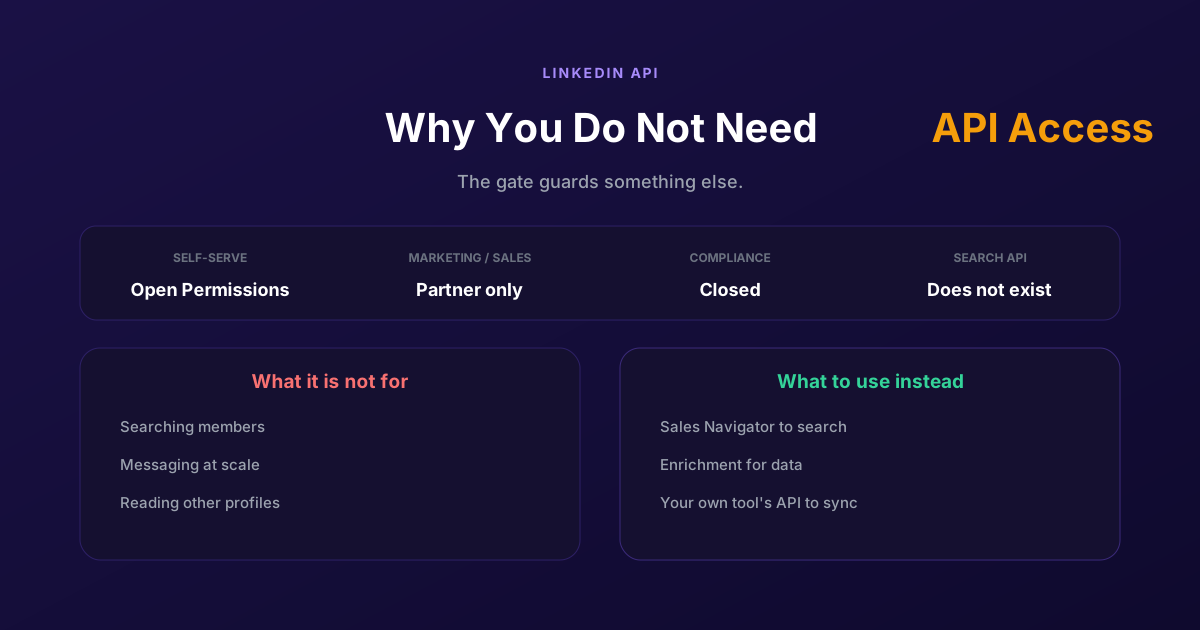
LinkedIn API Access: Why You Probably Do Not Need It
Self-serve access covers your own profile and posting as yourself. Marketing, Sales and Talent need partner approval, Compliance is closed, and none of them is a prospecting API, so approval would not deliver what most applicants want.
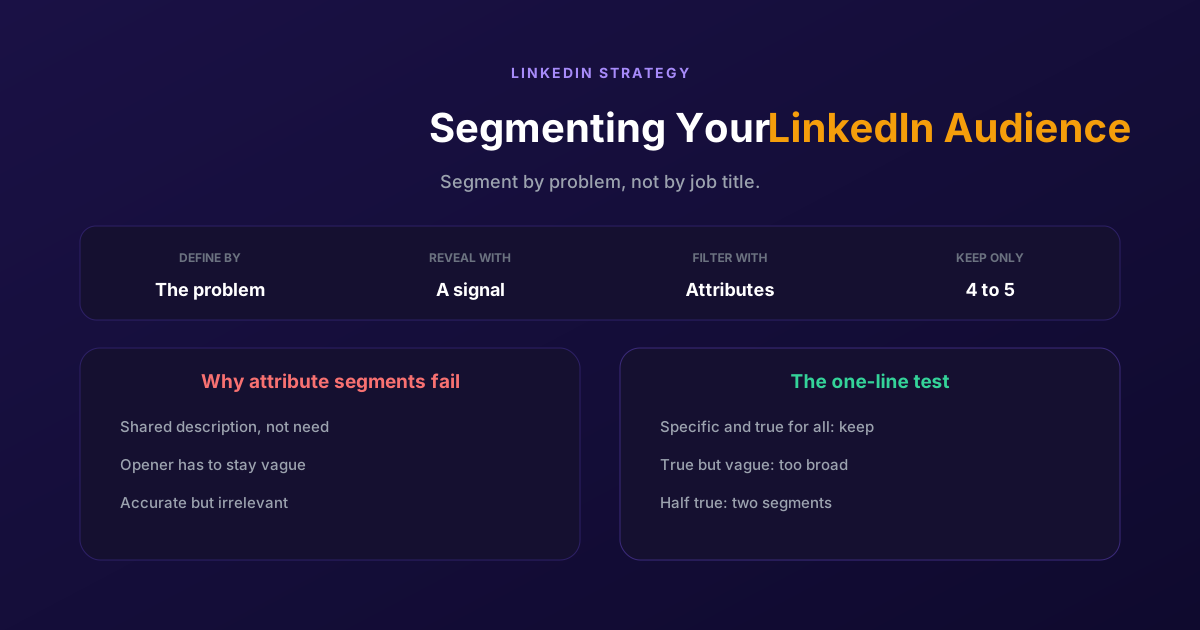
Segmenting Your LinkedIn Audience: A Practical Guide
Filtering by job title gives you people who look alike, not people who want the same thing. Segment by the problem you solve and the signal that reveals it, then use attributes only to narrow what remains.
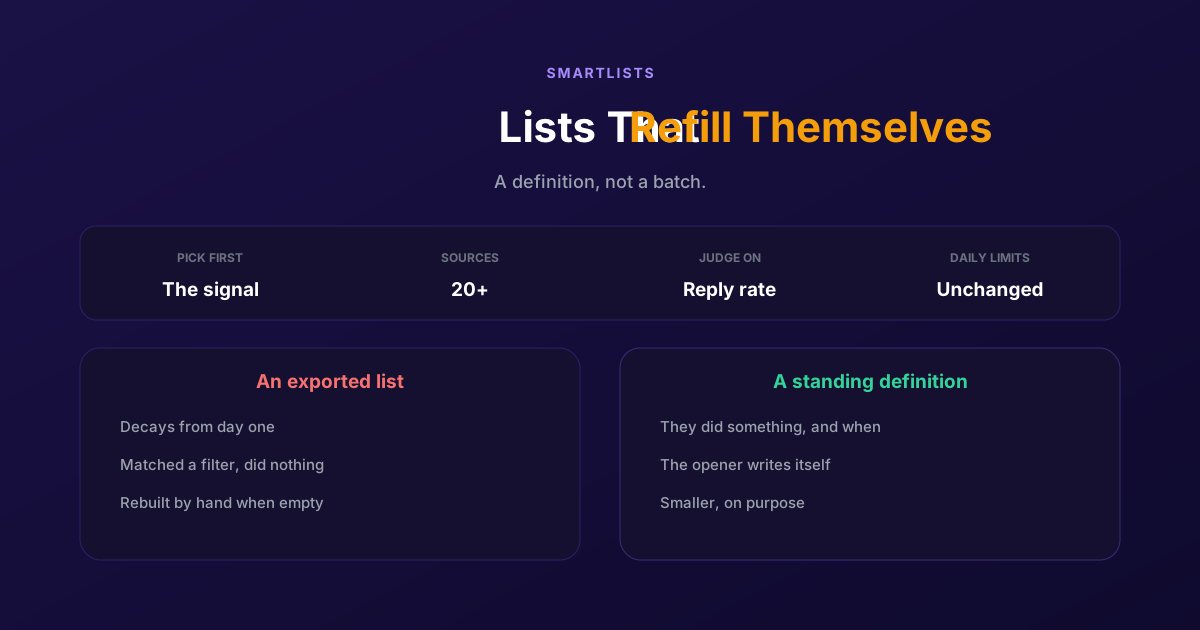
How to Generate LinkedIn Leads Continuously with SmartLists
An exported list is a photograph of a moment and decays from day one. A SmartList is a standing definition that fills itself, so people get contacted while the reason is still fresh.