Why Waalaxy Stopped Working in 2026 (And How to Fix Your Reply Rates)
Your Waalaxy reply rates cratered in 2026 and you cannot tell why. Here is what changed, why blast outreach stopped working, and how intent-based prospecting brings double-digit reply rates back.
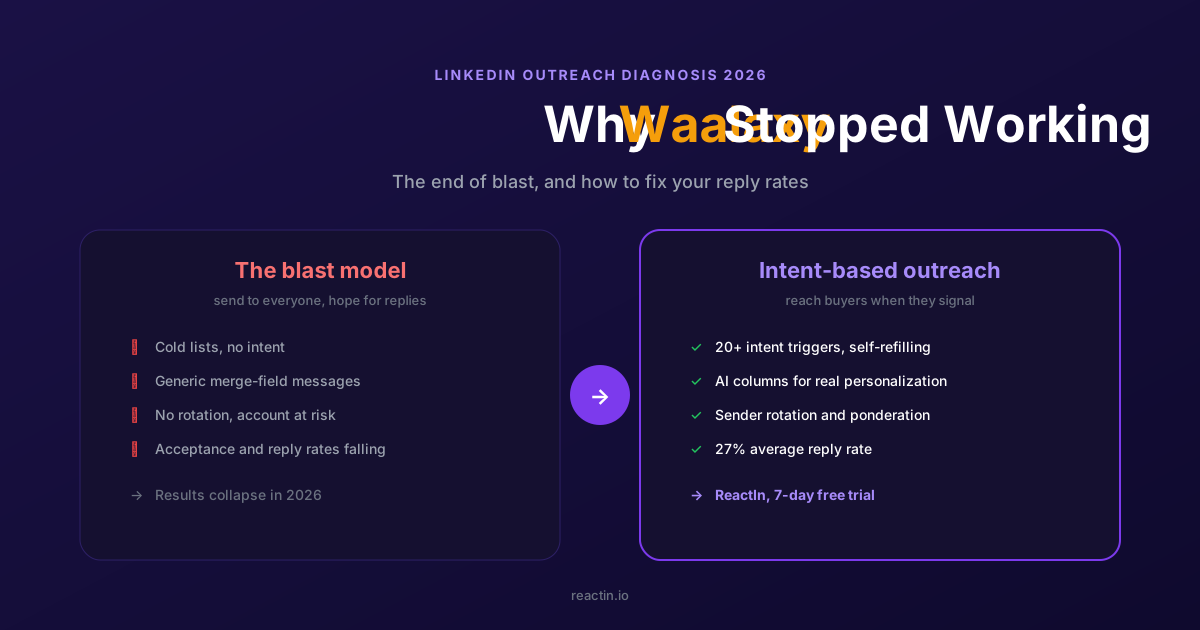
Your Waalaxy campaigns used to work, and then they did not. Since early 2026, the same message, the same target, and the same sequence return almost nothing. Your acceptance rates are sliding, replies have dried up, and you are wondering if the tool is broken. It is not. It is your method that stopped working, and Waalaxy gives you no levers to fix it.
This article explains why your Waalaxy results collapsed in 2026, what actually changed on LinkedIn and with buyers, and how to move from volume to intent to bring double-digit reply rates back. The problem is not how many messages you send. It is when you send them and how relevant they are.
| Symptom | The real 2026 cause | The intent-based fix |
|---|---|---|
| Acceptance rate dropping | Cold connection requests blasted to static lists | Reach only profiles that just sent a signal: like, comment, webinar signup |
| Replies declining | Generic messages prospects have seen a hundred times | AI hooks generated from the prospect's real activity |
| Accounts restricted or banned | Daily volume pushed with no rotation and no guardrails | Sender rotation and daily quota split with campaign ponderation |
| Poor lead quality | Static Sales Navigator or CSV lists built once | SmartLists that fill continuously from 20+ intent triggers |
| Pipeline drying up | Spray and pray: you burn the list, then nothing | Buying signals captured continuously: the pipeline refills itself |
Why your Waalaxy results dropped
Start with the most visible symptom: the falling acceptance rate. In 2026, an active B2B decision-maker gets dozens of connection requests a week, almost all cold and automated. When your request lands with no context, among fifty identical ones, it gets ignored or declined. Waalaxy sends the exact same kind of request to your whole list, with no regard for what the prospect is doing at the moment you reach out. That missing context is what kills your acceptance rate.
Next comes the drop in replies. Personalization in Waalaxy is limited to basic merge fields: first name, company, job title. Those variables fool no one anymore. A message that opens with "Hi {firstName}, I saw you work at {company}" is instantly recognized as a mass send. Prospects have gone numb to these generic sequences, and the reply rate follows the same downward slope as the acceptance rate.
The structural cause runs deeper. Waalaxy is built for volume, not precision. You import a static list, write a sequence, and send to everyone. There is no way to react automatically when a prospect likes a post, signs up for a webinar, or changes jobs. And once the list is exhausted, you start from zero. As long as your outreach pushes messages onto cold lists instead of reacting to real signals, your rates will keep eroding.
What actually changed in 2026
First factor: saturation. LinkedIn blast tools went mainstream, and everyone now sends the same automated sequences. Inboxes overflow with generic outreach. Mechanically, the return on each message falls, because your prospect receives ten versions of it a day. What worked in 2023 with little competition no longer works when the whole market does the same thing.
Second factor: LinkedIn tightened its limits. Invitation caps are stricter, detection of mass automation behavior is sharper, and the risk of account restriction is higher for anyone pushing volume carelessly. Cranking up volume to offset falling rates is exactly what puts your account at risk. Waalaxy offers neither sender rotation nor ponderation to spread that volume safely.
Third factor: your cold lists age fast. People change jobs, companies, and priorities. The list you scraped on Sales Navigator in January is partly stale by March. Without continuous signal capture, you prospect outdated data and reach people who no longer have the right context. Blast can only work static lists, and a static list goes stale by definition.
What happened to the Waalaxy Chrome extension
If you went looking for the Waalaxy Chrome extension recently and could not find it, you are not imagining things. Waalaxy pulled its Chrome extension from the Chrome Web Store in mid-2026 and moved the product fully into the cloud. Campaigns now run from app.waalaxy.com, and there is no extension to install in order to send. A lightweight companion extension still exists, but its only job is to speed up prospect imports from a LinkedIn search. It does not run your sequences.
For anyone who had the extension installed, this is the most common reason Waalaxy appeared to stop working overnight around that period. The extension stopped loading, campaigns paused, and the fix was never a reinstall: it was a migration. If that is where you are, stop troubleshooting Chrome. Log in to the web app and check that your sequences and quotas carried over. Nothing you do locally will bring the old extension back.
This is worth naming plainly, because it used to be the standard argument against Waalaxy. A browser extension borrows your logged-in session, so your computer had to stay on with Chrome open, and a Chrome update could halt your outreach until a patch shipped. That constraint is gone. Waalaxy sends server-side now, the same way ReactIn does. If you are comparing the two in 2026, architecture is no longer what separates them.
Which puts the question back where it actually matters. Once both tools send from the cloud, the difference is not how the messages leave, it is who they go to. That is the part the extension change does not fix, and it is what the rest of this article is about.
The fix: move from volume to intent
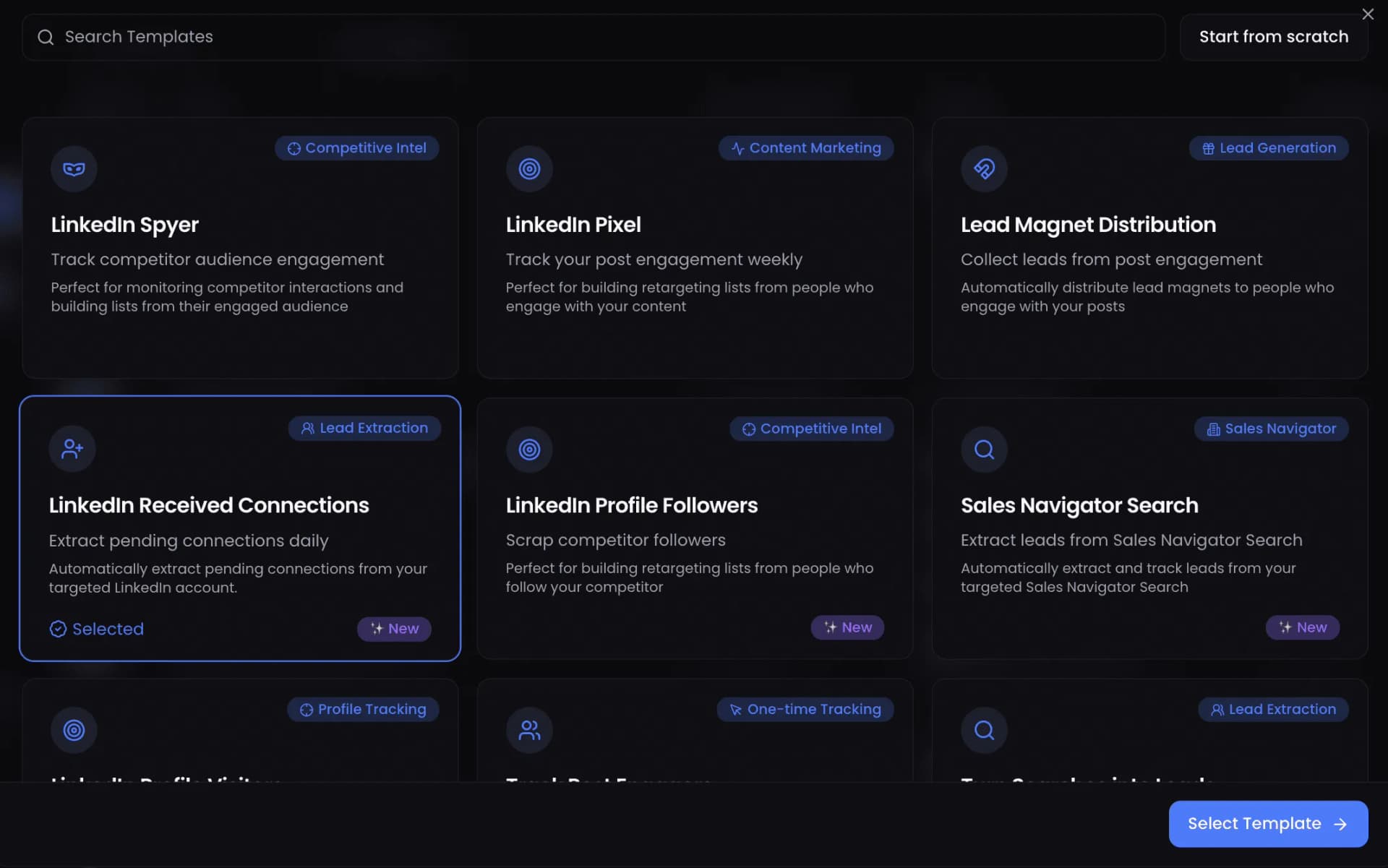
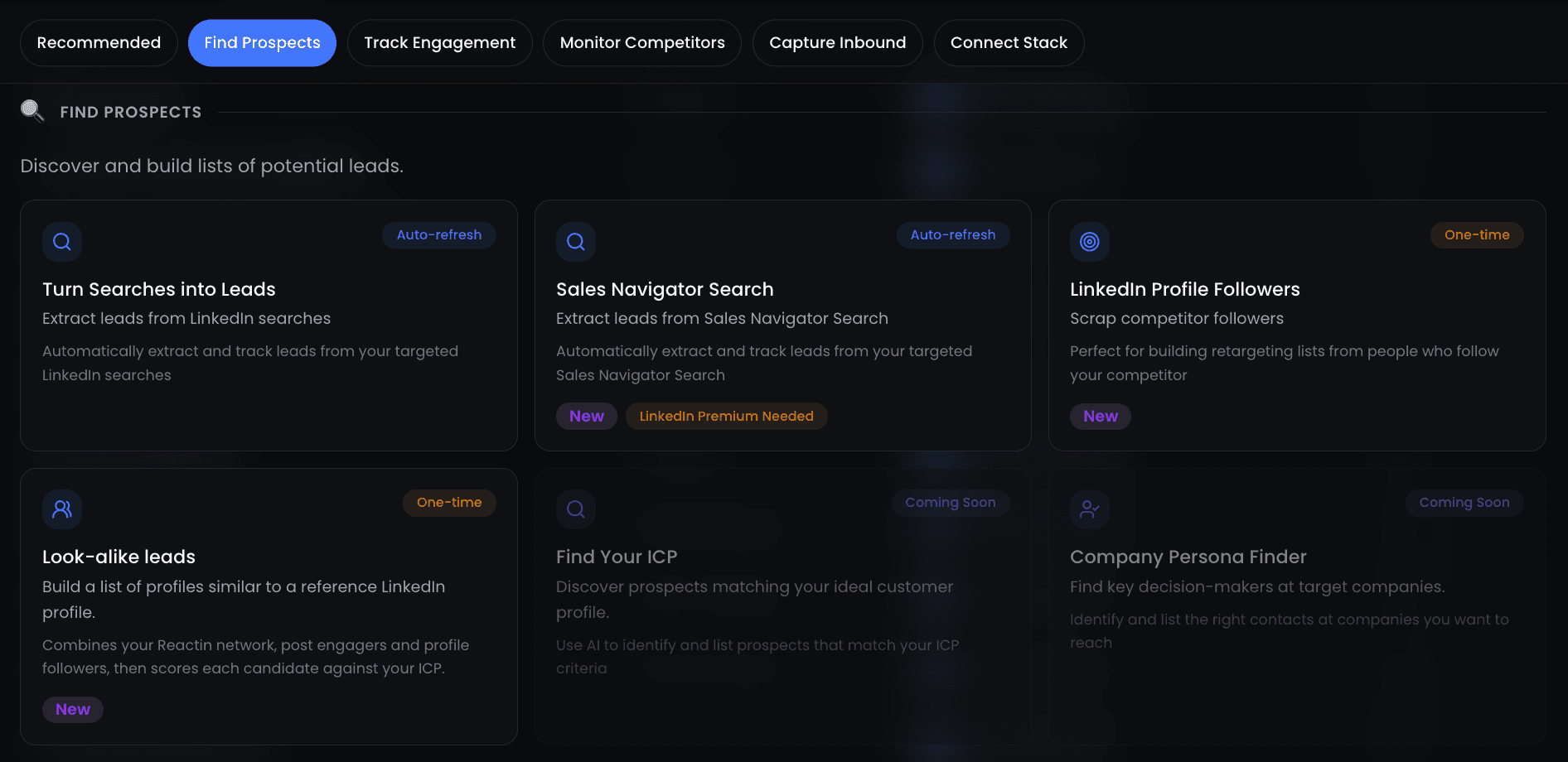
The way out is not to send more, it is to flip the model from push to pull. Instead of importing static lists, you connect SmartLists fed by 20+ intent triggers: post engagers, commenters, event attendees, job changes, webinar signups, Calendly bookings, Tally submissions, Stripe trials. When a signal fires, the lead enters your list at the exact moment they show interest. The pipeline refills itself, with no CSV exports and no manual rebuilding.
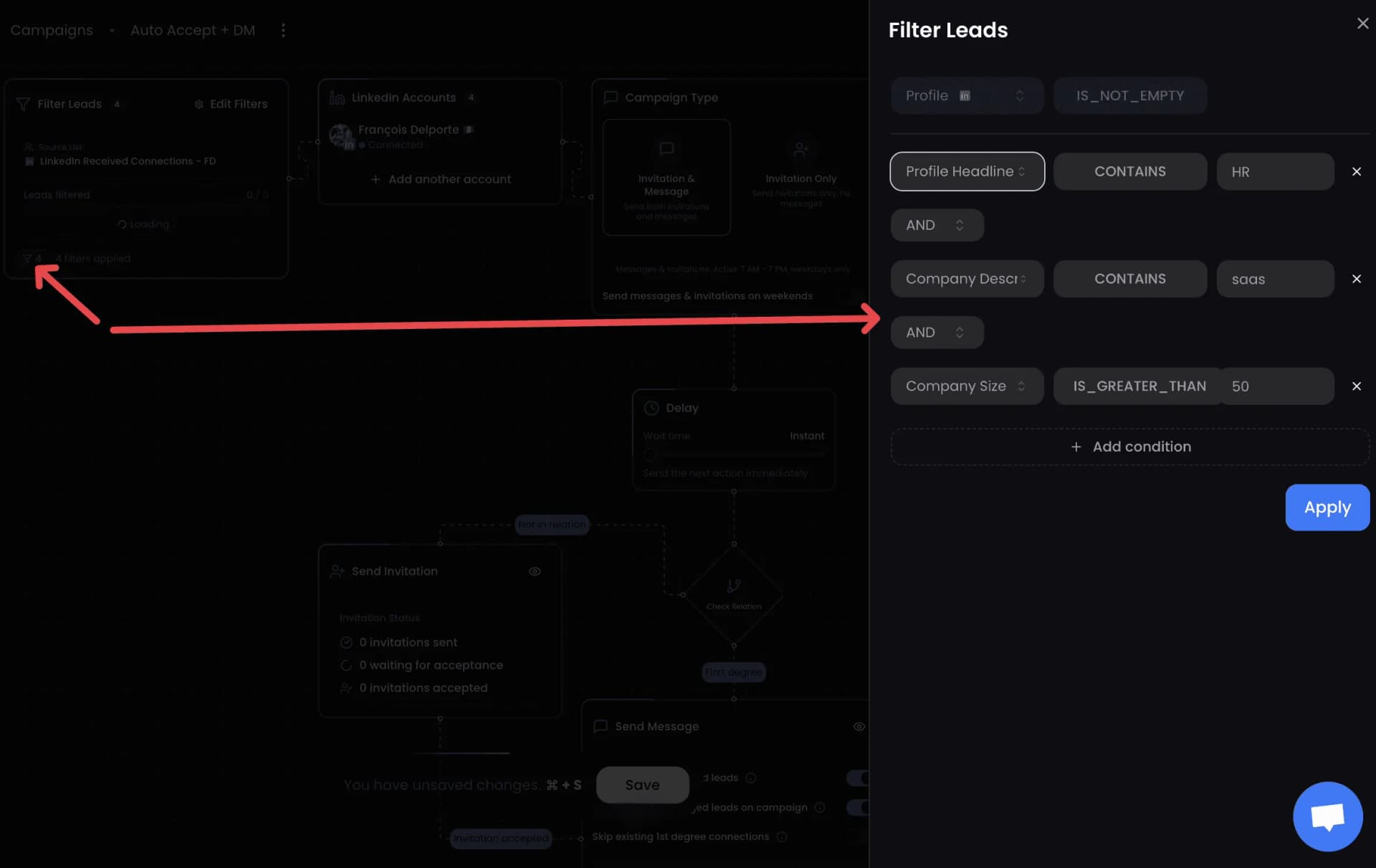
Then personalization moves to another level with AI enrichment columns. Each lead can be enriched automatically: a contextual hook based on recent posts, an ICP fit score, a company summary. These columns are visible, editable, and feed your templates as variables. Your messages finally reference what the prospect actually cares about, not just their first name. Teams using these columns report reply rates 3 to 5 times higher than generic template outreach.
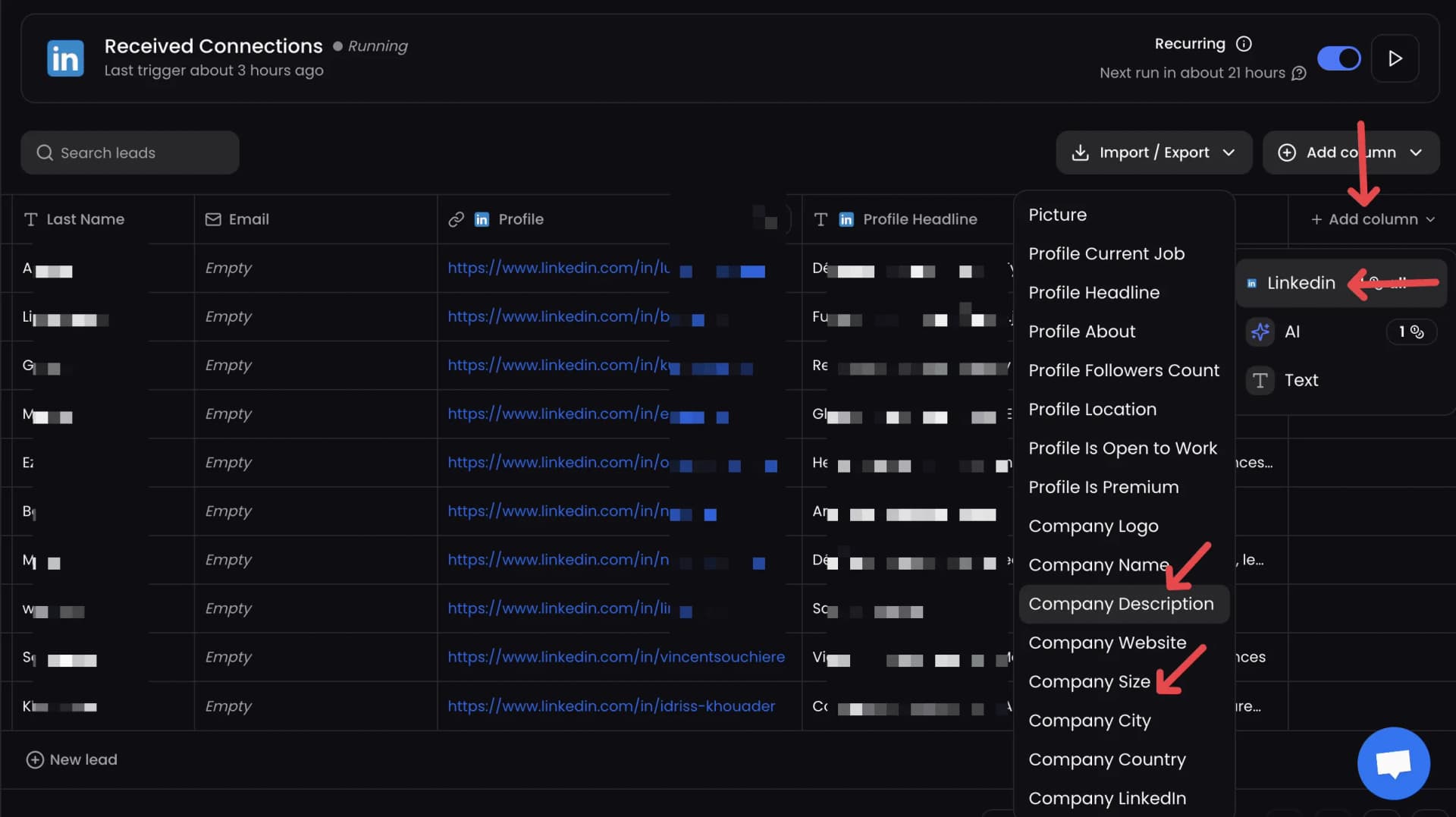
That leaves volume safety, the Waalaxy blind spot. ReactIn spreads outreach across several accounts with sender rotation, and allocates the daily quota across campaigns through ponderation, with simple percentage sliders. You prioritize your highest-intent leads while staying within LinkedIn safety limits, with no manual juggling. Lead temperature, cold, medium or warm, tells you who to contact first, and the unified inbox centralizes every reply across all accounts.
On budget, Waalaxy splits its features across tiers, from 56 EUR/month for basic LinkedIn to 144 EUR/month for the full multichannel suite, and even at the top tier you get no intent detection, no AI columns, no ponderation, and no rotation. ReactIn comes in two per-sender tiers, Basic at $29/month (invitations) and Growth at $69/month (full message automation), with everything included in both: the 20+ triggers, SmartLists, AI enrichment, ponderation, unified inbox, and sender rotation. With a 7-day free trial, no credit card, so you can verify the results before paying.
Want the feature-by-feature breakdown? Read our full ReactIn vs Waalaxy comparison. And to rebuild a high-quality audience in minutes, here is how to build a LinkedIn lookalike audience.
To see how each tool stacks up, read our complete ReactIn Alternatives & Comparisons guide for 2026.
Frequently Asked Questions
Sources & Further Reading
- See what users say about Waalaxy's strengths and limits on the Waalaxy G2 reviews page.
- LinkedIn enforces strict rules on automation and mass sending. Review the LinkedIn User Agreement to understand what puts your account at risk.
- You can check the current version and status of the extension on its Waalaxy Chrome Web Store page.
Related Articles
LinkedIn Outreach Playbook 2026: From Warmup to Closed Deals
The complete LinkedIn outreach playbook for 2026. Account warmup, connection request strategies, DM copywriting rules, multi-touch sequences, and optimization tactics. Based on data from 5,000+ campaigns.
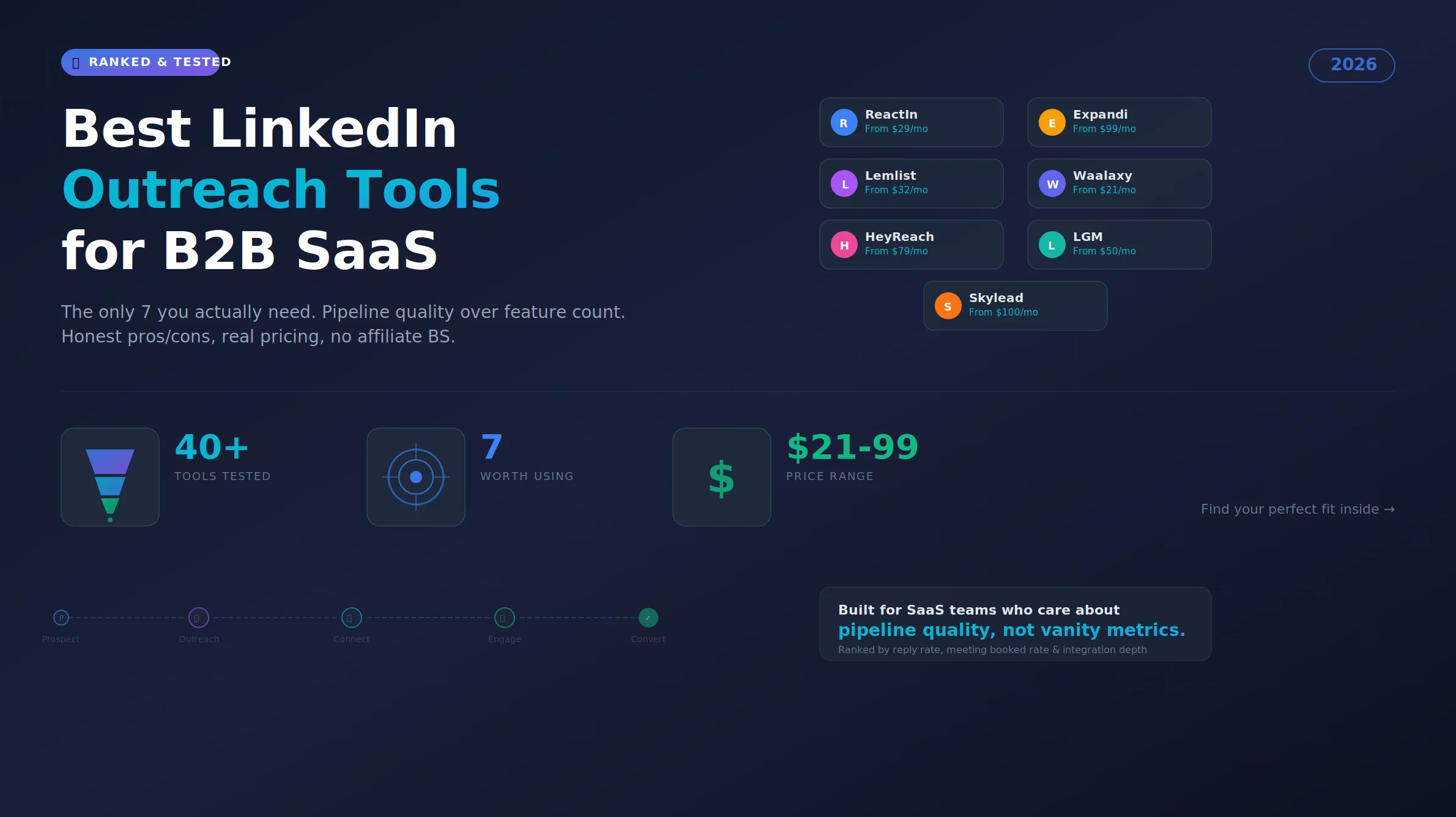
Best LinkedIn Outreach Tool for B2B SaaS in 2026 (Ranked by Pipeline Quality, Not Feature Lists)
The 7 best LinkedIn outreach tools for B2B SaaS in 2026, ranked by pipeline quality and true cost. ReactIn replaces 3-4 tools ($69/mo vs $500+/mo stack) with intent signals, AI enrichment, and automated campaigns. Full 5-seat cost comparison included.
LinkedIn Connection Request Note Character Limit 2026: Official Limit, Rules & Templates
The official LinkedIn connection request note limit in 2026 is 300 characters, on every plan. But notes between 120 and 180 characters win on acceptance rate. Full breakdown, 10 templates, and the difference with InMail and DM limits.
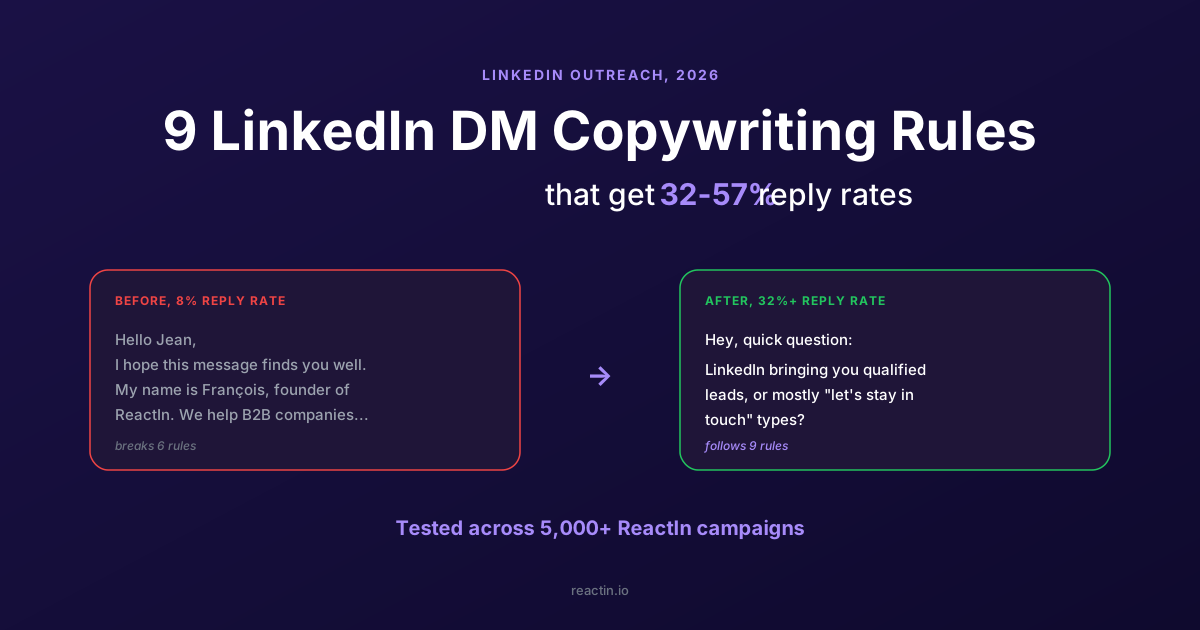
9 LinkedIn DM Copywriting Rules That Get 32-57% Reply Rates (2026)
The average LinkedIn direct message response rate is 8-12%. Our campaigns hit 32-57%. 9 tested copywriting rules, the 5-3-2 rule explained, and how to turn replies into meetings.