ReactIn vs Salesflow: Agency Seat Pricing or Signal Quality?
Salesflow gets cheap per seat once you buy twenty of them. ReactIn bets that the bottleneck is targeting, not sending capacity. Compare agency economics, volume limits and what each one leaves you to solve.
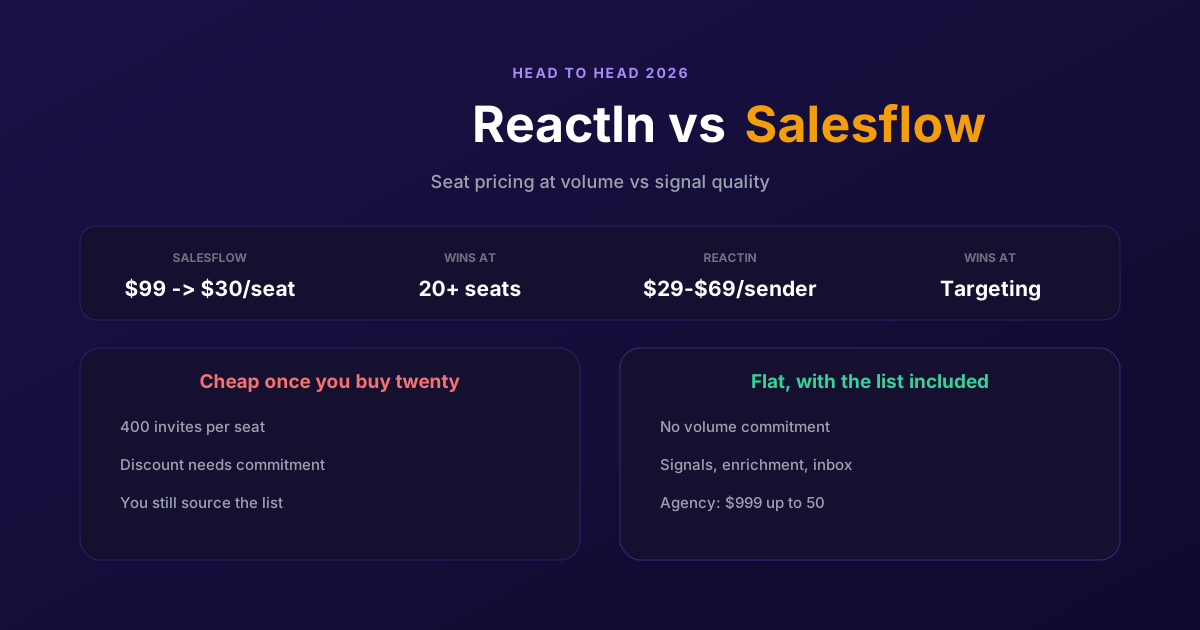
Salesflow is built for agencies, and its pricing says so. One seat costs $99, but twenty seats cost around $40 each and fifty drop under $30. If your business is running many LinkedIn accounts, that curve is the entire pitch.
It is also the whole argument. Salesflow gets cheap per seat as you commit to volume, on the assumption that sending capacity is what agencies are short of. ReactIn bets the shortage is elsewhere: not how many messages you can send, but knowing which of them deserve to go out. Here is the comparison, priced at real seat counts.
| Dimension | Salesflow | ReactIn |
|---|---|---|
| Entry price | $99 per user monthly, $79 on annual billing | $29 per sender (invitations) or $69 (everything) |
| Price at scale | Around $70 per seat at 5+, $39.95 at 20+, $29.98 at 50+ | Flat $999 agency plan covering up to 50 senders |
| How the discount is earned | Seat count plus commitment: 15 percent at 6 months, 30 percent at 12 | No commitment required, the agency plan is the list price |
| Monthly sending volume | 400 invites, up to 2,000 follow-ups, 800 open InMails per seat | Unlimited automations within LinkedIn's own safety limits |
| Where the list comes from | You import it, or use a Sales Navigator search | 20+ intent sources build and refill it automatically |
| Enrichment | Not included in the seat | AI enrichment columns in the lead table, 2,000 credits included |
| Best fit | Agencies past 25 seats pushing volume across many client accounts | Agencies under 50 senders where reply rate, not capacity, is the constraint |
What Salesflow does well
Salesflow understands agency economics better than most of this market. The per-seat price falls steeply with volume and commitment, from $99 for one seat to under $30 once you are past fifty, with an extra 15 percent at six months and 30 percent at twelve. If you are certain about your seat count for the next year, few tools will beat that number.
The included sending volume is generous and clearly stated: 400 invitations, up to 2,000 follow-up messages and 800 open InMails per seat per month. Open InMails in particular are a real lever, because they reach people outside your network without spending a connection request, and not every competitor includes them.
It is also a mature multichannel product with proper analytics per campaign and per seat, which matters when you have to show a client what their account did last month. For an agency whose job description is running high volume across many identities, Salesflow is doing exactly what it says.
Where Salesflow falls short
The discount is a commitment, not a price. Those attractive per-seat numbers require both scale and a term: 20+ seats to reach $39.95, 50+ for $29.98, with the deepest cuts tied to six or twelve month commitments. An agency that churns clients, or is not sure it will still need twenty seats in March, is not really buying at the advertised rate. Compare what you can actually commit to.
Below roughly twenty-five seats the maths favours a flat plan. Ten Salesflow seats at $70 is $700 a month; ten ReactIn senders on Growth is $690, and ReactIn's agency plan is $999 for up to 50. Salesflow only pulls clearly ahead once you are deep into volume territory, which is a smaller slice of agencies than the pricing page implies.
And the volume it sells you is capacity, not pipeline. 400 invitations per seat is a lot of invitations, and every one of them still needs a name to go to. Salesflow does not source, score or refresh that list, so an agency buys twenty seats of sending and then discovers the real cost is the person building twenty lists to feed them.
Why teams choose ReactIn
Agencies switch when they notice their cost per reply is not moving even though their cost per seat fell. More capacity into the same stale lists produces more sends, not more meetings. ReactIn spends the budget on the other half of the problem.
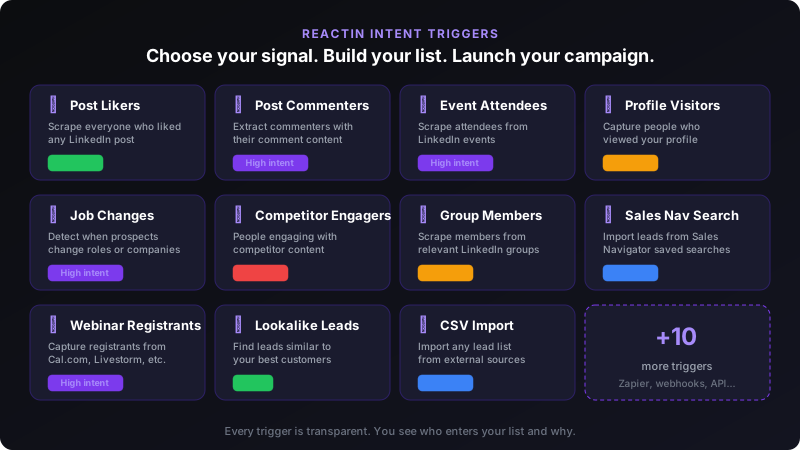
Every client account gets SmartLists that fill themselves from that client's own signals: people engaging with their posts, their competitors' audiences, their webinar attendees, their form submissions. The account manager stops maintaining twenty exports, which is usually the hidden headcount cost behind a large seat count.
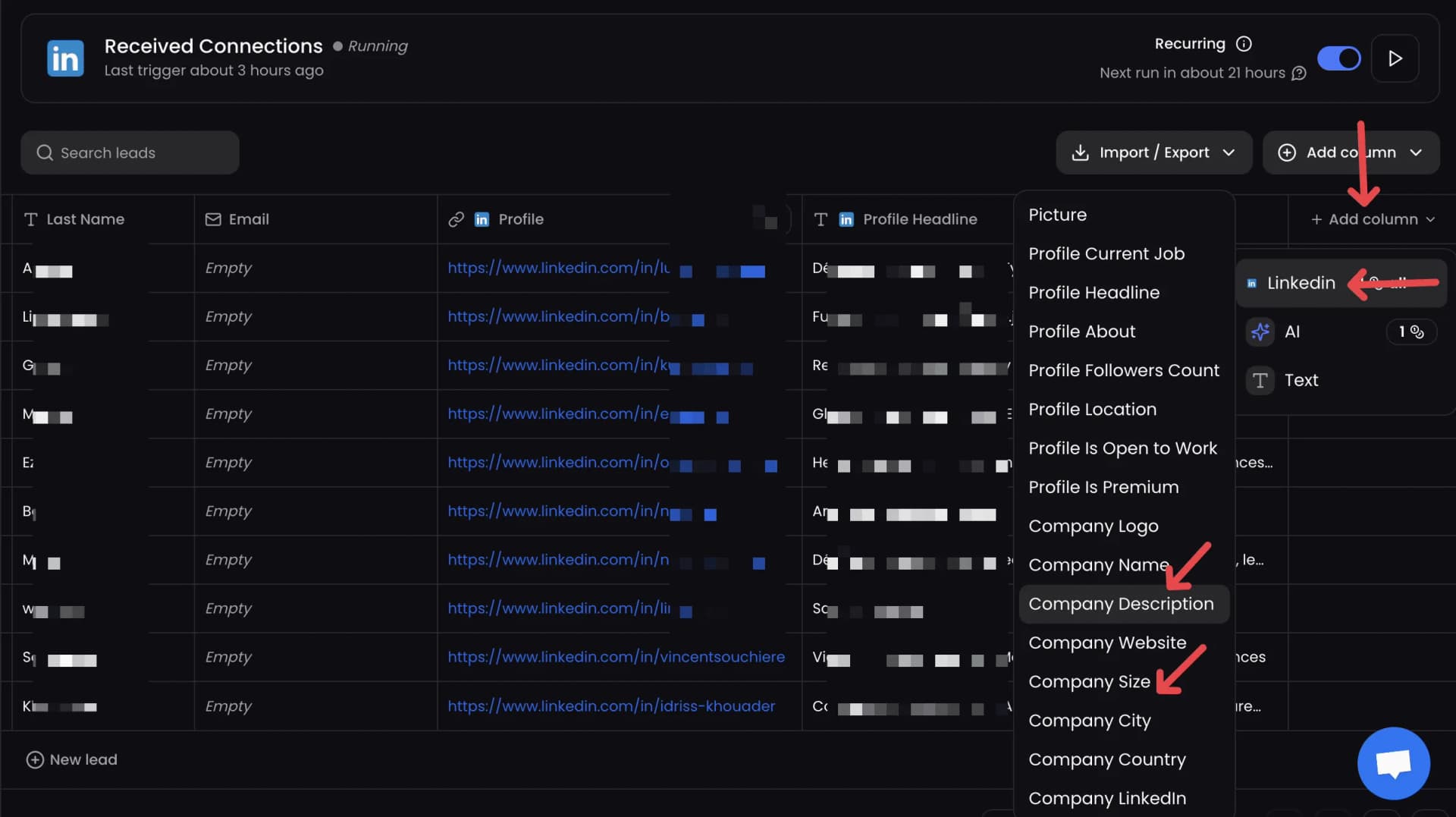
The pricing is flat and needs no term. $999 covers up to 50 senders, enrichment credits are in the price, and sender rotation plus one inbox across every client account come with Growth. There is no discount to negotiate and nothing to commit to for a year.
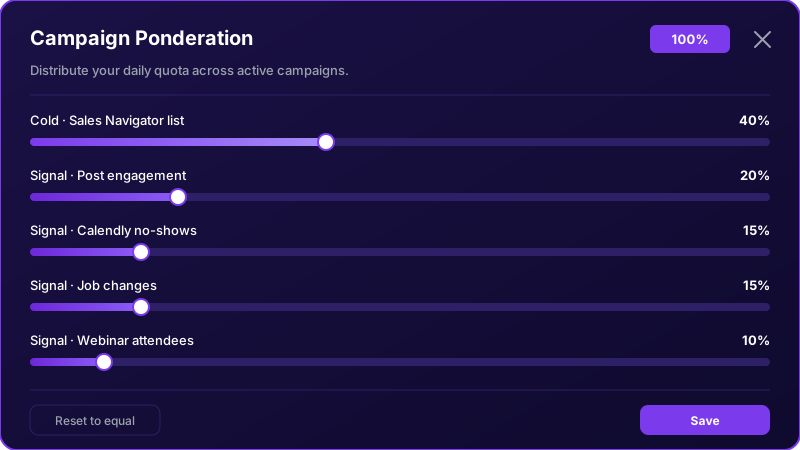
Where Salesflow still wins: past fifty seats on a long commitment, its per-seat price goes lower than ReactIn's agency plan, and open InMail volume is a real capability ReactIn does not match. If your service genuinely is volume across forty client accounts, Salesflow is competing on its own ground and it is hard to beat there.