ReactIn vs Expandi: Dedicated IP Safety or Better Targeting?
Expandi charges per seat for a dedicated residential IP and careful sending. ReactIn charges per sender and puts the money into who gets the message. Compare safety models, real per-seat cost and add-ons.
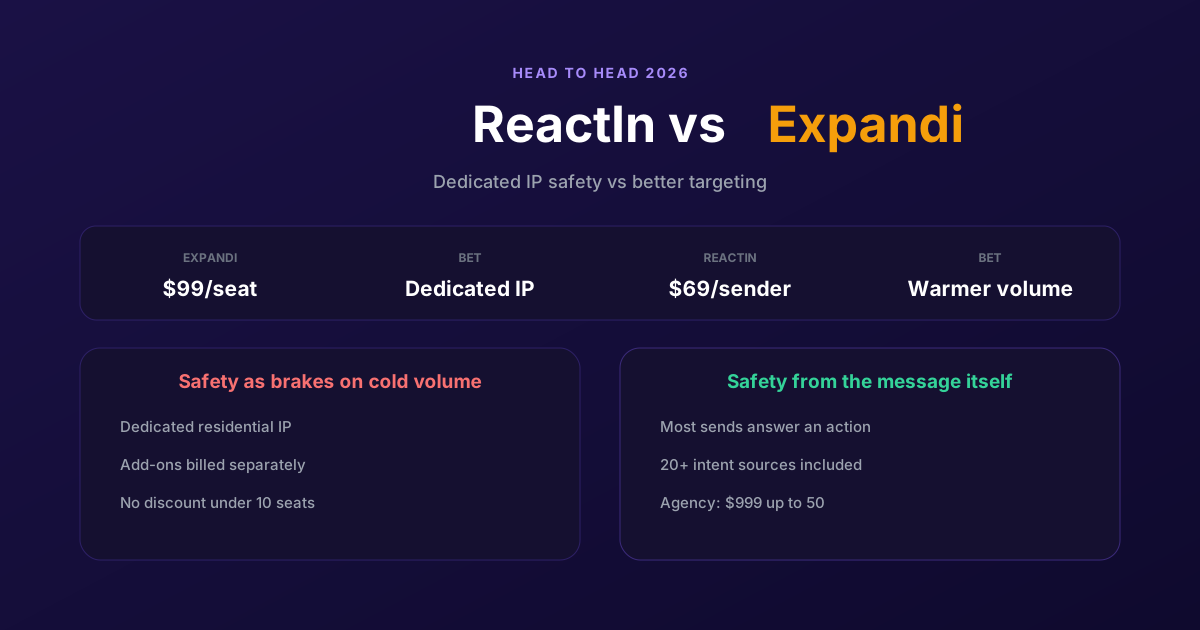
Expandi built its reputation on one promise: your LinkedIn account will not get restricted. Dedicated country-based IP, careful sending, warm-up built in. For anyone who has lost an account, that promise is worth paying for.
The question is what you give up to buy it. At $99 per seat with one seat per LinkedIn account and no discount below ten, the safety budget is large and it all goes into how you send rather than who you send to. ReactIn spends the same money on targeting and applies quota discipline too. Here is the comparison.
| Dimension | Expandi | ReactIn |
|---|---|---|
| Safety model | Dedicated country-based IP, warm-up, quota limits on cold volume | Quota limits plus messages that answer a real action |
| Price | $99 per seat monthly, $79 annually, one seat per LinkedIn account | $29 per sender (signals and enrichment, no outreach) or $69 (adds outreach), agency $999 up to 50 senders |
| Volume discount | None below the ten-seat agency threshold | Agency plan covers up to 50 senders for $999 |
| Where the list comes from | Import, Sales Navigator search, or Signals: profile and company page visitors (Premium or Sales Navigator), engagers on up to 3 posts | 20+ intent sources build and refill it automatically |
| Enrichment | Not included in the base seat | AI enrichment columns in the lead table, 2,000 credits included |
| Personalised images and GIFs | Needs a separate Hyperise or Sendspark subscription | Not offered, personalisation is text and behavioural context |
| Unified multi-account inbox | Global Inbox and shared campaigns in a Workspace, each LinkedIn account still a paid seat | One inbox across every account, sender rotation on Growth |
What Expandi does well
Expandi takes account safety more seriously than almost anyone in this category, and it shows in the architecture rather than the marketing. Each seat gets a dedicated country-based IP, sending is spread and warmed rather than fired in bursts, and the whole product is designed around not looking like a bot. If you have lost a LinkedIn account before, you understand exactly why people pay for this.
The smart sequences are also strong. Conditional branching on whether someone accepted, replied or viewed, with the logic actually behaving as drawn. Combined with webhooks and unlimited campaigns on the Business plan, an operator who knows what they want can build something quite precise.
And the one-seat-one-account model is honest about what LinkedIn automation is. You are not buying user licences, you are buying capacity per identity, which maps to how agencies actually think. For a team running one or two accounts they cannot afford to lose, Expandi is a defensible choice and this comparison is not trying to talk you out of it.
Where Expandi falls short
The safety model protects the delivery and not the message. Dedicated IPs, warm-up and quotas are all brakes applied to cold volume: they slow how fast you send strangers a generic opener, they do not change the fact that it is a generic opener to a stranger. That is real protection, and it is also the ceiling. The behaviour LinkedIn reads as most normal is a message answering something the person just did, and no IP buys you that.
The cost compounds in the wrong direction. At $99 per seat with no discount until ten seats, five LinkedIn accounts is $495 a month before anything else. Then enrichment is not included and Expandi's own Signals stop at profile visitors, company page visitors and post engagers, so a signal or enrichment subscription often sits next to it, and the personalised images and GIFs from the homepage videos need Hyperise or Sendspark on top. The seat price and the stack price are quite far apart.
And the list is still mostly your problem. Expandi's Signals add profile visitors, company page visitors and engagers on up to three posts, and the first two need LinkedIn Premium or Sales Navigator. Beyond that, Expandi sends beautifully to whoever you give it, which means the quality of every campaign is decided before Expandi is involved. Teams end up paying a premium for safe delivery of a list that was the actual weak point.
Why teams choose ReactIn
The teams that switch usually have not had an account restricted. They have had campaigns underperform, and they worked out that the safest message is also the one most likely to get a reply: one that answers something real.
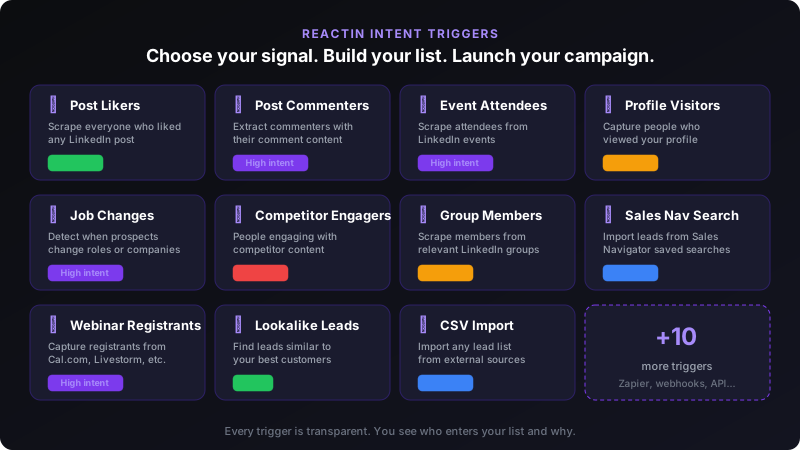
When most of what you send responds to an action, someone commenting on your post, attending your webinar, booking and not showing, the sending pattern looks like ordinary LinkedIn use because it largely is. ReactIn keeps the quota discipline, randomised timing and gradual ramp that Expandi has. It adds the part the IP cannot provide.
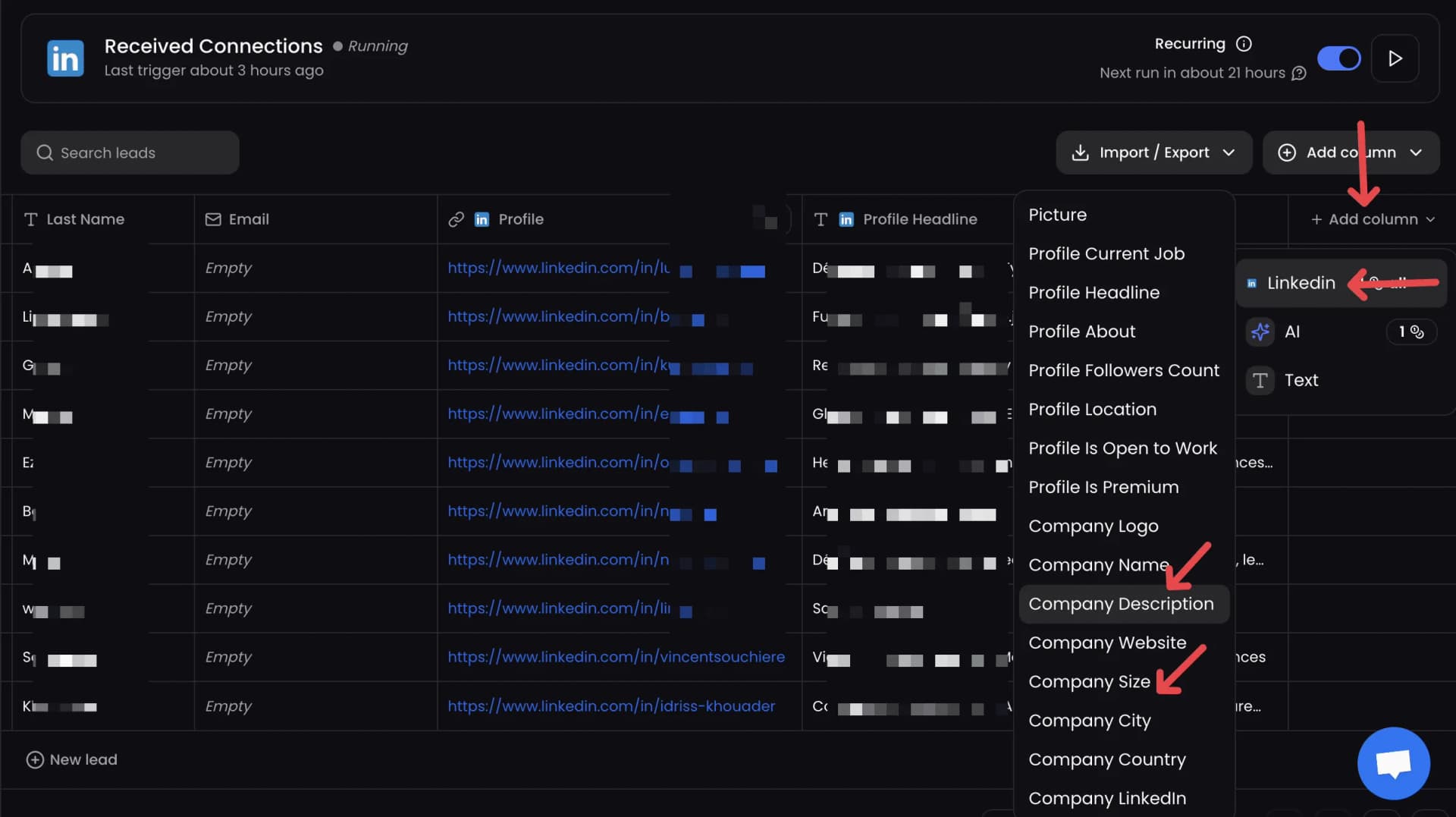
The economics differ most for agencies. Five senders on Growth is $345 against $495 for five Expandi seats, and the agency plan takes 50 senders for $999 where Expandi has no discount until ten. Enrichment credits are in the price rather than in a second subscription.
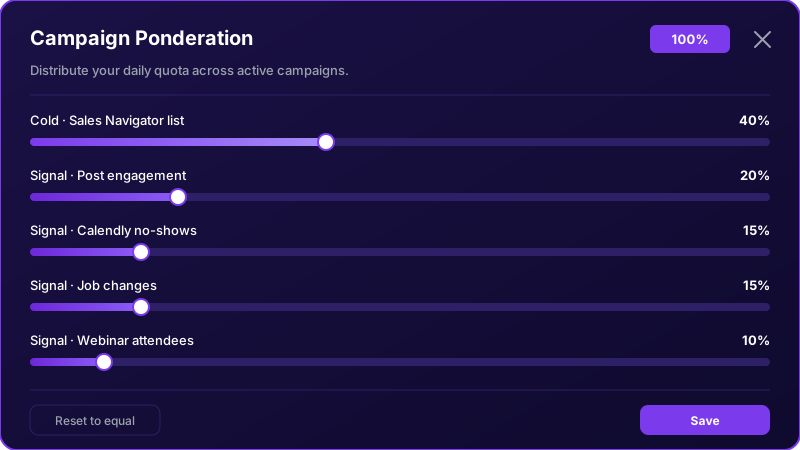
To be straight: no tool can promise your account is safe, ReactIn included. Volume is still your decision, and a new sender pushed hard will get restricted on either platform. If a dedicated IP is specifically what you need, Expandi offers it and ReactIn does not. The argument here is about where the marginal dollar does more work, not about who is invulnerable.
Whatever the tool, a new account needs a LinkedIn warm-up period before automation.
If you are weighing Expandi against more than one tool, our Expandi alternatives page compares five of them, pricing checked.