ReactIn vs La Growth Machine: Multichannel Identities or LinkedIn Intent?
La Growth Machine bills per identity and runs LinkedIn, email, calls and X from one sequence. ReactIn bills per sender and spends the budget on knowing who to contact. Compare cost per identity, channel depth and targeting.
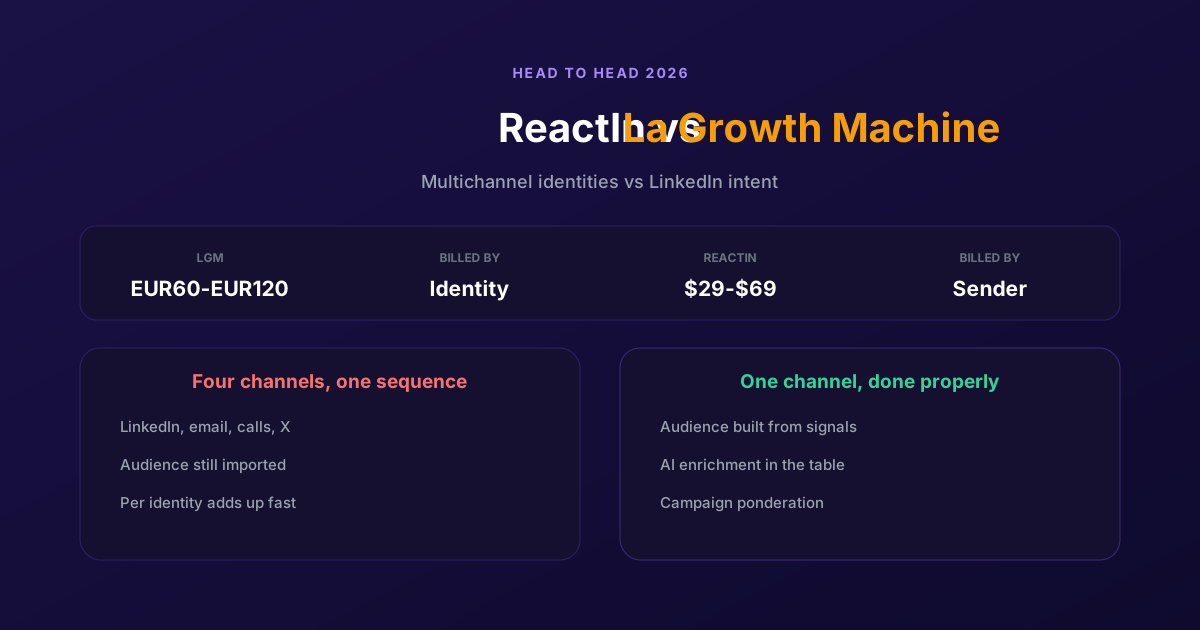
La Growth Machine sells breadth. One sequence reaches a prospect on LinkedIn, then email, then a call task, then X, all under a single identity with the reporting stitched together. When a multichannel motion is genuinely what you run, that is hard to beat.
ReactIn sells depth on one channel. It does not touch email or calls, and it puts the entire product surface into knowing who on LinkedIn is worth contacting this week. This comparison covers cost per identity against cost per sender, what each one automates, and how to tell which shortage you actually have.
| Dimension | La Growth Machine | ReactIn |
|---|---|---|
| Channels | LinkedIn and email on Basic, plus calls on Pro, plus X and CRM sync on Ultimate | LinkedIn only |
| Billing unit | Per identity: one outreach persona with its LinkedIn and email accounts | Per sender: one LinkedIn account |
| Price | EUR60 Basic, EUR120 Pro, EUR180 Ultimate per identity monthly (EUR50, EUR100, EUR150 yearly), custom from EUR150 | $29 per sender (signals and enrichment, no outreach) or $69 (adds outreach), agency $999 up to 50 senders |
| Minimum term | Six-month minimum on the custom plan | None |
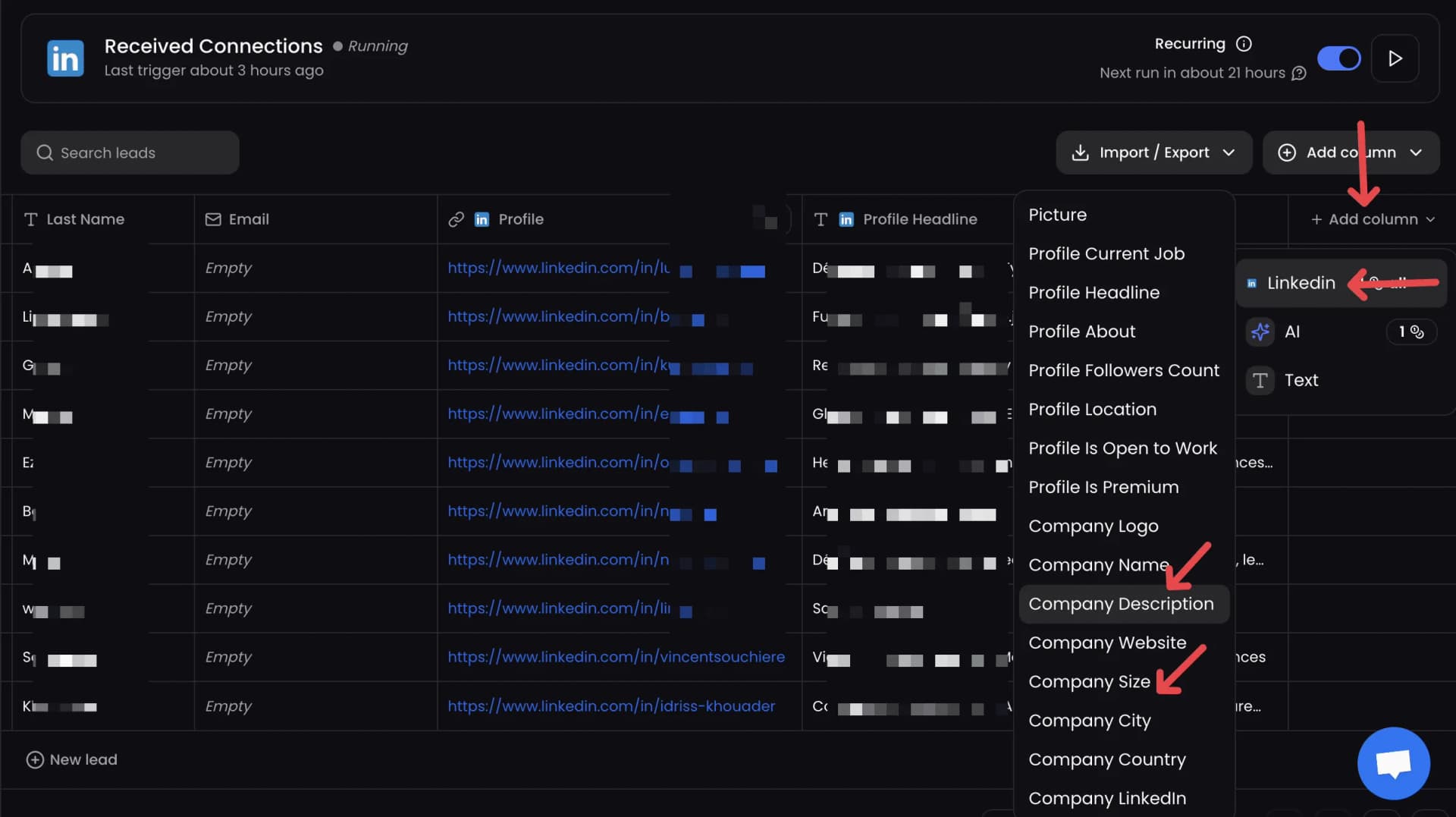
| Where the list comes from | You import it, or Signals import matching leads on Pro and above | 20+ intent sources build and refill it automatically |
| Intent signal detection | 12 signals on Pro and above: job changes, post engagement, profile and website visits, form submissions, CRM triggers | 20+ sources feeding SmartLists that refill on their own |
| Multi-account LinkedIn | Per identity, no cross-account sender rotation | Sender rotation and one inbox across every account on Growth |
What La Growth Machine does well
The multichannel sequencing is the best-executed part of the product and it deserves the reputation. A single flow moves a prospect between LinkedIn, email, calls and X with conditions at each step, and the reporting treats it as one campaign rather than four. Most tools that claim multichannel are really one channel with a second bolted on. This one is not.
The identity model is also a genuinely good idea. You buy a persona, with its LinkedIn account and its email inbox attached, rather than a user seat and a separate sending licence. For a sales team where each rep works under their own name across channels, that maps cleanly onto reality and keeps the reporting sane.
Enrichment across the audience is solid too: bring a partial list and LGM will fill in what it can before the sequence starts, so you are not exporting to a third tool and back. The 14-day trial covers every feature with no card, which is a fair way to evaluate something this broad.
Where La Growth Machine falls short
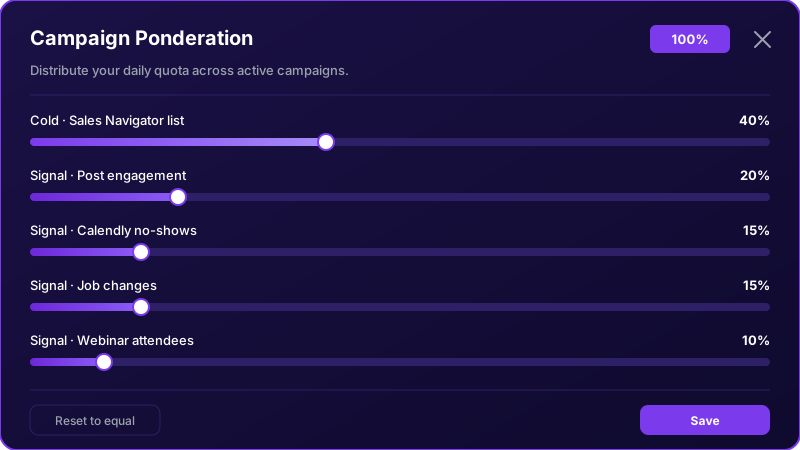
On Basic, the audience still comes from you. LGM enriches and sequences an imported list beautifully, and its Signals, 12 sources such as job changes, post engagement and profile visits, start on the Pro plan. There is no ponderation deciding who deserves the next slot. When reply rates slide, the multichannel builder offers more channels to send the same misdirected message on.
The bundle cuts both ways. An identity pairs LinkedIn with email, so if your motion is LinkedIn-only you are paying EUR60 to EUR180 a month for a package where half the value sits unused. And the price is per identity: five reps on Pro is EUR600 a month, which is where teams start asking whether every channel in the bundle is earning its share.
The agency case is where it strains hardest. There is no cross-account sender rotation, and every identity is billed on its own, so an agency running fifteen client accounts pays for fifteen identities. Add the six-month minimum on the custom plan and the flexibility that agencies actually need is not really there.
Why teams choose ReactIn
Teams move when they realise the extra channels were not the constraint. Adding a call step to a sequence aimed at the wrong hundred people does not produce meetings. ReactIn works on which hundred.
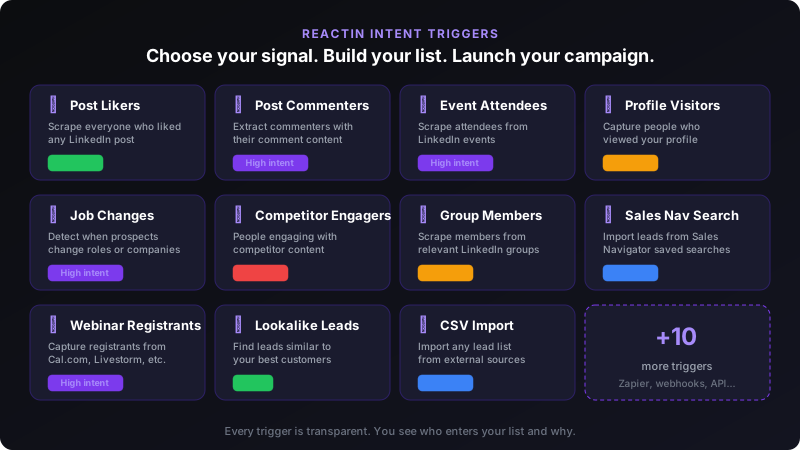
A SmartList subscribes to a source rather than importing a file, so the people who engaged with your post this week, followed a competitor or booked and did not show arrive on their own. The audience stops being a thing you rebuild every month and becomes something that maintains itself.
Pricing per sender rather than per identity matters if LinkedIn is your channel: you pay for the LinkedIn account and nothing else, from $29. There is no minimum term, and for agencies the $999 plan covers up to 50 senders with rotation and one inbox across all of them, on one flat price rather than a price per identity.
The honest limit is plain: ReactIn is one channel. No email sequences, no call tasks, no X. If your pipeline genuinely depends on reaching the same person across four channels, LGM does something ReactIn does not attempt, and swapping one for the other would cost you real coverage. Some teams run both, with LGM on multichannel accounts and ReactIn on LinkedIn-led ones.
If you are weighing La Growth Machine against more than one tool, our La Growth Machine alternatives page compares five of them, pricing checked.