ReactIn vs Lemlist: Email-First Multichannel or LinkedIn-Native Outreach?
Lemlist is a cold email platform that added LinkedIn. ReactIn is a LinkedIn platform that starts from intent signals. Compare channel depth, targeting, pricing per seat and which one your pipeline actually needs.
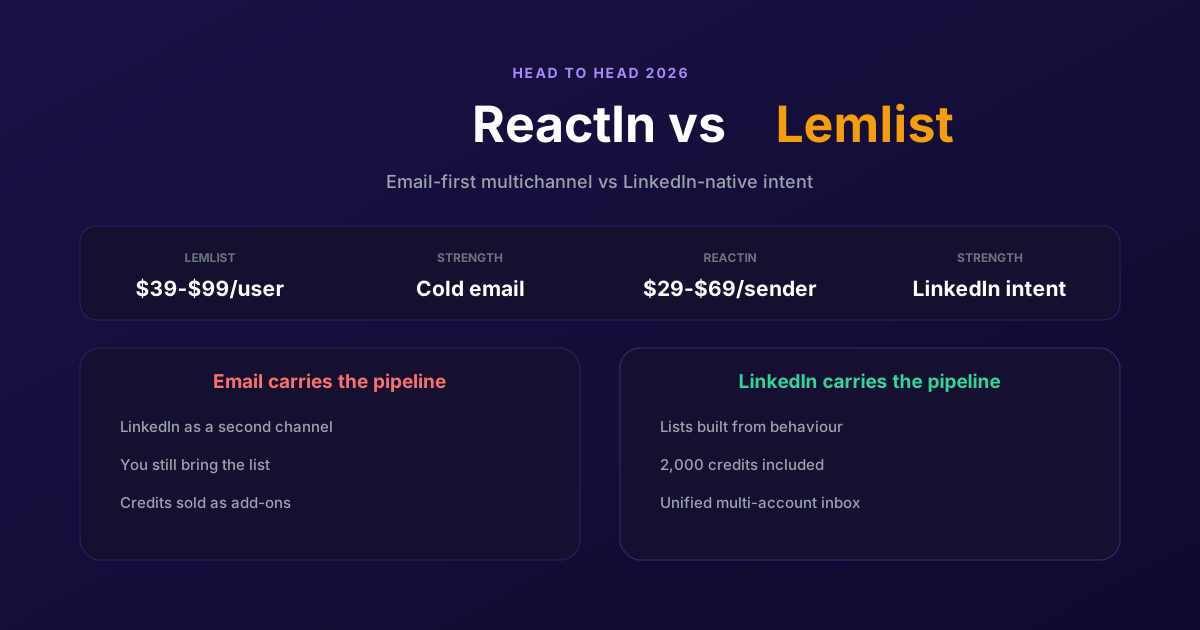
Lemlist and ReactIn both promise multichannel outreach, and both deliver it. The difference is which channel each was built around, and that shows up everywhere once you look past the feature list.
Lemlist is a cold email platform that added LinkedIn, calls and WhatsApp on top. ReactIn is a LinkedIn platform that starts from intent signals. If email carries half your pipeline, that ordering favours Lemlist. If LinkedIn is where your buyers actually answer, it does not. Here is the comparison, priced and scoped.
| Dimension | Lemlist | ReactIn |
|---|---|---|
| Built around | Cold email, with LinkedIn, calls and WhatsApp added as channels | LinkedIn, starting from intent signals |
| Where the list comes from | You import it, pull it from the built-in database, or add the paid intent signals add-on | 20+ intent sources build and refill it automatically |
| Price | Email $69/month ($55 yearly, no LinkedIn), Multichannel $109 per user ($87 yearly) | $29 per sender (signals and enrichment, no outreach) or $69 (adds outreach), agency $999 up to 50 senders |
| Enrichment credits | Included per tier, more sold as add-on packs | 2,000 included on both plans |
| Email sequencing | Deep: warm-up, deliverability tooling, inbox rotation, A/B testing | Not offered, LinkedIn only |
| Multi-account LinkedIn | Per seat, no cross-account sender rotation | Sender rotation and one inbox across every account on Growth |
| Best fit | Teams where email drives the pipeline and LinkedIn supports it | Teams where LinkedIn drives the pipeline and targeting is the bottleneck |
What Lemlist does well
Lemlist is a serious cold email product, and the email tooling is the reason to buy it. Warm-up, deliverability monitoring, inbox rotation across sending domains, sequence testing: this is a mature stack built by people who understand that an email campaign lives or dies in the inbox placement, not the copy. Nothing on the LinkedIn-first side of this market comes close on that axis.
The multichannel sequencing is genuinely one flow rather than two tools glued together. A prospect can get an email, then a LinkedIn visit, then a connection request, then a call task, with conditions between each step, and the whole thing reports as one campaign. If your motion really is multichannel, that single view is worth a lot.
The pricing also scales down sensibly. The Email plan at $69 a month, $55 billed yearly, covers unlimited users, and the enrichment credits are only spent when an address is actually found, so you are not paying for misses. The 14-day trial needs no card.
Where Lemlist falls short
The first gap is targeting. Lemlist assumes you arrive with a list, or buy one from its database. That is a demographic list: title, industry, headcount. It tells you who someone is. Knowing whether they are in the market this week takes the separate intent signals add-on. When reply rates slide, the sequence builder cannot fix it, because the problem is upstream of the sequence.
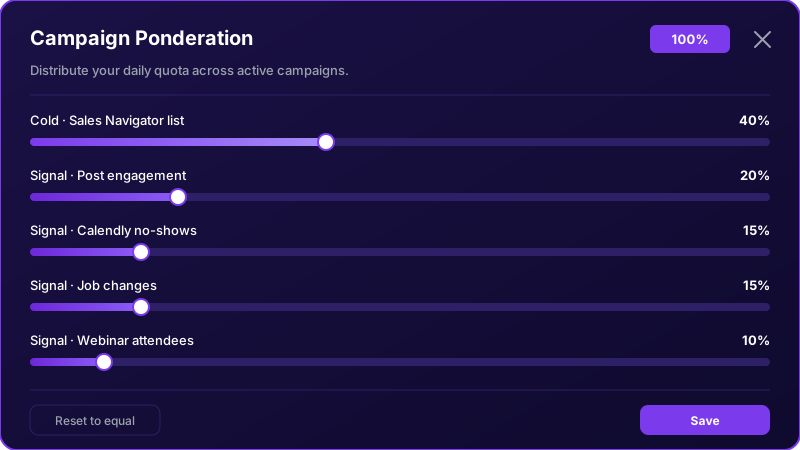
The second is that LinkedIn is a channel, not a discipline. Intent signals are a paid add-on, $29 a month for 100 signals, and there is no campaign ponderation deciding who deserves the next slot, and no cross-account sender rotation. For a team running one identity that is fine. For an agency running fifteen LinkedIn accounts it is a structural limit rather than a missing feature.
The third is how the price behaves. Per user, plus credit packs when volume grows, plus the higher tier to unlock the channels you wanted in the first place. Multichannel at $109 per user per month, $87 billed yearly, is the plan you need as soon as LinkedIn is involved, because the Email plan does not include it. Compare the plan you will end up on, not the one on the left of the pricing page.
Why teams choose ReactIn
Teams move when they notice their LinkedIn replies are coming from a specific kind of person: someone who just engaged with something. ReactIn makes that the input rather than the accident.
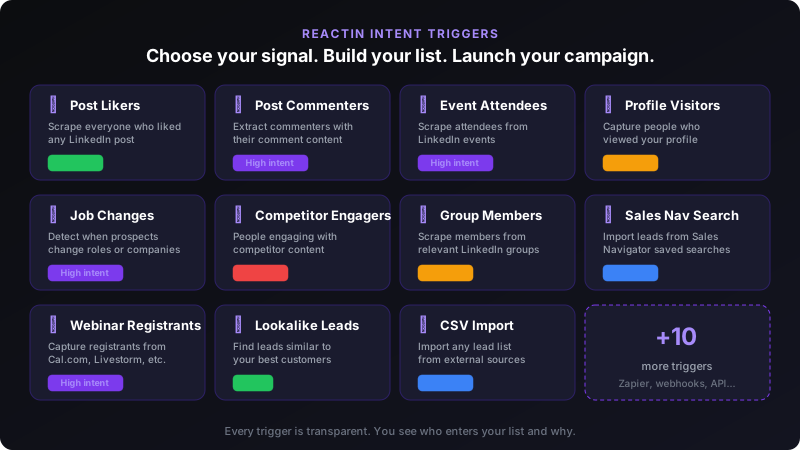
A SmartList subscribes to a source instead of importing a file. The people who commented on your post this week, followed a competitor, or attended your webinar arrive on their own, already carrying a profile. The list stops ageing, which is the failure mode every imported list eventually hits.
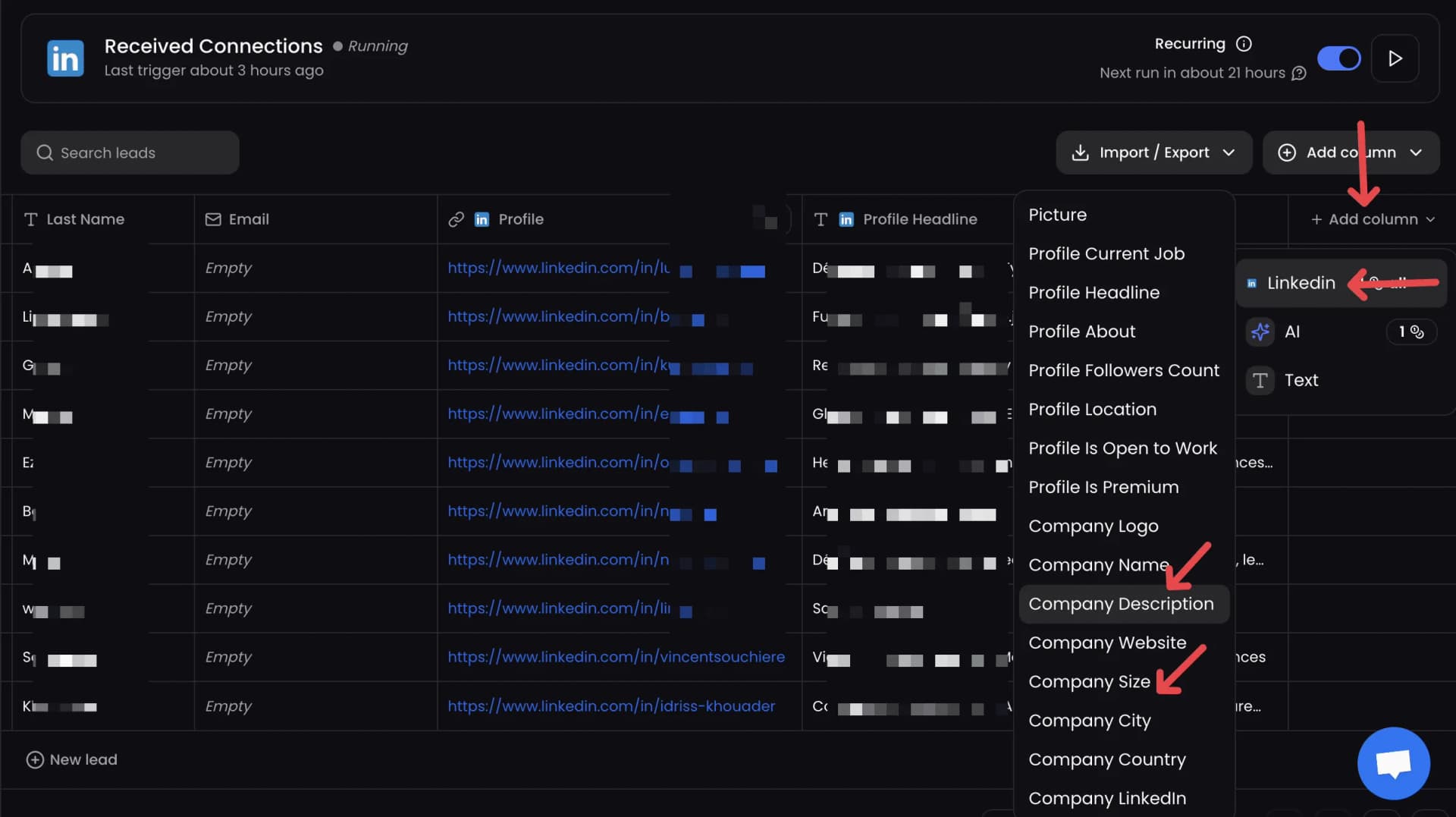
Enrichment and ICP scoring happen in the same table as the leads, so there is no export between deciding someone fits and writing to them. And because it is priced per sender rather than per user, an agency adding a client's LinkedIn account is not also buying another seat licence.
The honest limit: ReactIn does not do email. No warm-up, no deliverability tooling, no cold email sequences. If half your pipeline comes from email, ReactIn does not replace Lemlist and you should not try to make it. Plenty of teams run both, with Lemlist owning email and ReactIn owning LinkedIn, and that is a perfectly sane stack.