The 5 Best Gojiberry Alternatives in 2026 (Priced and Compared)
Gojiberry's AI agent finds high-intent leads and contacts them for you. Here are the 5 best alternatives for teams that want to own the targeting, add senders or lower the cost per seat, with pricing checked in September 2026.
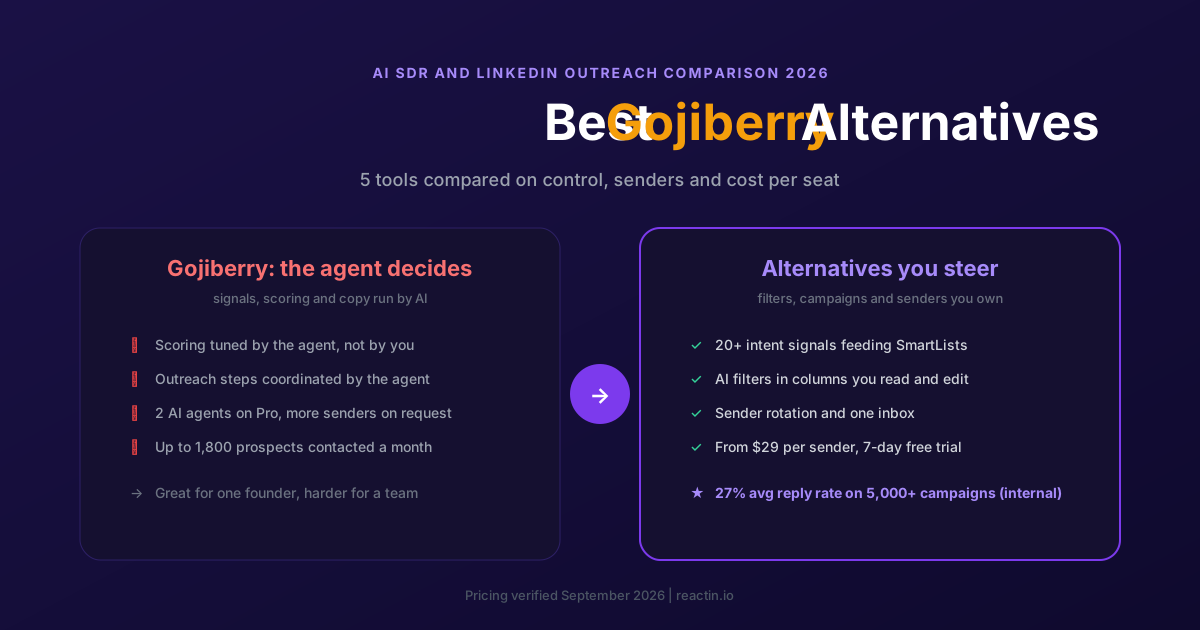
Gojiberry got you your first warm replies without building a single sequence. Then you wanted to set the targeting rules yourself. Or you hired a third rep. Or you priced the plan for a whole team. That is usually when people start searching for Gojiberry alternatives. Here are the five worth your time in 2026, with every price checked on the vendor's own site in September 2026.
Gojiberry deserves a fair hearing first. It is a Y Combinator backed AI agent that watches 15+ buying and social signals, scores prospects against your ideal customer and contacts them on LinkedIn and email. For a founder who wants outbound to run on its own, that is the right design. It is also why some teams outgrow it. The agent owns the logic, and a growing team usually wants that logic back.
Why teams look for a Gojiberry alternative
Gojiberry sells an outcome, not a workspace. You enter your website. The agent works out what you sell and who you sell to. It finds leads showing intent, scores them and writes to them. You can run it fully automatic, or approve each message before it goes out. Replies land in a unified inbox with an answer already drafted.
That model is fast to start. The friction shows up later, and it usually comes from one of four places.
- Control over targeting. You describe your ICP, and the agent turns it into scoring that it adjusts on its own every week. You can approve messages, but the scoring is the agent's job. Teams that want to write the exact filter, and read why each lead passed, want a different model.
- Senders. Pro is built for founders and operators running their own outbound, with 2 AI agents. More senders across channels sit on the Custom plan, aimed at teams of 5+ and agencies, with pricing on request.
- Campaign structure. Gojiberry's pitch is no sequences to build. Teams that want to build them anyway, one campaign per signal, their own steps, their own weights, look for a builder instead of an agent.
- Cost per seat. Pro is $99 a month for 2 AI agents and up to 1,800 prospects contacted a month. That is good value for one founder. It gets harder to read once you price five reps, or an agency book of clients.
For the feature-by-feature breakdown of the two products, read the full ReactIn vs Gojiberry comparison.
The 5 best Gojiberry alternatives in 2026
Five tools, five answers to the same two questions: who should we contact, and who decides? We lead with our own product and say so. The four others are independent picks we rate. You may see Trigify on older lists. On 23 September 2026, its team announced it is joining HubSpot, and access to the standalone platform ends on 22 October 2026 for most customers. So we left it out.
1. ReactIn: intent signals with filters you control
At a glance: LinkedIn automation triggered by intent signals. Basic $29 per sender per month (no outreach), Growth $69 per sender per month with outreach, agency plan $999 per month for up to 50 senders. 7-day free trial, no credit card.
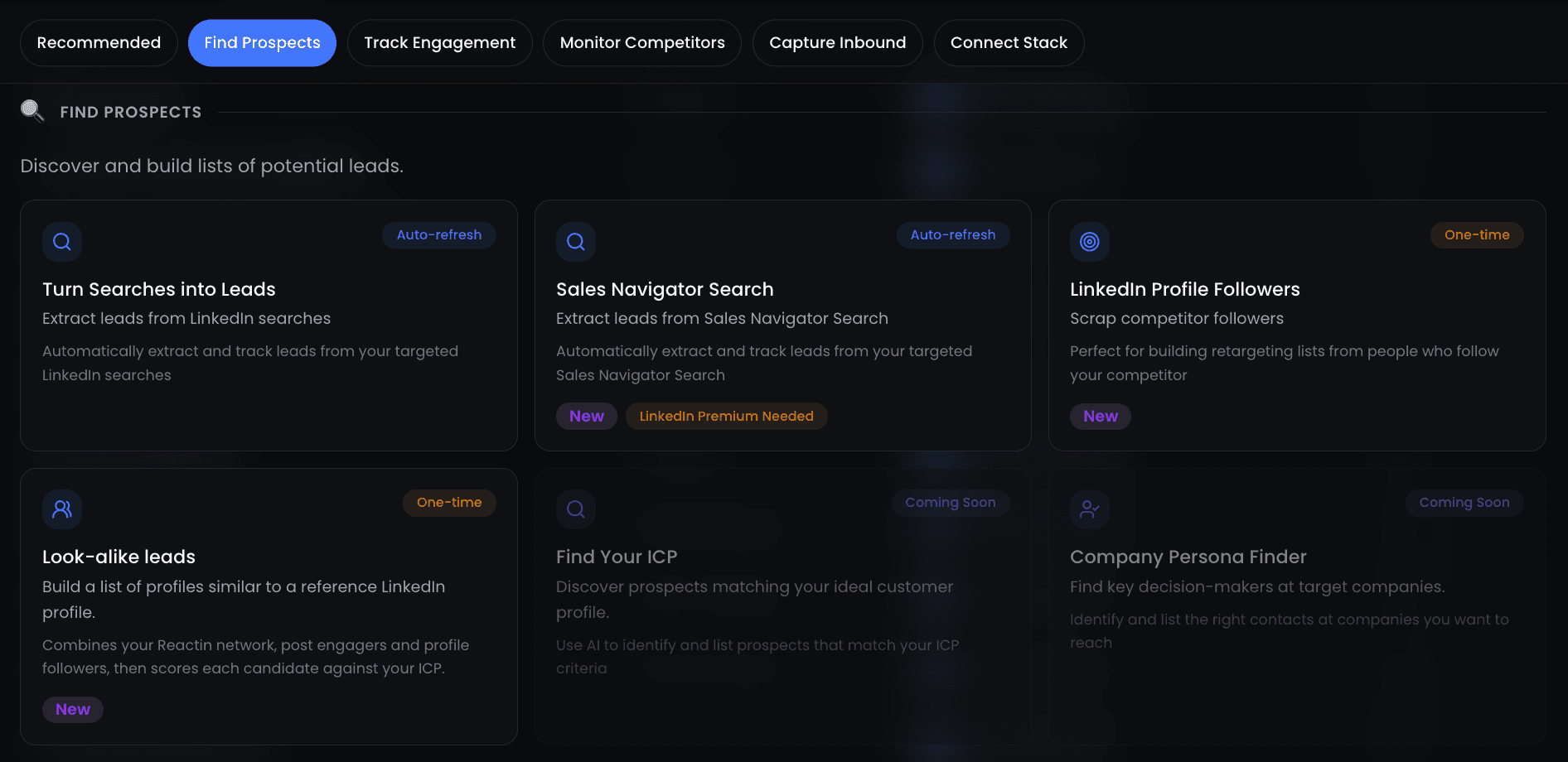
ReactIn starts from the same idea as Gojiberry: contact people when they show intent, not because they sit in a list. It watches 20+ signals. Spyer catches people who like or comment on a competitor's posts. Echo catches your own post engagers, Pixel your profile visitors, Scout your Sales Navigator searches. Gather, Tribe, Shift and Orbit cover event attendees, group members, job changes and company page followers. You can also import a CSV or push leads through the API.
The difference is where the control sits. Every lead is enriched with emails, phone numbers and company data. AI columns then check it against your ICP, with rules you write and can edit. You build the multi-step LinkedIn campaigns yourself: invitations, messages, follow-ups. Sender rotation, daily limits per sender and campaign weighting spread the volume. One inbox collects replies from every sender. Across 5,000+ campaigns, ReactIn's internal benchmark shows a 27% average reply rate.
Pros
- AI filters live in visible columns: you read the verdict on each lead and edit the rule behind it.
- A real multi-sender setup: rotation, daily limits per sender, campaign weighting and one inbox.
- Per-sender pricing you can compute, and a $999 agency plan for up to 50 senders.
Cons
- LinkedIn only for sending. No email sequences and no calls, where Gojiberry also sends email.
- More hands-on than an agent: you build the campaigns. The product interface is in English only.
Best for: B2B teams and agencies that want intent-based LinkedIn outreach with targeting rules, campaigns and senders they own.

2. Valley: the closest AI SDR alternative
At a glance: AI SDR for LinkedIn and email. $199 per month month to month, or $149 per month billed quarterly, for one seat and one LinkedIn account. 7-day free trial.
Valley is the like-for-like swap. It also finds warm leads from signals: profile viewers, company page visitors, followers, post engagers and competitor engagers. It scores them against your ICP and drops the misfits. Then it researches each lead across 200+ sources and writes in your voice. You approve messages or let it run on autopilot. Connection requests and InMails go out inside LinkedIn, and email is covered too. Valley cut its entry price in July 2026, from $395 to $199 a month.
Pros
- Research-heavy personalization is the core of the product, not an add-on.
- The same agent comfort as Gojiberry, with manual approval when you want it.
Cons
- Costs more than Gojiberry Pro: $199 a month, or $149 billed quarterly, for one LinkedIn account.
- Setups with 5 to 50 LinkedIn accounts sit on a Scale plan with a 5-seat minimum and pricing on request.
Best for: Founders and sales teams who like the agent model but want sharper, research-based messages.
3. Clay: build your own signal and AI stack
At a glance: Data and AI workspace, no LinkedIn sending of its own. Free plan, Launch from $185 per month, Growth from $495 per month. 14-day trial.
Clay is the opposite of an agent. You build tables that pull data from many providers, run AI research on each row and track job changes and other signals. Every rule is yours, and every column is visible. That is the most control on this list. The trade-off is effort, and a second tool. Clay's built-in sequencer is for email, so LinkedIn outreach needs a sending tool next to it.
Pros
- Full control: every filter, prompt and data source is yours to write and inspect.
- Waterfall enrichment across many providers, well beyond LinkedIn data.
Cons
- No LinkedIn sending: you pay for a second tool to actually reach people.
- A steep learning curve, and data credits and actions need watching.
Best for: GTM engineers and ops teams who left AI agents because they want to build every rule themselves.
4. HeyReach: when senders are the bottleneck
At a glance: Multi-sender LinkedIn sending. Growth $79 per sender per month, Agency $999 per month for 25 senders (50 on quarterly or yearly billing), Unlimited $2,999 per month.
HeyReach does one thing very well. It pools many LinkedIn accounts into one campaign and rotates sends so no profile hits its limit. A unified inbox, workspaces, an API, webhooks and an MCP server come on every plan. What it does not do is decide who to contact. There is no native intent layer: you bring the list, or plug in a signal tool. For a Gojiberry user, that is a step back on targeting and a big step up on sending.
Pros
- Best-in-class sender rotation across dozens of LinkedIn accounts.
- Agency tooling: workspaces on every plan, whitelabel from the Agency plan.
Cons
- No intent signals: your targeting is only as fresh as your last import.
- Thin enrichment: 100 one-time credits per sender on Growth.
Best for: Agencies and teams whose real limit is sending capacity across many LinkedIn accounts.
5. La Growth Machine: LinkedIn and email in one sequence
At a glance: Multichannel outreach on LinkedIn, email, calls and X, depending on plan. From 60 euros per identity per month on monthly billing (50 on annual), Pro at 120 euros. 14-day free trial.
Gojiberry sends on LinkedIn and email. If your replies come from both, La Growth Machine is the natural landing spot. It runs LinkedIn, email and calls in one sequence, with waterfall email enrichment and AI writing help. The Pro plan imports LinkedIn intent data, such as post likers, commenters and event attendees. It also adds a unified LinkedIn and email inbox. You design the sequences yourself, which is the point if control is why you are leaving.
Pros
- True multichannel: LinkedIn, email and calls in one workflow.
- LinkedIn intent data import and a multichannel inbox on Pro.
Cons
- Per-identity pricing adds up, and intent data needs Pro at 120 euros a month.
- If you only use LinkedIn, you pay for an email bundle you do not use.
Best for: Teams that want LinkedIn and email weighted evenly, with sequences they design.
Gojiberry vs ReactIn vs Valley, side by side
Prices checked on each vendor's site on 24 September 2026. We put Gojiberry next to ReactIn and Valley because all three share the same premise: start from intent, not from a cold list. Check current plans before you buy.
| Criterion | ReactIn | Gojiberry | Valley |
|---|---|---|---|
| Starting price | $29 per sender per month (no outreach), $69 with outreach | $99 per month (Pro: 2 AI agents, up to 1,800 prospects contacted a month) | $199 per month, or $149 billed quarterly (1 LinkedIn account) |
| Intent signals | 20+ signals: competitor and own post engagers, profile visitors, Sales Navigator, events, groups, job changes, page followers | 15+ buying and social signals, plus lookalikes of your best customers | Profile viewers, page visitors, followers, post engagers, competitor engagers |
| Enrichment | Emails, phones, company data, AI columns you edit, 2,000 credits included | Email waterfall across 15+ data providers, automatic lead scoring | Research across 200+ sources per lead, ICP scoring that drops misfits |
| Multi-account sending | Sender rotation, daily limits per sender, campaign weighting, one inbox; $999 for up to 50 senders | 2 AI agents on Pro; more senders on the Custom plan, on request | 1 LinkedIn account per seat; 5 to 50 accounts on the Scale plan, on request |
| Channels | LinkedIn only | LinkedIn and email | LinkedIn and email |
| Best for | Teams that want to own filters, campaigns and senders | Founders who want an agent to run outbound for them | Teams that want an agent with research-heavy messages |
How to choose your Gojiberry alternative
Start from the reason you are leaving. Each reason points to a different tool.
You want to own the targeting rules
Pick ReactIn. Signals fill your lists, AI columns filter them against rules you write, and you build the campaigns. If you have a GTM engineer and want even more control, Clay plus a sending tool is the build-it-yourself route.
You need more senders than Pro includes
Price it per sender. ReactIn Growth is $69 per sender with rotation and one inbox. From 15 senders, the $999 agency plan costs less than 15 Growth seats. HeyReach fits if you already have good lists and only need sending capacity.
You like the agent, not the messages
Pick Valley. It keeps the hands-off model and puts its effort into research and writing. Budget $199 a month per LinkedIn account, or $149 billed quarterly.
Email matters as much as LinkedIn
Pick La Growth Machine, or stay on Gojiberry. ReactIn does not send email. If your best replies come from email follow-ups, a LinkedIn-only tool will not replace them.
Intent was the right bet. The question now is who holds the controls.
Frequently Asked Questions
Sources & Further Reading
- Gojiberry lists its Pro and Custom plans in the pricing section of the Gojiberry homepage.
- Valley details seats, LinkedIn accounts and its July 2026 price change on the Valley pricing page.
- Clay documents its plans, data credits and actions on the Clay pricing page.
- Confirm sender counts per plan on the HeyReach pricing page before you buy.
- Per-identity prices by billing period are listed on the La Growth Machine pricing page.
- The end of the standalone Trigify platform is announced in Trigify's notice about joining HubSpot, dated 23 September 2026.
Related Articles
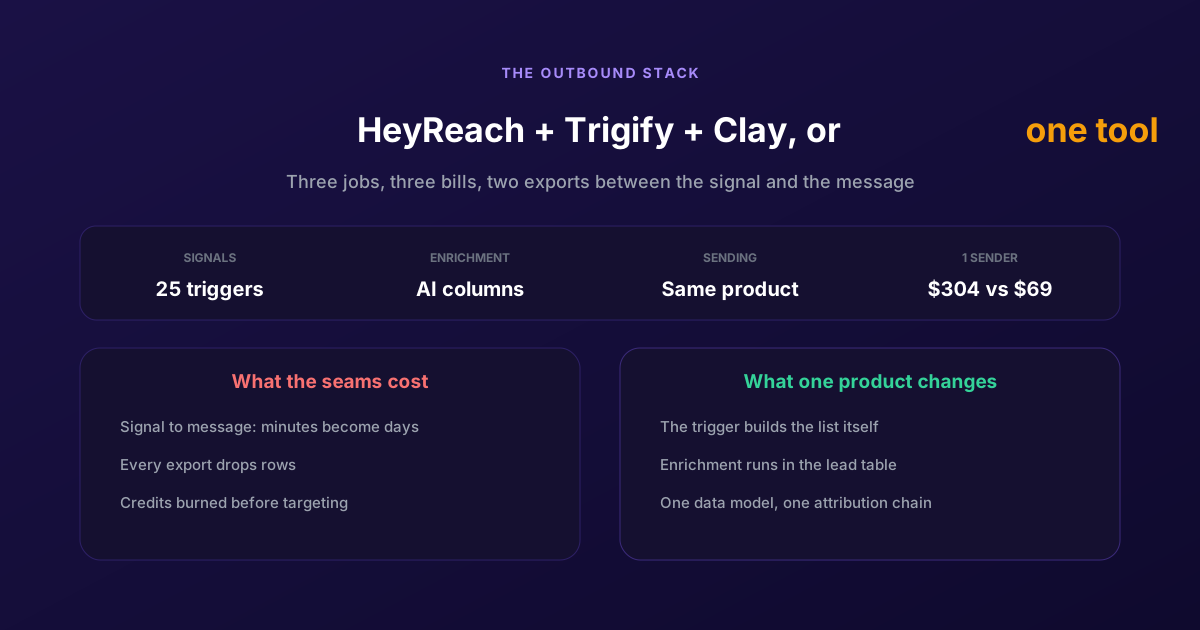
ReactIn = HeyReach + Trigify + Clay: One Tool for Cold and Warm Outreach
Three products, three bills, and two exports between the signal and the message. Here is what each tool owns, what the seams cost in latency and credits, and when keeping the stack is still the right call.
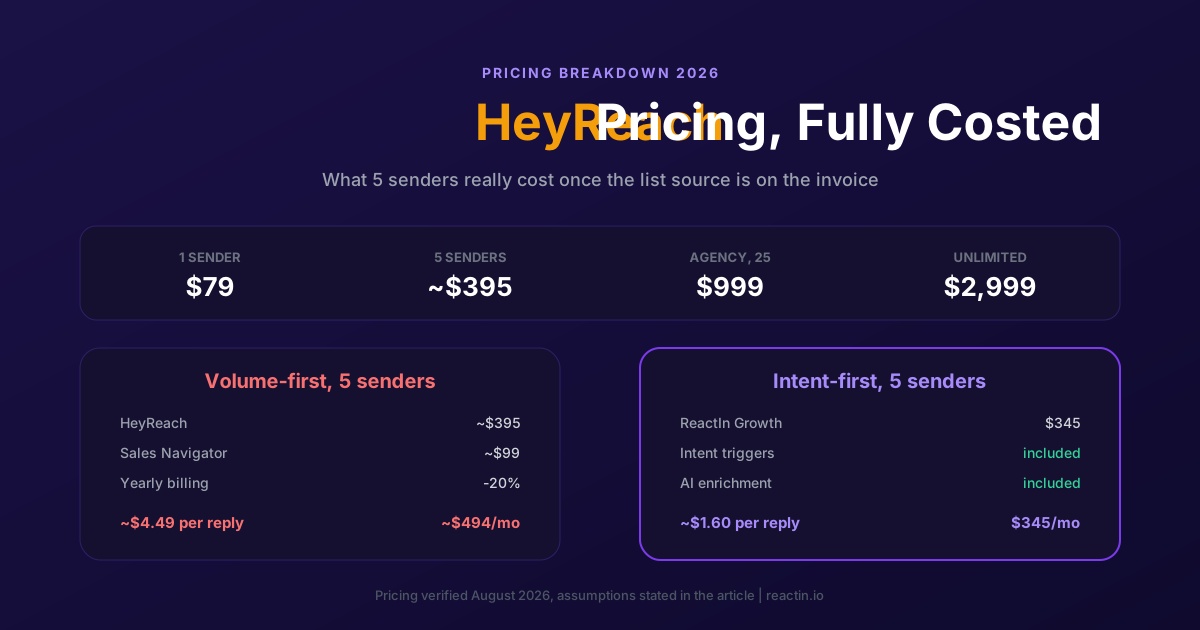
HeyReach Pricing in 2026: Real Cost per Sender and 5 Cheaper Alternatives
HeyReach Growth starts at $79 per sender, Agency is $999 for 25 senders and Unlimited is $2,999. Here is every plan, what the price includes and leaves out, and how to compare cost per reply instead of cost per seat.
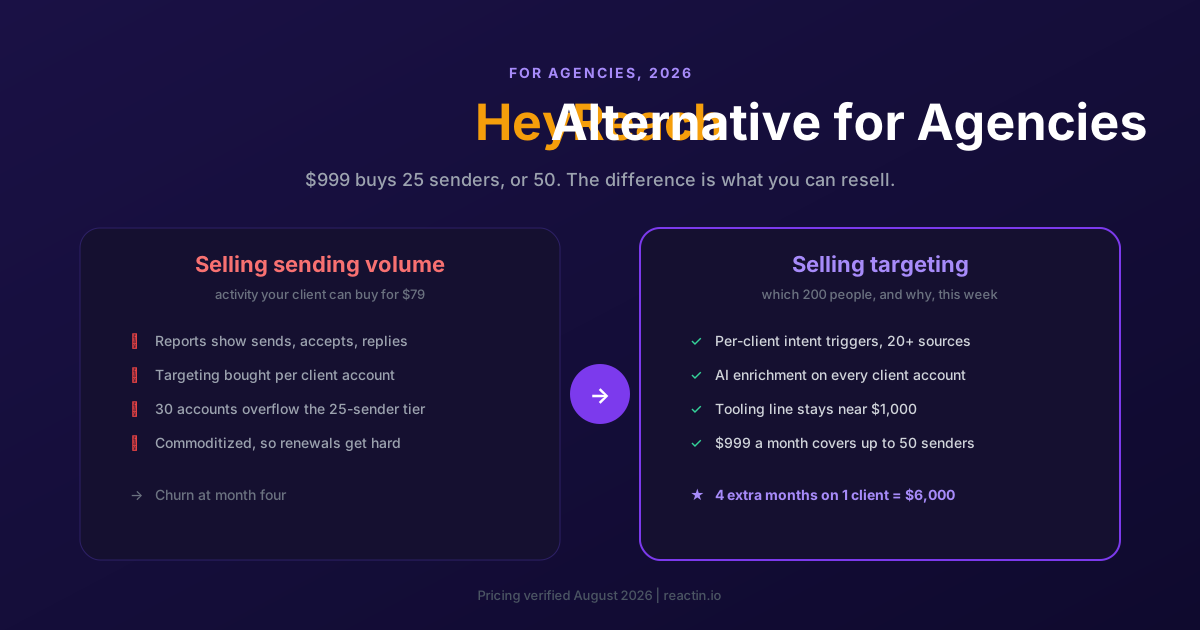
The Best HeyReach Alternative for Agencies in 2026 (5 Options Compared)
Agencies rarely leave HeyReach because the sending broke. They leave because volume services get commoditized. Here are 5 options compared on margin per client and months retained.
ReactIn Alternatives & Comparisons 2026: Find the Right LinkedIn Tool
Compare ReactIn with every major LinkedIn automation tool in 2026. Head-to-head comparisons with BeReach, Gojiberry, Phantombuster, Waalaxy, and more. Find the right tool for your use case.