HeyReach Pricing in 2026: Real Cost per Sender and 5 Cheaper Alternatives
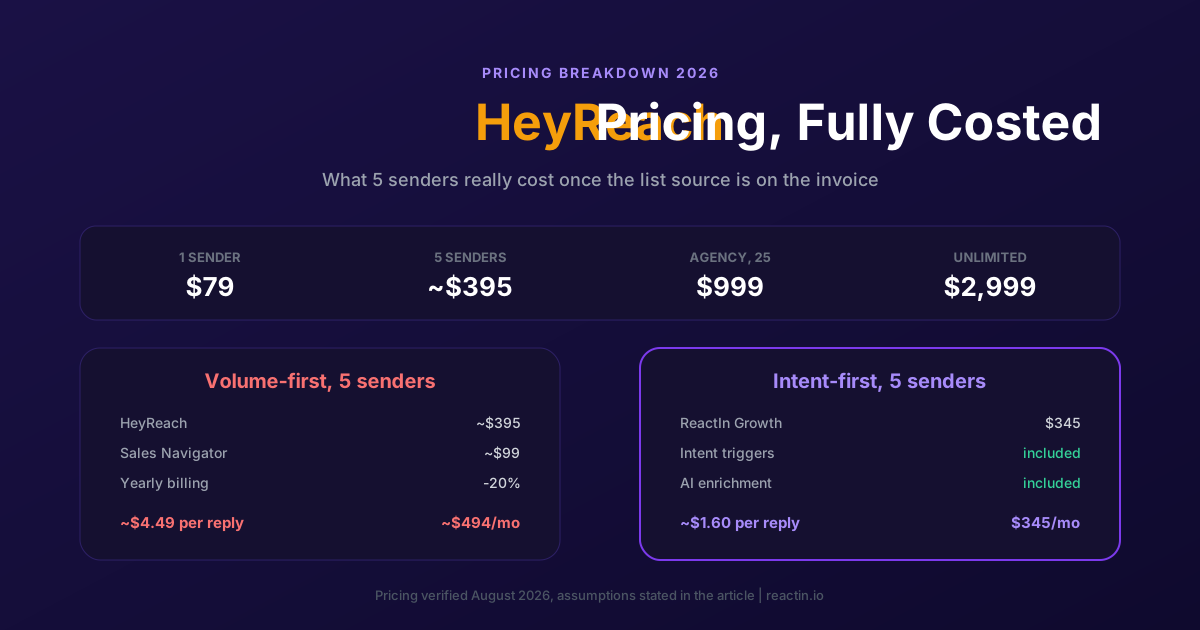
HeyReach Growth starts at $79 per sender, Agency is $999 for 25 senders and Unlimited is $2,999. Here is every plan, what the price includes and leaves out, and how to compare cost per reply instead of cost per seat.
You opened the invoice, saw the sender count multiplied by the per-sender rate, and did the math on what each of those accounts actually produced last month. This is the honest breakdown of HeyReach pricing in 2026, what the price does not cover, and the alternatives that cost less per reply rather than just less per seat.
HeyReach publishes its prices, which is more than many competitors do, and the plans include more than the reputation suggests: unified inbox, multichannel outreach, workspaces, API and webhooks, an MCP server and enrichment credits on every tier. What the price does not cover is the part that decides whether a message gets a reply: knowing who to contact and why. Here is the full arithmetic, verified in August 2026.

HeyReach pricing in 2026, plan by plan
HeyReach charges per connected LinkedIn account, not per user, which is the right model for agencies and the wrong one for teams with idle accounts. Seats are unlimited on every plan. Growth uses a sender selector, then two flat tiers take over at the agency end.
| Plan | Senders | Monthly price | Effective cost per sender |
|---|---|---|---|
| Growth | 1 | 79 dollars | 79 dollars |
| Growth | 5 | around 395 dollars | around 79 dollars |
| Agency | 25 | 999 dollars | around 40 dollars |
| Unlimited | uncapped | 2,999 dollars | depends on usage |
| Done for you | custom | on request | managed service, not software only |
Three things move the real number. Quarterly billing takes off 10 percent and yearly 20 percent, a genuine saving if your volume is stable. The Growth to Agency crossover sits around 13 senders: at 79 dollars each, 13 accounts already cost more than the 999 dollar Agency tier, so check where you land before adding the next sender. And the effective rate only improves if the senders work. An agency paying 999 dollars for 25 slots while running 12 accounts is paying 83 dollars per active sender, not 40.
What the HeyReach price does and does not include
Give HeyReach credit first: the 79 dollar entry plan already carries a unified inbox, multichannel outreach, integrations, API and webhooks, workspaces and permissions, an MCP server and 100 enrichment credits per sender. That is a lot for the price. What it does not carry is the answer to who deserves the message, and that job still has to happen somewhere.
- List sourcing. HeyReach runs on imported lists, so most teams keep a Sales Navigator seat at around 99 dollars per month.
- Intent signals. No monitoring of post engagement, job changes, webinar signups or payment events, so a signal layer is either another subscription or manual work.
- AI enrichment columns. The bundled credits find contact data, but nothing in the lead table scores ICP fit or writes a contextual hook. That layer commonly starts at 149 dollars per month.
- Headroom on credits. 100 per sender on Growth, 1,000 on Agency, 3,000 on Unlimited. Past that you buy more.
Put together, a five-sender team commonly runs HeyReach at around 395 dollars and Sales Navigator at 99 dollars, so close to 500 dollars a month before any AI layer, and the line item people quote is 395. When you compare tools, compare the whole stack or the comparison is fiction.
For the full field of options and what each one replaces, read our guide to the best HeyReach alternatives in 2026.
The number that actually matters: cost per reply
Cost per seat is the wrong metric. You do not buy senders, you buy conversations. Here are two five-sender setups with the assumptions written out, so you can rerun them with your own numbers.
Setup A, volume-first: HeyReach at around 395 dollars plus a Sales Navigator seat at 99 dollars, so about 494 dollars a month. Five senders at 20 messages a day over 22 working days is 2,200 sends. At a 5 percent reply rate on a cold imported list, that is 110 replies, or about 4.49 dollars per reply.
Setup B, intent-first: ReactIn Growth at 69 dollars per sender is 345 dollars a month, with signals, AI enrichment and 2,000 enrichment credits included, so there is no second subscription. Intent-sourced lists are smaller by design, so call it 800 sends over the same month. Across 5,000+ ReactIn campaigns the average reply rate is 27 percent, which gives 216 replies, or about 1.60 dollars per reply.
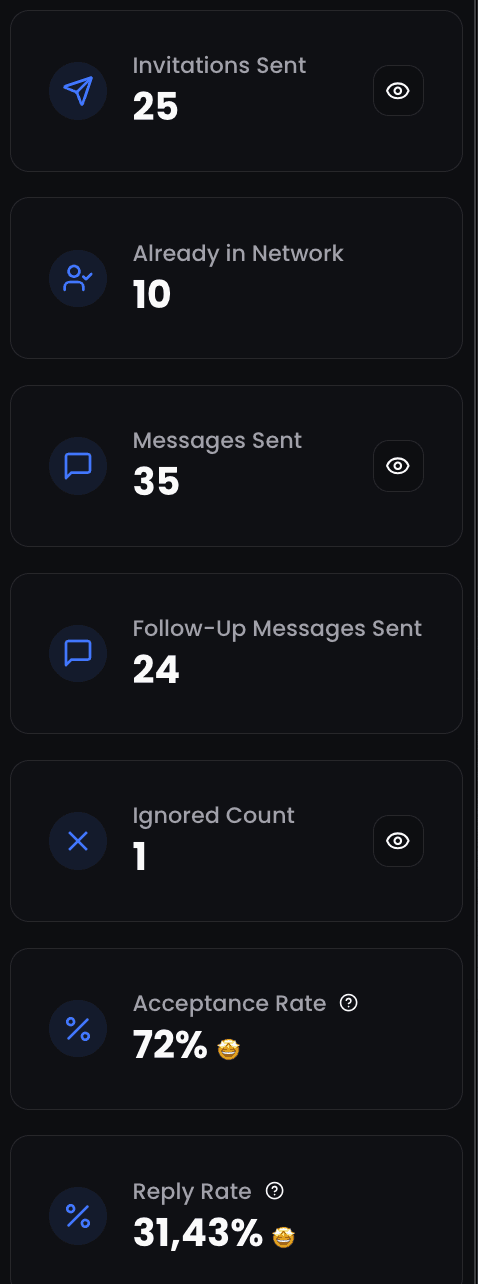
Setup B sends a third of the volume and gets roughly twice the replies for about 30 percent less spend. The assumptions matter and yours will differ, which is exactly the point: run the calculation on cost per reply before you renew anything. If your reply rate is healthy on imported lists, volume pricing is fine. If it is under 5 percent, more senders will not fix it and every extra seat makes the cost per reply worse.
If you are a B2B SaaS team weighing the whole stack rather than one line item, read our guide to the best LinkedIn outreach tool for B2B SaaS.
5 cheaper HeyReach alternatives in 2026
Cheaper means cheaper for the same job. Every price below was verified in August 2026, and the last column shows what each tool covers so you can see what still needs buying.
| Tool | Entry price | 5 senders per month | Replaces in your stack |
|---|---|---|---|
| HeyReach | 79 dollars per sender | around 395 dollars | Sending, inbox, multichannel, capped credits |
| ReactIn | 29 dollars per sender | 145 to 345 dollars | Signals, enrichment, sending, inbox |
| Dripify | 59 dollars per user | around 295 dollars | Sending only |
| Waalaxy | 19 euros per user | around 95 euros | Sending only, Chrome extension |
| La Growth Machine | 60 euros per identity | around 300 euros | Sending, email, enrichment |
| Skylead | 100 dollars per seat | around 100 dollars per operator | Sending, email, email finder |
Three of these deserve a note. Waalaxy is the cheapest line on the table and runs as a Chrome extension, so campaigns pause when the browser is closed or an update breaks it. Skylead charges per seat rather than per sender, so one operator running five accounts pays once, the cheapest column on the table if that describes you. And HeyReach is not the outlier on features it is sometimes painted as: at five senders the gap versus Dripify is about 100 dollars for a much deeper platform.
If you run client accounts, the arithmetic changes at the 50-sender tier. See the HeyReach alternatives for agencies.
How to cut the bill without cutting pipeline
Most outbound budgets have 30 percent of waste in them that has nothing to do with which vendor you picked. Work through these in order.
Audit sender utilization
List every connected account and the replies it produced last month. Accounts sitting under 20 percent of their daily capacity are pure cost. Cut them before you shop for a new tool.
Check the Growth to Agency crossover before adding a seat
At 79 dollars per sender, 13 accounts already cost more than the 999 dollar Agency tier that covers 25. If you are near that line, the next sender is effectively free once you switch. Annual billing then takes off a further 20 percent, which is real money on stable volume and an expensive lock-in while you are still testing the channel.
Count the stack, not the tool
Add Sales Navigator, enrichment, credits and any email platform to the sending subscription. A platform that includes signals and enrichment can be more expensive per sender and still cheaper per month.
Rebuild lists around intent before adding senders
If the reply rate is the problem, another sender multiplies the problem. Fix the list first: trigger on post engagement, webinar signups, job changes or product events, then scale the volume once replies hold.
For the wider field of tools and how they compare, see our ReactIn alternatives and comparisons guide.
Cheaper outbound is rarely a cheaper tool. It is usually fewer idle senders and a list that deserved the messages.
Frequently Asked Questions
Sources & Further Reading
- Confirm the current plans and terms on the HeyReach pricing page before you buy.
- Read what buyers say about the value for money on the HeyReach G2 reviews page.
- Sales Navigator is the list source most of these setups assume. Check its current plans on the LinkedIn Sales Navigator pricing page.
Related Articles
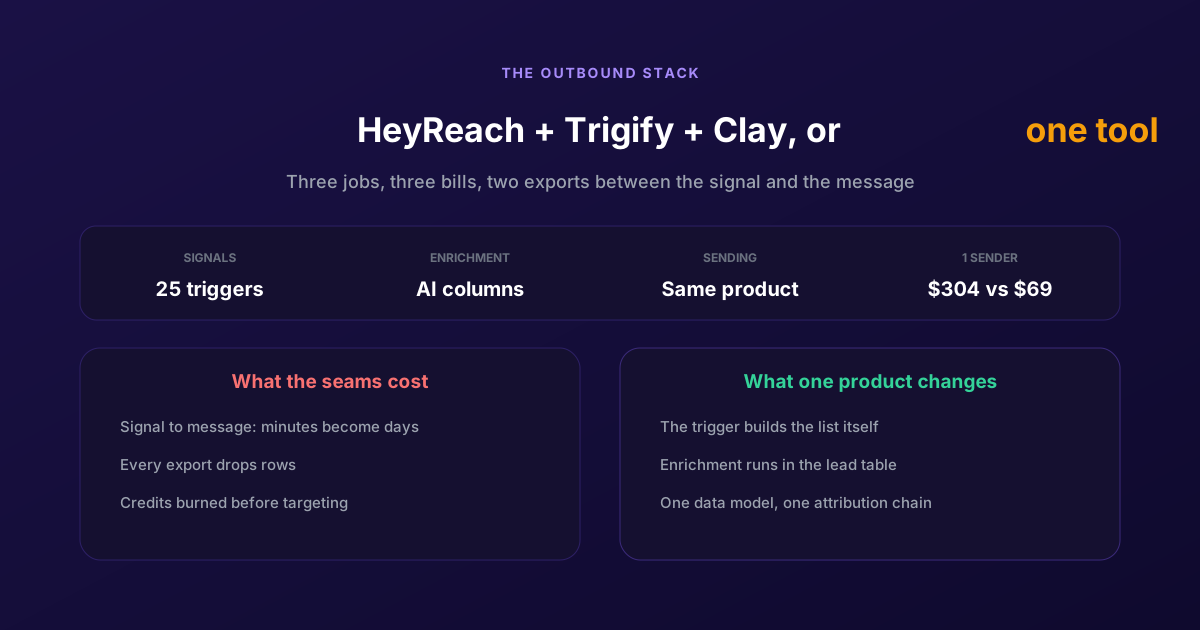
ReactIn = HeyReach + Trigify + Clay: One Tool for Cold and Warm Outreach
Three products, three bills, and two exports between the signal and the message. Here is what each tool owns, what the seams cost in latency and credits, and when keeping the stack is still the right call.
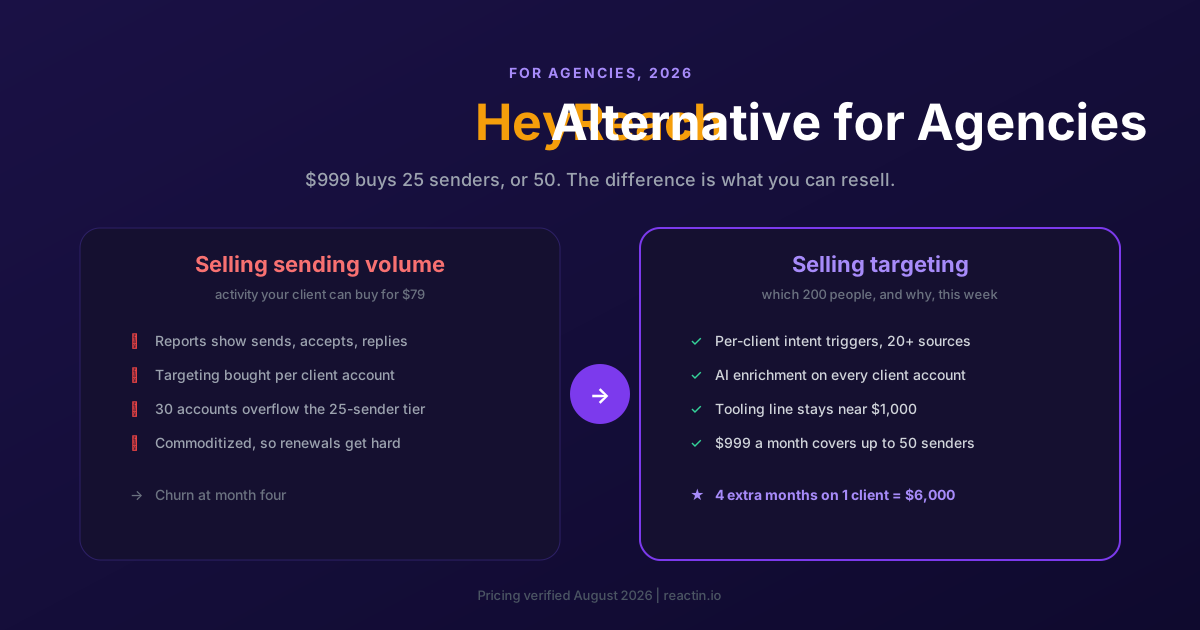
The Best HeyReach Alternative for Agencies in 2026 (5 Options Compared)
Agencies rarely leave HeyReach because the sending broke. They leave because volume services get commoditized. Here are 5 options compared on margin per client and months retained.
ReactIn Alternatives & Comparisons 2026: Find the Right LinkedIn Tool
Compare ReactIn with every major LinkedIn automation tool in 2026. Head-to-head comparisons with BeReach, Gojiberry, Phantombuster, Waalaxy, and more. Find the right tool for your use case.
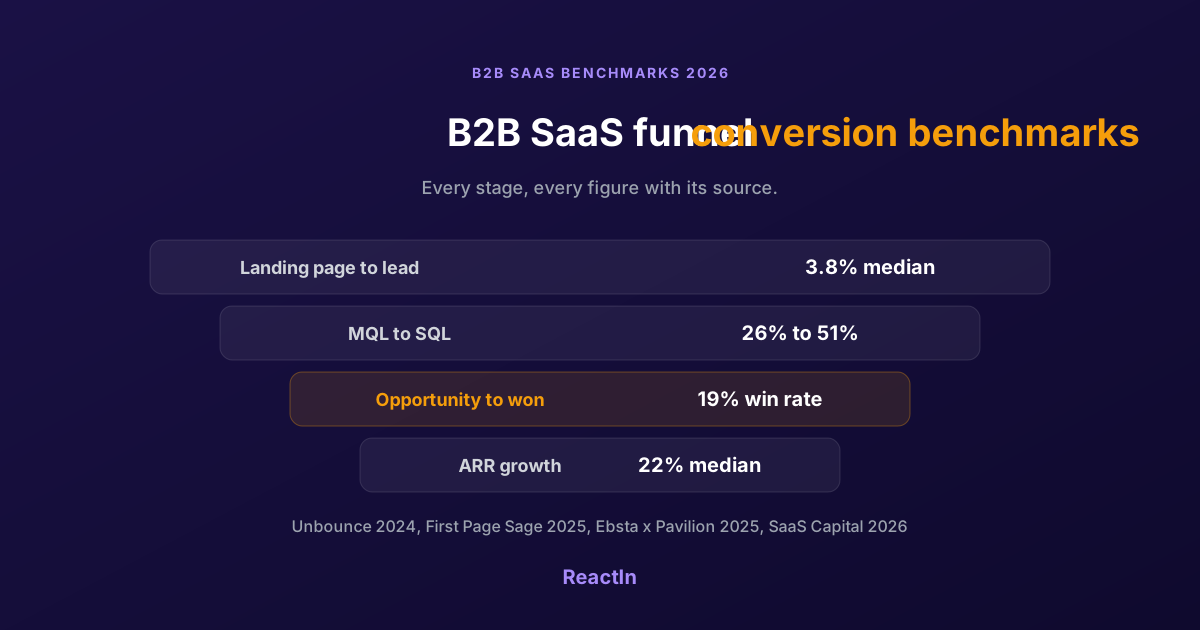
B2B SaaS Funnel Conversion Benchmarks 2026: Every Stage, With Sources
Sourced conversion benchmarks for each stage of the B2B SaaS funnel, from landing page to closed-won, plus growth and retention medians, and why the numbers you find online disagree.