LinkedIn Outreach Playbook 2026: From Warmup to Closed Deals
The complete LinkedIn outreach playbook for 2026. Account warmup, connection request strategies, DM copywriting rules, multi-touch sequences, and optimization tactics. Based on data from 5,000+ campaigns.
Cold email reply rates have been falling every quarter since 2024. Meanwhile, LinkedIn outreach is producing the highest engagement rates in B2B prospecting. The reason is simple: LinkedIn messages land in a trusted inbox attached to a real profile, not a spam folder.
This is the definitive LinkedIn outreach playbook for 2026. It covers every stage - from warming up your account to writing DMs that get replies to building multi-touch sequences that convert. Every strategy is backed by data from 5,000+ ReactIn campaigns.
higher engagement rates on LinkedIn outreach vs. cold email
ReactIn internal data, 5,000+ campaigns, 2025-2026
The teams booking the most meetings on LinkedIn in 2026 are not sending more messages. They are sending better messages to warmer prospects at the right time. This guide shows you exactly how to do that, step by step.
Why LinkedIn Outreach Beats Cold Email in 2026
Cold email is not dead, but its effectiveness has dropped dramatically. Average cold email reply rates sit at 1-3% in 2026. LinkedIn outreach, done right, consistently delivers 18-25% reply rates on warm prospects. The gap has never been wider.
The fundamental difference is trust. When you receive a LinkedIn message, you can see the sender's job title, company, mutual connections, content history, and endorsements. An email from a stranger offers none of that context. LinkedIn gives your prospect every reason to trust you before they read a single word.
LinkedIn connection request acceptance rate vs. 15-25% cold email open rate
ReactIn campaign data, 2025-2026
The 4 Structural Advantages of LinkedIn Outreach
LinkedIn outreach has four built-in advantages that no email tool can replicate:
- Profile-as-proof - your prospect sees your photo, headline, experience, and mutual connections before opening your message. You are pre-vetted.
- Engagement signals - you can see who liked your posts, viewed your profile, or commented on relevant content. You know who is warm before you reach out.
- Single inbox - LinkedIn messages do not compete with 50 other sales emails. The inbox is smaller and more personal.
- Multi-touch native - connection request, profile view, post engagement, DM, and follow-up all happen on one platform. No need to stitch together tools.
LinkedIn vs. Cold Email: The Numbers
Here is what the data shows across 5,000+ campaigns:
average LinkedIn DM reply rate for warm outreach (vs. 1-3% cold email)
- Connection request acceptance rate: 40-65% (vs. 15-25% email open rate)
- DM reply rate on warm prospects: 18-25% (vs. 1-3% cold email reply rate)
- Meeting booking rate from LinkedIn outreach: 3-8% of total prospects (vs. 0.5-1.5% from cold email)
Before reaching out, make sure you're targeting the right people. Our LinkedIn Prospecting Guide shows you how to build signal-based audiences.
Account Warmup: The Foundation Nobody Talks About
Before you send a single outreach message, your LinkedIn account needs to be ready. Skipping warmup is the number one reason accounts get restricted - and the most common mistake in LinkedIn outreach.
Account warmup is the process of gradually increasing your LinkedIn activity over 2-4 weeks so that LinkedIn's algorithm recognizes your behavior as normal, not automated. Think of it like warming up a new email domain, but for your personal profile.
recommended warmup period before scaling outreach activity
ReactIn account safety data
The 4-Step Warmup Protocol
Follow this exact sequence to prepare your account for outreach at scale:
Week 1: Profile & Passive Activity
Optimize your profile headline and summary for your target audience. Start browsing LinkedIn for 15-20 minutes daily. Like 10-15 posts in your niche. Accept all pending connection requests. Do not send any outreach yet.
Week 2: Light Engagement
Send 5-10 connection requests per day to people you genuinely know or share mutual connections with. Leave 3-5 thoughtful comments on posts in your niche. Share or repost one piece of content. Continue daily browsing.
Week 3: Moderate Outreach
Increase connection requests to 15-20 per day. Start sending 5-10 personalized DMs to new connections. Engage with your new connections' content. Post your own content once or twice this week.
Week 4: Scale to Target Volume
Ramp up to your target daily volume based on your account type (free: 15-20/day, Premium: 25-30/day, Sales Navigator: 50-60/day). Launch your first outreach campaign. Monitor acceptance rates and SSI score daily for the first week.
For a detailed walkthrough of each warmup stage with exact daily action counts, read our complete guide: How to Warm Up Your LinkedIn Account for Outreach.
Connection Requests: The Science Behind Acceptance Rates
The connection request is the gateway to every LinkedIn outreach conversation. Get it wrong and nothing else matters - your DM sequence never starts. Get it right and you are already halfway to a reply.
With Note vs. Without Note: What the Data Says
This is the most debated question in LinkedIn outreach. We analyzed acceptance rates across thousands of campaigns and the answer is nuanced:
acceptance rate for blank connection requests (no note)
- Blank requests: 55-68% acceptance rate - LinkedIn shows your profile photo, headline, and mutual connections. That is often enough.
- Requests with a good note: 38-45% acceptance rate - a relevant, non-salesy note can build context but also triggers more scrutiny.
- Requests with a bad note (salesy or generic): 12-22% acceptance rate - a pitch in the connection note is the fastest way to get ignored.
LinkedIn limits connection notes to 200 characters (down from 300). Learn how to write within this constraint: LinkedIn Connection Request Character Limit in 2026.
When to Use a Note (and When to Skip It)
The decision to include a note should be strategic, not default. Our data shows clear patterns for when each approach wins:
acceptance rate range for connection requests with a note (varies by quality)
“Hey - saw your talk at SaaStr on PLG metrics. The CAC payback framework was spot on. Would love to connect.”
- Send blank when: your profile is strong, you share mutual connections, or you are targeting high-volume with a follow-up DM strategy
- Send with a note when: you have a genuine shared context (event, content, mutual connection), you are targeting senior executives who scrutinize requests, or your profile alone does not explain why you are connecting
- Never send a note that: pitches your product, asks for a meeting, or uses generic flattery like "impressive profile"
We break down this decision with full campaign data in: LinkedIn Connection Request: With or Without a Note?
DM Copywriting That Actually Converts
Your connection request got accepted. Now comes the moment that separates average outreach from high-performing campaigns: the first DM. Most people blow it with a pitch. The best operators start with a question.
reply rate on campaigns using proven copywriting rules (vs. 8-12% average)
ReactIn campaign data, top-performing campaigns
The 5 Non-Negotiable Rules
These five rules are distilled from the 9 copywriting rules we teach across all our campaigns. Master these and your reply rates will double:
1. Never open with "Hello {{firstname}}"
Your prospect's brain recognizes automation in 0.3 seconds. "Hello Jean," triggers the same pattern as spam email. Start with a casual greeting or jump straight into a question. Write like you are texting a colleague, not drafting a formal letter.
2. One message = one goal
Each message should do exactly one thing: ask a question, share a resource, or propose a next step. Never combine all three. A 2-line question gets a 23% reply rate. A 10-line pitch gets 7%. Shorter is almost always better.
3. Agitate the pain before pitching
Nobody cares about your product until they feel the problem. Your first message should surface a specific challenge your prospect faces. Only after they confirm the pain should you mention your solution. Problem-first messaging gets 3x more replies than product-first messaging.
4. Write like WhatsApp, not corporate email
Short sentences. No "Dear". No "I hope this finds you well". No paragraphs longer than 2 lines. LinkedIn DMs are mobile-first - 68% of LinkedIn messages are read on phones. If your message looks like a wall of text on a phone screen, it will not get read.
5. Make replying easier than ignoring
End every message with a question that can be answered in 1-5 words. Yes/no questions, multiple choice, or scale questions ("on a scale of 1-10, how painful is X?") remove friction. The easier it is to reply, the more replies you get.
3 High-Performing DM Templates
These templates are pulled from real campaigns with 30%+ reply rates. Adapt them to your niche:
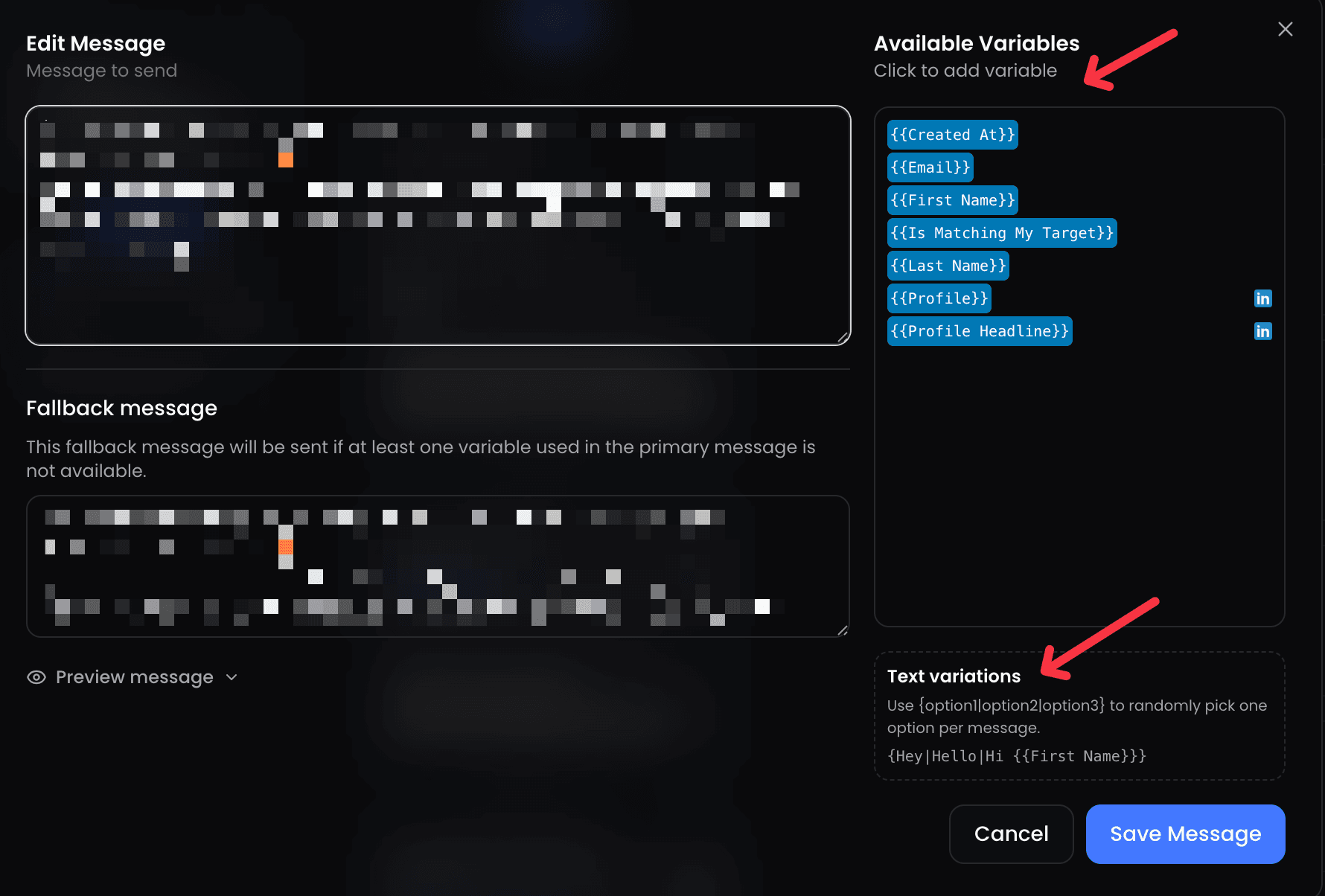
Template 1: The Curiosity Question
“Hey 👋 Quick question - how are you currently handling [specific challenge] at [company]? Asking because we just helped [similar company] cut that process from 3 weeks to 4 days. Curious if it is the same bottleneck for you.”
Template 2: The Value-First Share
“Hey - just published a breakdown of how [specific result] companies are [achieving outcome] in 2026. Not gated, no email required. Thought it might be useful given [relevant context]. [link]”
Template 3: The Soft Breakup
“Hey [name] - circled back a couple of times, totally understand if the timing is off. If [specific challenge] ever becomes a priority, happy to share what is working for [similar companies]. Either way, enjoy the connection 👋”
For the complete set of 9 rules with before/after examples and campaign data, read: 9 LinkedIn DM Copywriting Rules That Get 32-57% Reply Rates.
Multi-Touch Sequences: The Full Outreach Workflow
A single LinkedIn message is not outreach. Outreach is a sequence - a carefully timed series of touchpoints designed to build familiarity, provide value, and earn a conversation.
The best-performing sequences we see across ReactIn campaigns use 4-6 touchpoints over 14-21 days. Fewer than 3 touchpoints leaves money on the table. More than 7 starts to feel like harassment.
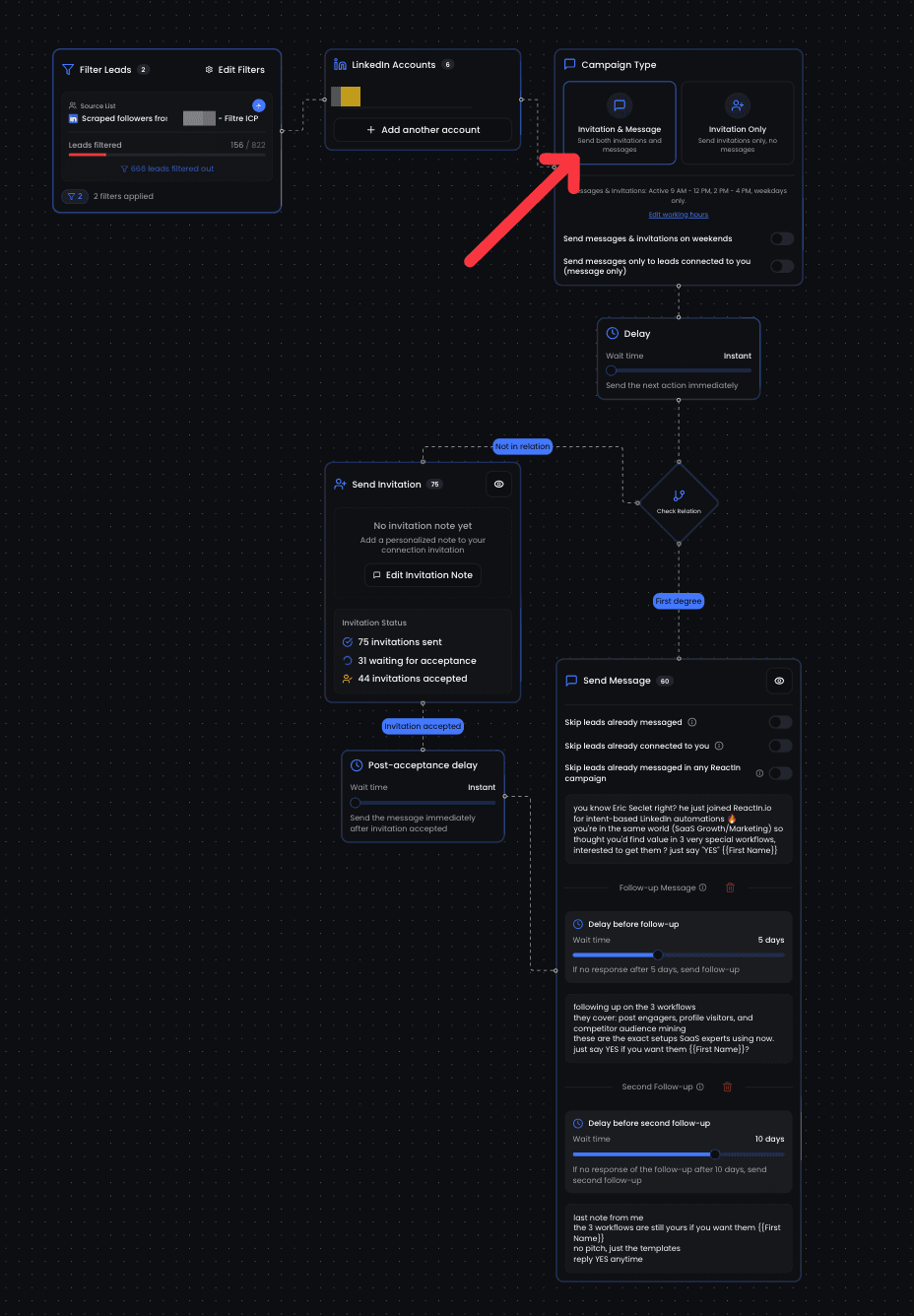
The Optimal 5-Touch Sequence
This is the sequence structure behind our highest-performing campaigns:
| Day | Action | Purpose |
|---|---|---|
| Day 1 | Connection request (with or without note) | Open the door - get into their network |
| Day 3 | Profile view + like a recent post | Build familiarity - they see your name twice |
| Day 5 | First DM: curiosity question | Start a conversation - do not pitch |
| Day 10 | Second DM: value-first resource | Prove expertise - share something useful |
| Day 18 | Third DM: soft breakup | Leave the door open - low-pressure close |
Timing and Spacing Rules
The spacing between touchpoints matters as much as the content. Here are the rules that our data supports:
- Wait at least 24 hours after connection acceptance before sending your first DM. Instant DMs feel automated and reduce reply rates by 15-20%.
- Space follow-ups 4-7 days apart. Shorter gaps feel pushy. Longer gaps lose momentum.
- Send messages during business hours in your prospect's timezone (9 AM - 11 AM and 2 PM - 4 PM perform best).
- Tuesday through Thursday consistently outperform Monday and Friday for first DMs. Save breakup messages for Friday afternoons.
When to Stop a Sequence
Knowing when to stop is as important as knowing when to start. If a prospect has not replied after 3 DMs over 3 weeks, stop the sequence. Sending a 4th, 5th, or 6th message to someone who never replied does not increase your chances - it damages your sender reputation.
The exception: if a prospect viewed your profile after your last message but did not reply, one final soft touchpoint can recover 8-12% of those silent prospects.
Measuring & Optimizing Your LinkedIn Outreach
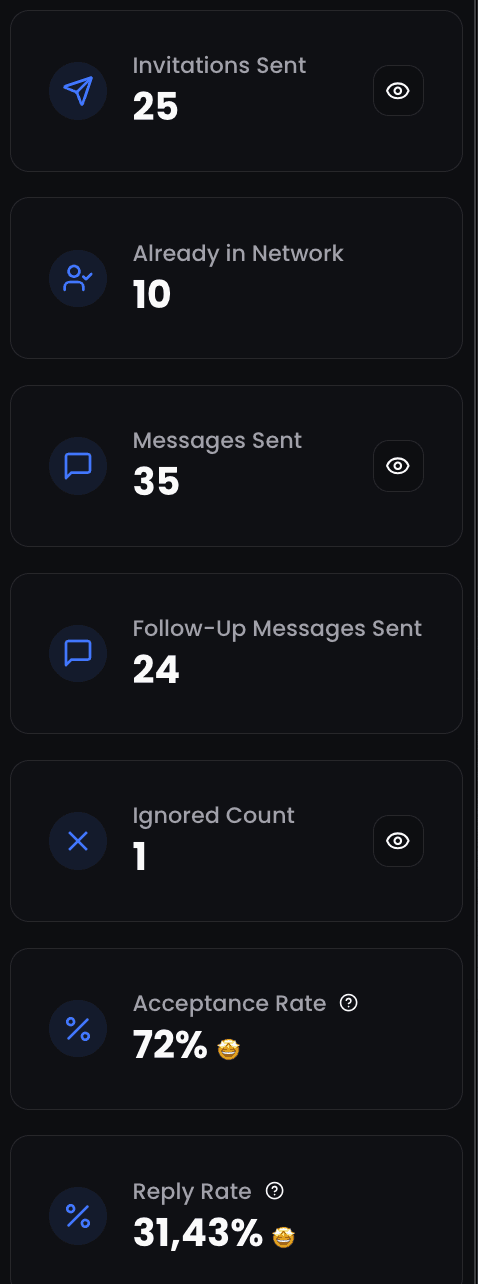
You cannot improve what you do not measure. Most teams track reply rates and stop there. The best teams track 4 metrics across the entire funnel and optimize each stage independently.
The 4 KPIs That Matter
Track these four metrics for every campaign:
| Metric | Good benchmark | What it tells you |
|---|---|---|
| Connection acceptance rate | 40-65% | Profile strength + targeting quality |
| DM reply rate | 18-25% | Message quality + audience warmth |
| Positive reply rate | 60-75% of replies | Offer-market fit + positioning |
| Meeting booking rate | 3-8% of prospects | End-to-end outreach effectiveness |
The 3-Step Optimization Loop
Run this loop every 2 weeks to continuously improve your outreach performance:
Step 1: Diagnose the Bottleneck
If your acceptance rate is low (<40%), the problem is your profile or targeting. If acceptance is high but reply rate is low (<15%), the problem is your DM copy. If reply rate is high but meetings are low, the problem is your qualification or call-to-action. Fix one bottleneck at a time.
Step 2: A/B Test One Variable
Split your next campaign into two variants. Test one thing: the connection note, the first DM opening line, the timing, or the target audience. Run each variant on at least 100 prospects before drawing conclusions. Small samples lead to false positives.
Step 3: Double Down on Winners
When you find a variant that outperforms by 20% or more, make it your new baseline. Then test the next variable. Teams that run this loop every 2 weeks see a 40-60% improvement in meeting booking rate over 3 months.
improvement in meeting booking rate after 3 months of systematic A/B testing
For a deeper dive into automation metrics and safe scaling, read our companion guide: LinkedIn Automation Guide: The Complete 2026 Playbook.
Tools & Technology for LinkedIn Outreach
The right tools do not replace strategy - they amplify it. A great outreach tool handles the repetitive work (sending requests, scheduling follow-ups, tracking replies) so you can focus on writing better messages and having real conversations.
What to Look for in a LinkedIn Outreach Tool
Not all LinkedIn tools are created equal. After testing dozens of tools and analyzing the results from thousands of campaigns, here are the 5 features that separate effective tools from dangerous ones:
- Cloud-based execution - browser extensions inject code into LinkedIn and are easily detected. Cloud-based tools operate from dedicated IPs and are invisible to LinkedIn.
- Warmup support - the tool should let you control daily limits so you can gradually increase activity on new accounts, not blast 50 requests on day one.
- Intent signal integration - the ability to target people based on engagement signals (post likes, comments, profile views) is the single biggest performance multiplier.
- Smart sequencing - multi-touch sequences with conditional logic (if replied, stop; if viewed profile, wait; if no response after 3 touches, breakup message).
- Campaign analytics - per-campaign metrics for acceptance rate, reply rate, positive reply rate, and meeting booking rate. Without granular data, you cannot optimize.
The Outreach Tech Stack
A complete LinkedIn outreach setup in 2026 typically includes four components:
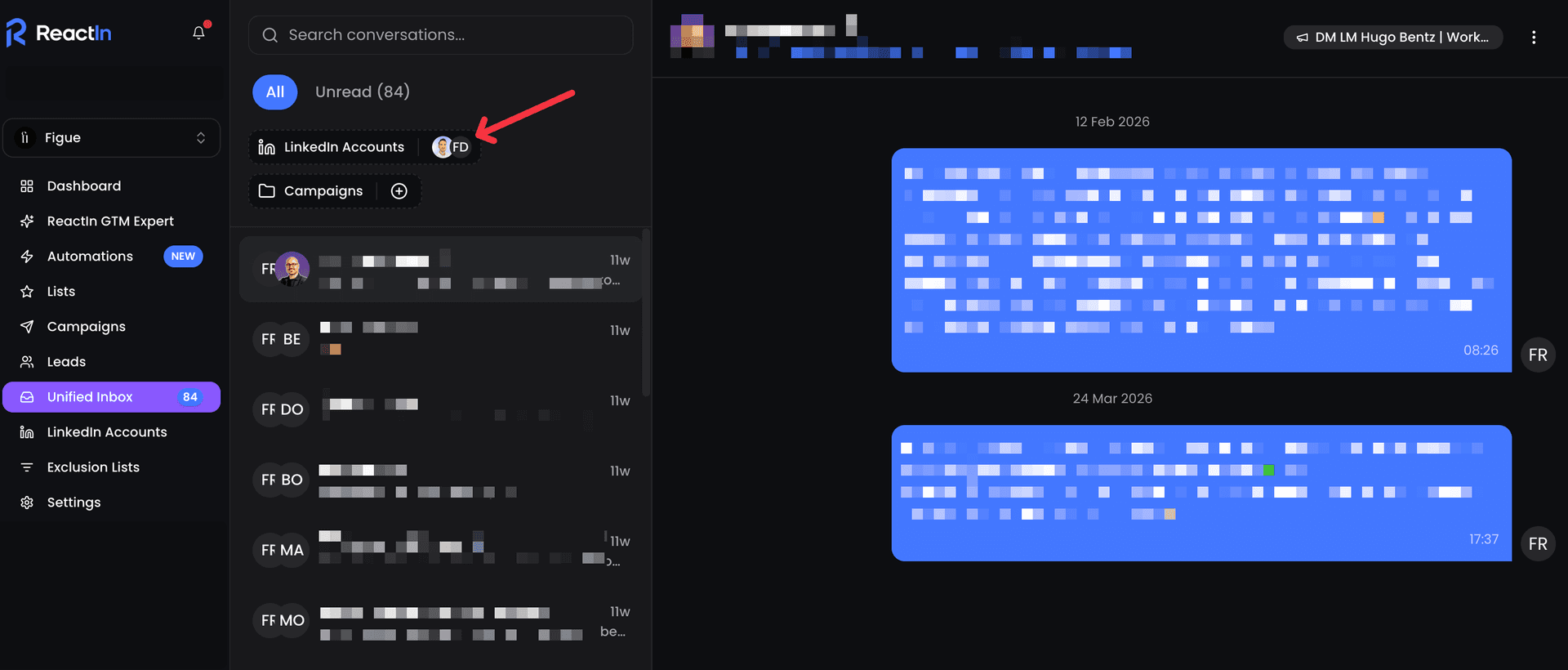
- LinkedIn outreach tool (ReactIn) - handles connection requests, DM sequences, adjustable daily limits for warmup, and campaign analytics.
- LinkedIn account (Sales Navigator recommended) - higher daily limits, advanced search filters, and InMail credits.
- CRM integration - sync conversations and meeting bookings to your CRM (HubSpot, Salesforce, Pipedrive) so nothing falls through the cracks.
- Content engine - a steady stream of LinkedIn posts builds your profile authority and generates warm engagement signals for your outreach campaigns.
Learn how to automate connection requests safely at scale: How to Automate LinkedIn Connection Requests.
For the complete automation strategy including workflows, safety limits, and advanced tactics, read: LinkedIn Automation Guide: The Complete 2026 Playbook.
Compare all the tools that power your outreach in our Best LinkedIn Tools guide for 2026.
LinkedIn outreach in 2026 is not about volume. It is about precision, timing, and genuine conversation. The teams that win are the ones that treat every prospect like a person, not a lead in a spreadsheet.
The playbook is in your hands. Start with warmup, nail your first 100 connection requests, write one great DM, and iterate from there. Every high-performing outreach campaign started with a single, well-crafted message.
Frequently Asked Questions
Sources & Further Reading
- LinkedIn provides official guidance on connection request limits in their Help Center article on invitation restrictions, which every outreach professional should bookmark.
- The Salesforce State of Sales report shows that top-performing sales reps spend 30% more time on social selling than their peers - confirming LinkedIn's growing role in pipeline generation.
- For research on social selling effectiveness, the RAIN Group's study on B2B buying behavior found that sellers who consistently use LinkedIn for prospecting are 51% more likely to hit quota.
Related Articles
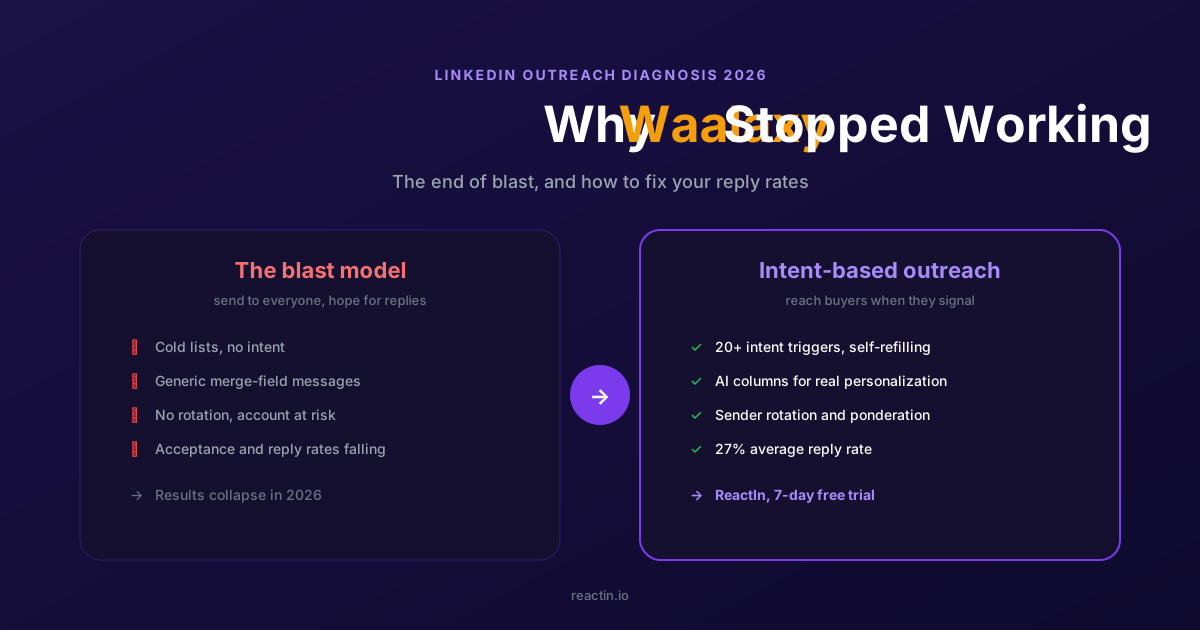
Why Waalaxy Stopped Working in 2026 (And How to Fix Your Reply Rates)
Your Waalaxy reply rates cratered in 2026 and you cannot tell why. Here is what changed, why blast outreach stopped working, and how intent-based prospecting brings double-digit reply rates back.
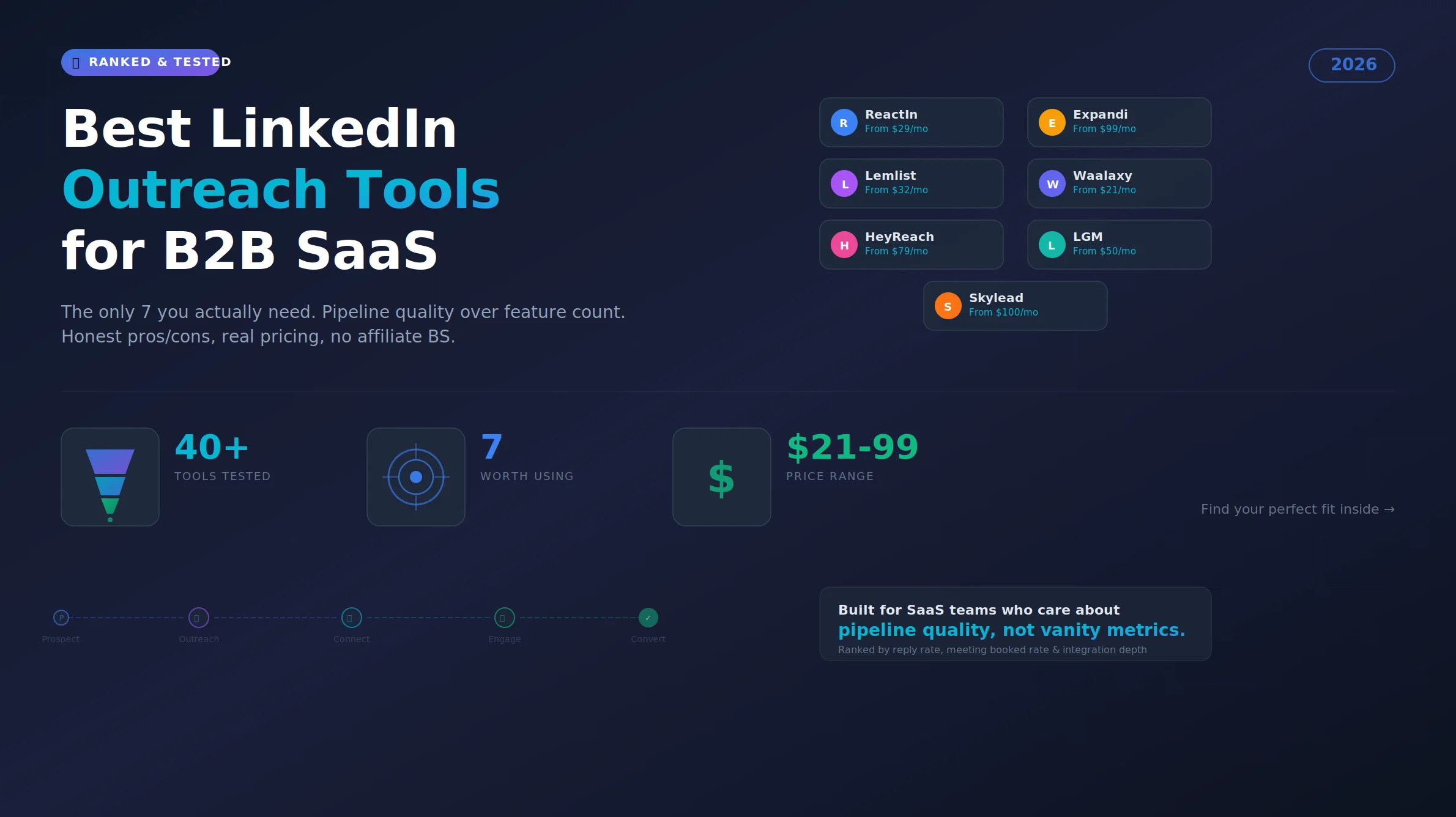
Best LinkedIn Outreach Tool for B2B SaaS in 2026 (Ranked by Pipeline Quality, Not Feature Lists)
The 7 best LinkedIn outreach tools for B2B SaaS in 2026, ranked by pipeline quality and true cost. ReactIn replaces 3-4 tools ($69/mo vs $500+/mo stack) with intent signals, AI enrichment, and automated campaigns. Full 5-seat cost comparison included.
LinkedIn Connection Request Note Character Limit 2026: Official Limit, Rules & Templates
The official LinkedIn connection request note limit in 2026 is 300 characters, on every plan. But notes between 120 and 180 characters win on acceptance rate. Full breakdown, 10 templates, and the difference with InMail and DM limits.
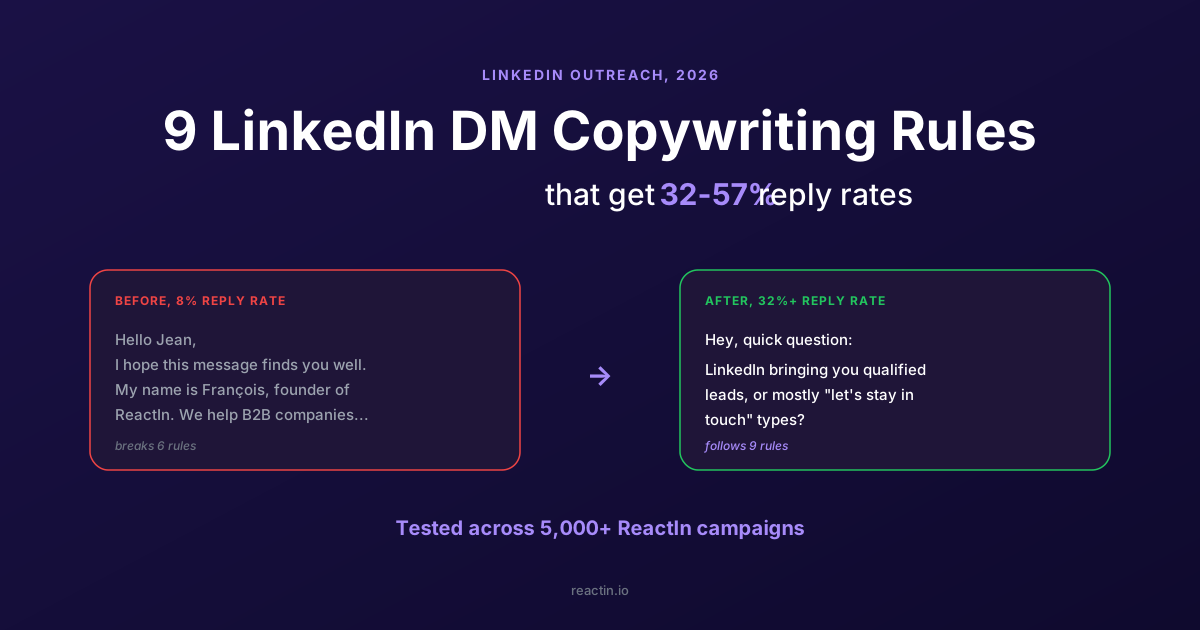
9 LinkedIn DM Copywriting Rules That Get 32-57% Reply Rates (2026)
The average LinkedIn direct message response rate is 8-12%. Our campaigns hit 32-57%. 9 tested copywriting rules, the 5-3-2 rule explained, and how to turn replies into meetings.