ReactIn vs HeyReach (2026): Volume Rotation or Intent-Driven Outreach?
HeyReach focuses on multi-sender rotation for agencies. ReactIn combines smart rotation with 20+ intent signals, AI columns, and campaign ponderation - all at $69/mo per sender.
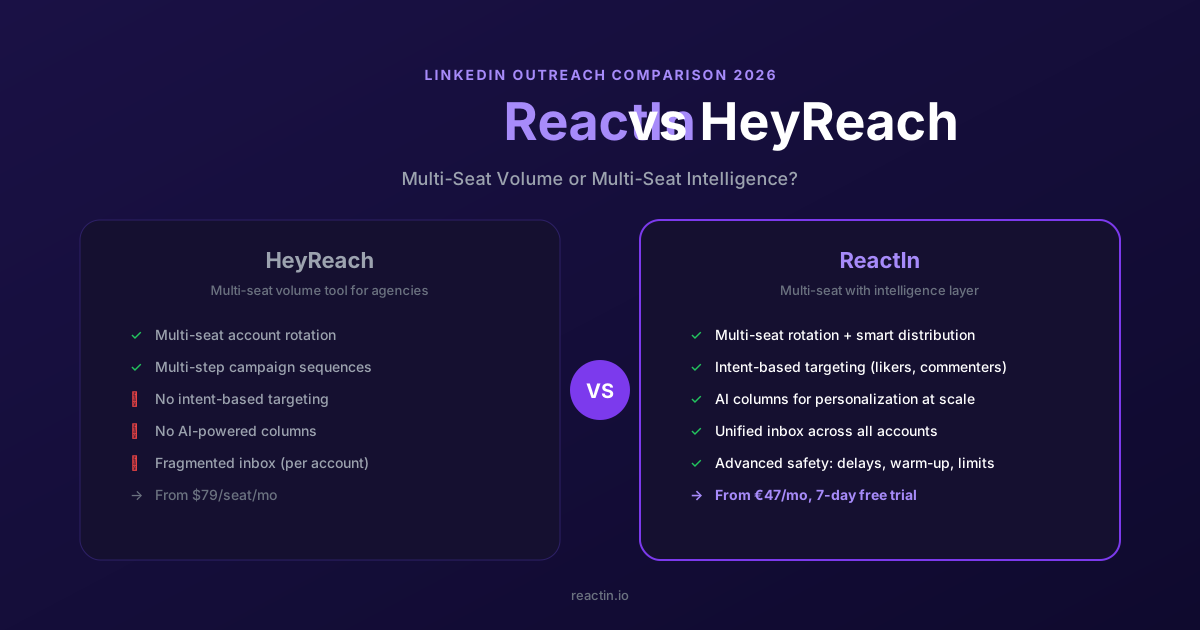
HeyReach has built a strong reputation among agencies and multi-seat teams for one thing: sender rotation at scale. Their platform lets you rotate outreach across multiple LinkedIn accounts so no single profile hits daily limits, a legitimate need for agencies managing dozens of clients. If your entire strategy is "send more connection requests from more accounts," HeyReach delivers that machinery, and it delivers it well.
ReactIn takes a different approach. Instead of optimizing for volume through account rotation, ReactIn detects buying intent across 20+ signal sources: post engagement, job changes, webinar sign-ups, Stripe trials, Calendly bookings and more, then triggers personalized outreach automatically. The result is a 27% average reply rate across 5,000+ campaigns, not because of more volume, but because of better targeting. On price the two sit close per sender, $69 against $79, and the gap opens at agency scale where ReactIn's $999 plan covers up to 50 senders and HeyReach's covers 25. Pricing on both sides verified August 2026.
| Feature | HeyReach | ReactIn |
|---|---|---|
| Intent signal detection | No - manual list imports or Sales Navigator searches only | Yes - 20+ sources (LinkedIn, webinars, Stripe, Calendly, Tally, job changes…) |
| AI enrichment columns | No - enrichment credits are included (100 per sender on Growth) but nothing in the lead table scores ICP fit or writes a hook | Yes - custom AI columns for icebreakers, ICP scoring, company insights |
| SmartLists (auto-built from triggers) | No - static list imports | Yes - auto-populated from any intent trigger in real time |
| Campaign ponderation / weighting | No | Yes - distribute leads across campaigns by weight and priority |
| Multi-sender rotation | Yes - core feature, rotate across sender accounts | Yes - smart rotation with intent-aware distribution |
| Unified inbox | Yes - included on every plan | Yes - included on the Growth plan at $69/sender/mo |
| Per-sender pricing | $79/mo on Growth (quarterly -10%, yearly -20%) | $29/mo Basic (invitations) or $69/mo Growth (everything included) - 7-day free trial, no credit card |
| Agency pricing | $999/mo for 25 senders, then $2,999/mo Unlimited | $999/mo for up to 50 senders, custom terms available |
What HeyReach does well
HeyReach deserves credit for solving a real agency pain point: sender rotation. When you're running LinkedIn outreach for multiple clients or across a large sales team, individual accounts hit LinkedIn's daily limits fast. HeyReach lets you pool multiple sender accounts into a single campaign and rotate outreach across them, effectively multiplying your daily capacity without burning any single account. For agencies managing 10, 20 or 50 client accounts, this is genuinely useful.
The entry plan also carries more than its reputation suggests. At $79 per sender, Growth includes a unified inbox, multichannel outreach, integrations, API and webhooks, workspaces and permissions, an MCP server and 100 enrichment credits per sender. The Agency plan at $999 for 25 senders adds whitelabel, 1,000 enrichment credits, done-for-you onboarding and a dedicated Slack channel, and Unlimited at $2,999 adds multi-brand whitelabels and done-for-you migration. Anyone telling you HeyReach is a thin sending tool has not looked at the plan grid.
If your primary challenge is scaling LinkedIn outreach volume across many sender accounts while keeping daily limits safe, HeyReach is a legitimate tool. They've built a focused product around the rotation use case, and agencies running high-volume campaigns will find the mechanics well-polished.
Where HeyReach falls short
HeyReach's fundamental limitation is not its feature list, it is its philosophy. The platform is built to send more messages from more accounts, but it has no mechanism to determine who deserves those messages. There's no intent signal detection: no monitoring of post engagement, job changes, webinar registrations or buying behavior. You import a static list from Sales Navigator or a CSV, plug it into a sequence, and send. The targeting quality is entirely dependent on whatever list you brought in, and there's no dynamic updating as new signals emerge.
The enrichment credits find contact data, but there are no AI enrichment columns: you can't generate contextual icebreakers, score ICP fit or pull company insight inside the lead table. Every personalization variable beyond contact data must be pre-populated in your import or handled by a separate tool. There's also no campaign ponderation or weighting system. If you have multiple campaigns targeting overlapping audiences, HeyReach has no built-in way to prioritize or distribute leads intelligently across them. You manage that manually, or risk contacting the same prospect from multiple campaigns.
Then there are the tier steps. Growth is $79 per sender, the Agency plan at $999 covers 25 senders, and the next stop is Unlimited at $2,999. That grid is fine at 10 or 20 accounts and awkward at 30: you either trim accounts or triple the bill. The Growth to Agency crossover sits around 13 senders, which is worth checking before you add the next account. Quarterly billing takes 10% off and yearly 20%.
Why sales teams choose ReactIn over HeyReach
ReactIn starts where HeyReach stops - at the question of who to contact and why. Instead of importing static lists and blasting sequences, ReactIn detects buying intent across 20+ signal sources in real time. A prospect engages with a competitor's LinkedIn post, registers for an industry webinar, changes jobs, starts a Stripe trial, or books a Calendly call - ReactIn captures that signal and automatically populates a SmartList. Your outreach targets people showing active intent right now, not a stale CSV from last month.
AI enrichment columns let you generate contextual data directly inside your lead lists - custom icebreakers from a prospect's recent posts, ICP fit scores based on company data, industry classifications, or any AI-powered column you define. This means every message your campaigns send is informed by real context, not just a first name and company. Combined with SmartTags that segment leads by enriched attributes, your targeting precision is on a different level than anything HeyReach offers.
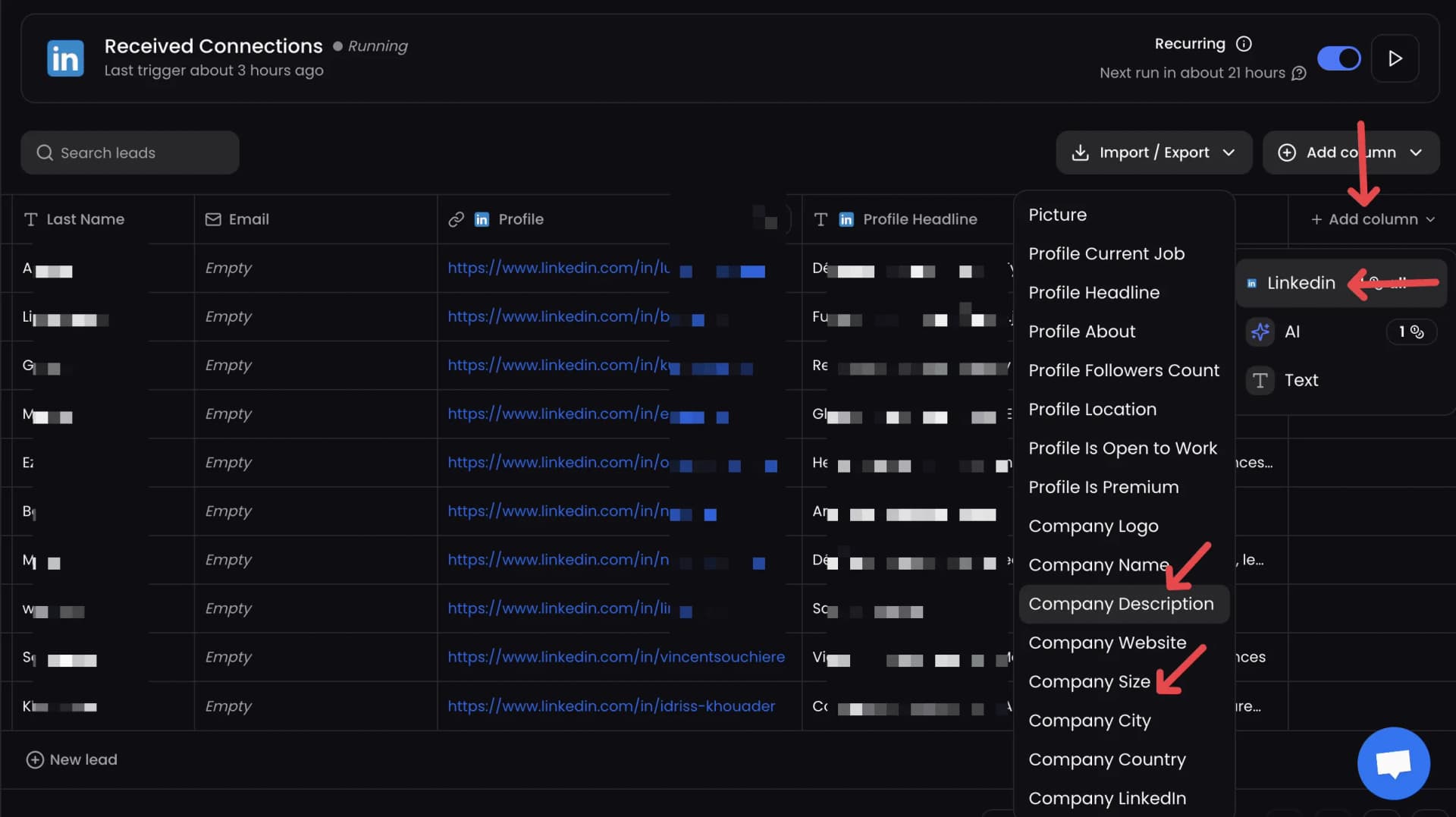
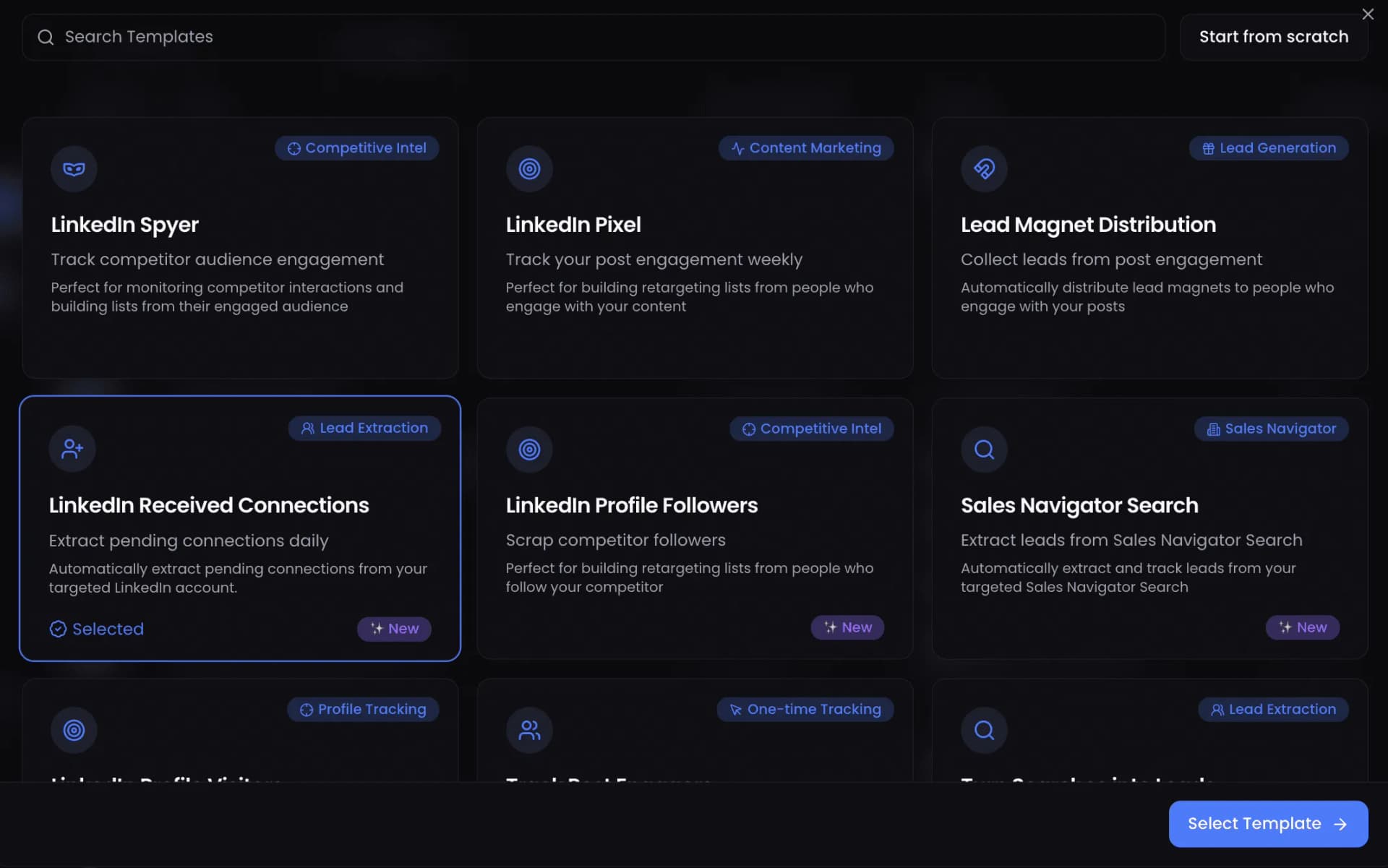
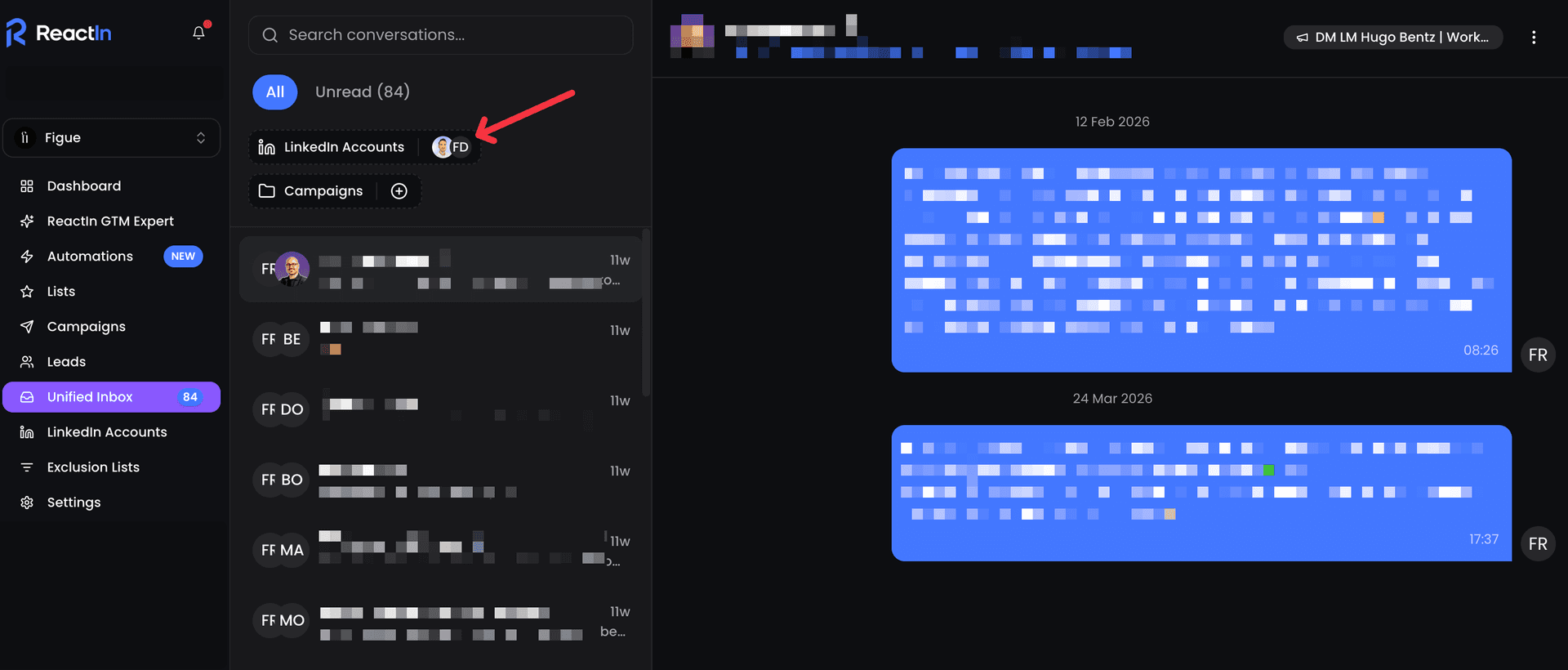
Campaign ponderation is another ReactIn exclusive. When multiple campaigns target overlapping audiences, ReactIn's weighting system distributes leads intelligently, prioritizing high-intent signals, balancing volume across campaigns and preventing duplicate outreach. HeyReach leaves this problem to you. ReactIn also includes smart sender rotation with intent-aware distribution, a unified inbox, unlimited automations and 2,000 enrichment credits on both tiers.
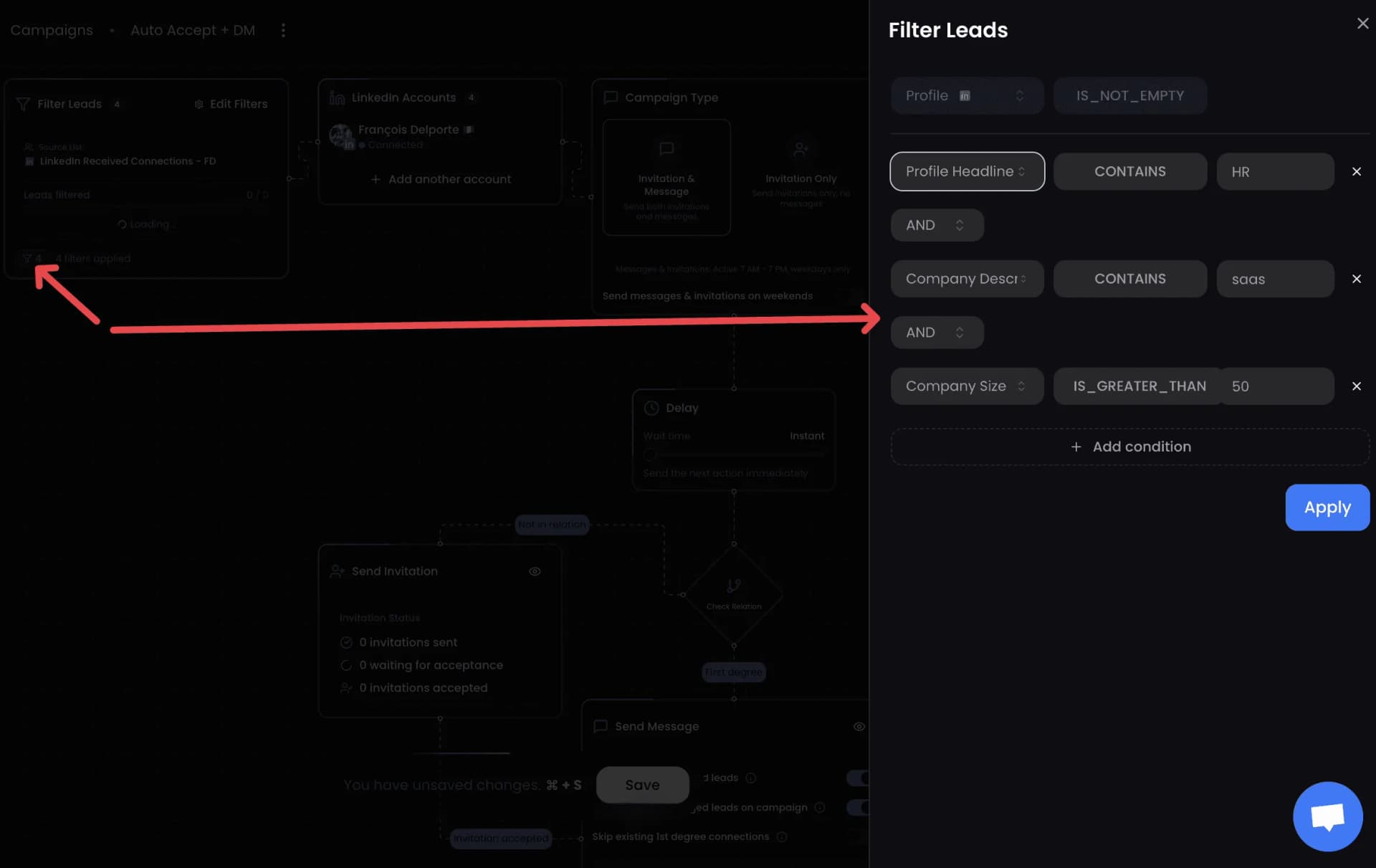
On price, the honest read is that the two are close per sender and diverge at scale. At $69 against $79 the monthly gap on 10 senders is $690 versus $790, real but not decisive. The agency tier is where it matters: 30 client accounts fit inside ReactIn's $999 plan, which covers up to 50 senders, while HeyReach's $999 Agency plan stops at 25, so 30 accounts push you to the $2,999 Unlimited plan. That is a $2,000 monthly difference for the same account count, and ReactIn adds intent signals, AI columns and ponderation on top. ReactIn offers a 7-day free trial with no credit card, so your team can validate the difference before committing.
Alternatives HeyReach users shortlist in 2026
Anyone searching alternatives HeyReach is rarely looking for a cheaper sender. They are looking for the layer HeyReach leaves out. Rotation, unified inbox, workspaces, API and enrichment credits sit on every plan; what is missing is the part that decides who deserves the message. So the shortlist splits by which gap you are filling: targeting, multichannel reach, account safety, or agency economics past 25 senders. Comparing tool against tool hides that. Compare stacks instead: a five-sender HeyReach setup at around $395 plus one Sales Navigator seat is close to $500 a month before a single signal or AI layer is added.
The names that keep coming up: La Growth Machine and Lemlist when the motion is genuinely multichannel and email carries half the pipeline, Skylead when you want one all-in-one seat, Expandi when you run one or two accounts and cannot afford to lose them, and ReactIn when the bottleneck has moved from sending capacity to targeting quality. That last case is the one this comparison covers: 20+ intent sources, SmartLists that populate as signals fire, AI enrichment columns inside the lead table and campaign ponderation, at $69 per sender against HeyReach's $79, with an agency plan at $999 for up to 50 senders where HeyReach's $999 stops at 25.
The honest rule: if your job is to push volume across 40 client accounts, no alternative beats HeyReach at its own game and you should stay. If your lists are stale, your replies are sliding and you already pay for a separate signal or enrichment tool, the alternative you want is the one that absorbs those subscriptions rather than sitting next to them. The full field, scored on how much of the targeting stack each tool replaces and priced at 1, 5 and 25 senders, is in our guide to the best HeyReach alternatives for 2026.
See how every tool stacks up in our complete ReactIn Alternatives & Comparisons guide for 2026.
Weighing other options too? See the best HeyReach alternatives for 2026, and the full HeyReach pricing breakdown.
Frequently Asked Questions
Sources & Further Reading
- Check how HeyReach compares to other tools based on verified user reviews on the HeyReach G2 reviews page.
- Using multiple LinkedIn accounts for outreach carries specific risks. Learn about LinkedIn's stance in the LinkedIn Help Center on account restrictions.
Related Articles
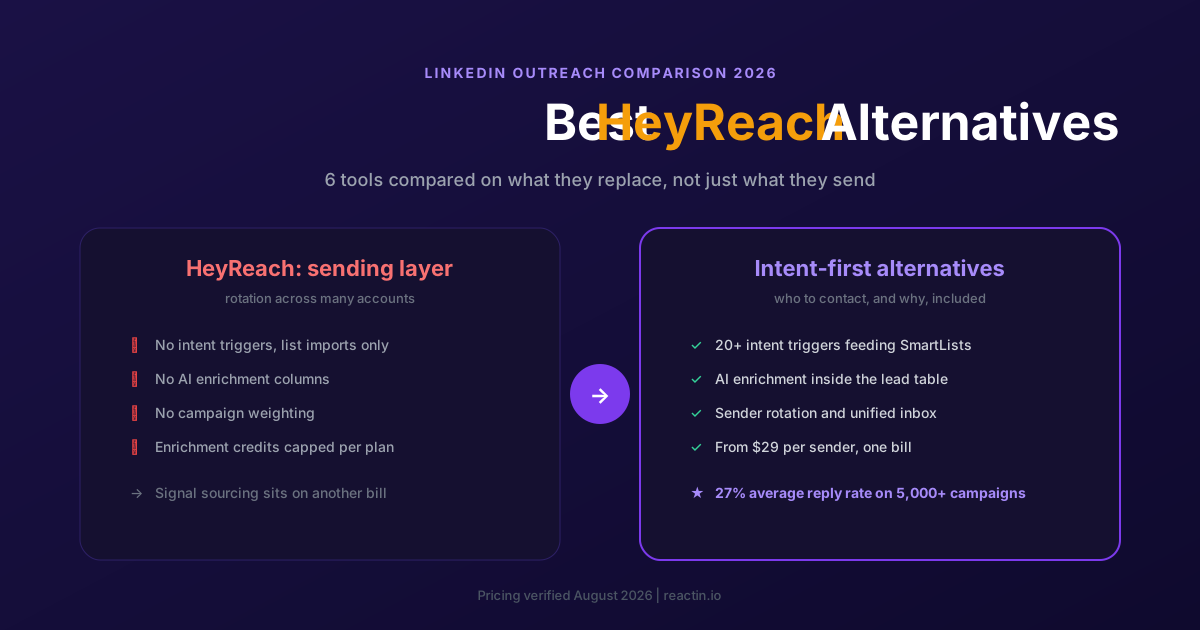
The 6 Best HeyReach Alternatives in 2026 (Priced and Compared)
HeyReach scales sending across many accounts, but it does not tell you who to contact. Here are the 6 best alternatives for 2026, with verified pricing and the cost of the stack HeyReach does not include.
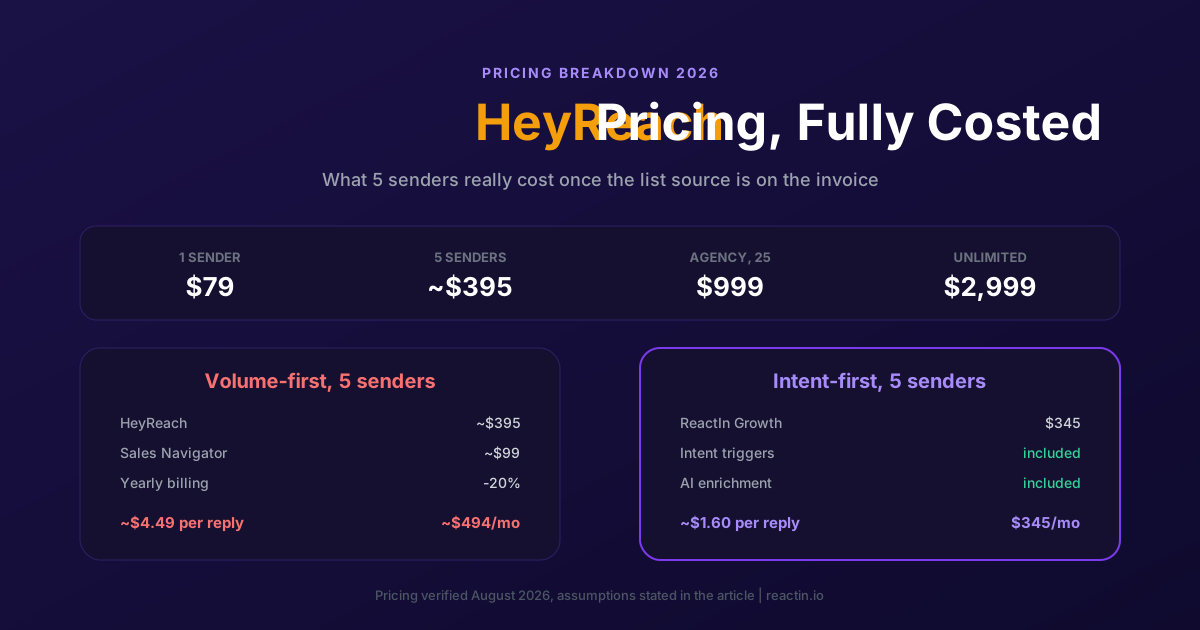
HeyReach Pricing in 2026: Real Cost per Sender and 5 Cheaper Alternatives
HeyReach Growth starts at $79 per sender, Agency is $999 for 25 senders and Unlimited is $2,999. Here is every plan, what the price includes and leaves out, and how to compare cost per reply instead of cost per seat.
The Best HeyReach Alternative for Agencies in 2026 (5 Options Compared)
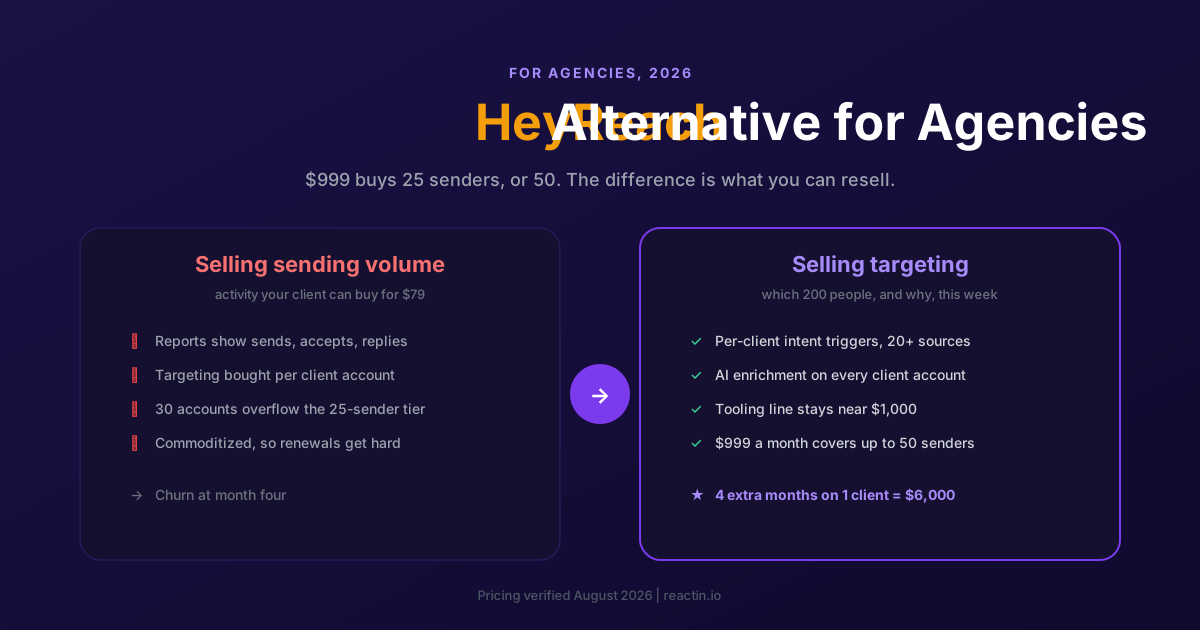
Agencies rarely leave HeyReach because the sending broke. They leave because volume services get commoditized. Here are 5 options compared on margin per client and months retained.
The 6 Best Waalaxy Alternatives in 2026 (Cloud Tools, No Extension)
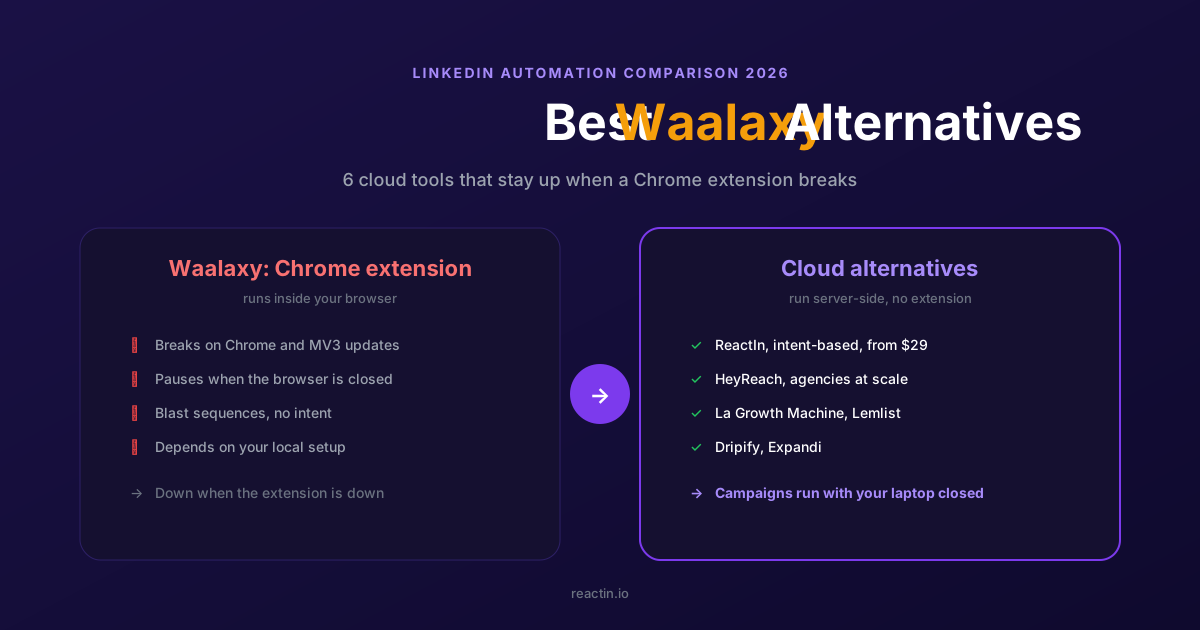
Waalaxy runs as a Chrome extension that pauses when the browser breaks. Here are the 6 best cloud-based alternatives for 2026, with verified pricing and the right pick for your motion.