Segmenting Your LinkedIn Audience: A Practical Guide
Filtering by job title gives you people who look alike, not people who want the same thing. Segment by the problem you solve and the signal that reveals it, then use attributes only to narrow what remains.
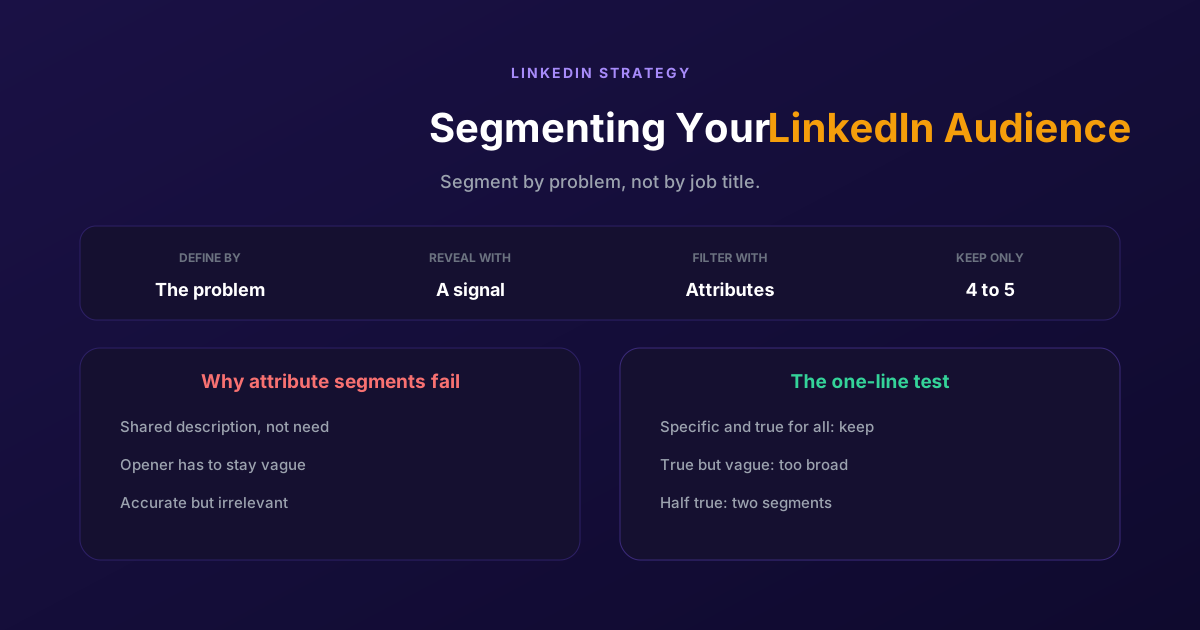
Most LinkedIn segmentation is filtering. You pick a job title, a company size and a country, and call the result a segment. It is a list of people who look alike, which is not the same as a list of people who want the same thing.
That distinction is the whole of this guide. A segment is only useful if it lets you write one message that is genuinely right for everyone in it. Attributes rarely do that. What does is the problem you can name, and the signal that tells you someone has it.
Why attribute segments underperform
Attributes are easy to filter on and weak at predicting interest. Two people with the same title at similarly sized companies can have nothing in common in the thing you sell against, and a message written for the title has to be vague enough to fit both.
| Attribute segment | Problem and signal segment | |
|---|---|---|
| How it is defined | Title, headcount, industry, geography | A problem, plus an observable sign of it |
| What the members share | A description on their profile | A situation you can speak to |
| What the first line can say | Something true of thousands of people | Something true of these people this month |
| How you improve it | Add more filters, shrink the list | Sharpen the problem, change the signal |
| How it ages | Stays technically accurate, loses relevance | Refreshes as new people produce the signal |
The row that matters most in practice is the third. Message quality is downstream of segment quality, and it is capped by it: you cannot write a specific opener for a group whose only shared property is a job title, no matter how good you are. Teams usually try to fix weak replies by rewriting copy, when the copy is already the best possible version of a message to an audience defined too loosely.
The other trap is the opposite one. Adding filters feels like sharpening, and past a point it just makes segments too small to learn from. Thirty people is not enough to tell a good message from a bad one, so you end up with twenty segments and no evidence about any of them. Fewer, larger, better-defined segments give you both relevance and a readable result.
Building segments that hold
Four steps, in this order. Reversing the first two is the usual mistake.
Name the problem before the audience
Write down the specific problem you solve, in the words the person would use, not in your product's vocabulary. If you cannot state it in a sentence without naming your product, the segmentation that follows will be guesswork. Several problems means several segments, and that is the useful starting structure rather than a complication.
Find a signal that reveals it
Ask what someone with that problem does that you can observe. Engaging with a post about it, attending a webinar on it, visiting your profile after reading something, following a company that sells an adjacent solution, reacting to a competitor's ads. A signal beats an attribute because it indicates the problem is live now rather than plausible in principle.
Use attributes only to narrow
Attributes earn their place as a filter on top of a signal, not as the definition. Someone who engaged with your post and is a buyer at a company you can actually serve is a good segment; someone who merely matches the profile is not. Used this way, filters remove noise instead of inventing a group.
Apply the one-line test and cut
Write the opener. Merge segments whose openers are nearly identical, because they were never different segments. Split the ones where the line is only half true. Then stop: four or five segments you can keep current are worth more than twenty built in one session and abandoned.
Segments worth having
Four that tend to work, each defined by a signal rather than a description.
- Engaged with a specific piece of content. Not your posts in general, one post about one problem. The narrower the content, the sharper the segment, and the opener writes itself because you know what they read.
- Showed interest and went quiet. Booked a call and did not attend, filled in a form, started a trial and stopped. These people already told you they had the problem, which makes this consistently the highest-intent group and the one most often left alone.
- In the market, judged by category behaviour. Engaging with a competitor's ads, following companies in your category, reacting to posts on your keyword. Weaker than a direct signal, stronger than any attribute, and usually the largest useful segment.
- Known and reachable but never contacted. Existing connections who fit and have never heard a pitch. It is the cheapest segment to build and the one most teams forget they own.
Notice none of these is a job title. Titles belong in the filter you apply afterwards, and if a title is doing the defining work then the segment is probably an attribute segment wearing a signal's clothes.
For turning a segment into a list that maintains itself, see how SmartLists keep LinkedIn lead lists full, and for the message itself, 9 LinkedIn DM copywriting rules.
Keeping them alive
Segments decay differently depending on how you defined them, and this is the part that decides whether the work survives the quarter. An attribute segment stays accurate and becomes irrelevant: everyone in it still has that job title, and none of them is any more interested than when you exported them.
A signal segment refreshes, because the definition describes behaviour rather than a snapshot. ReactIn is built around that: a list is a standing rule fed by a signal source, so the people who engaged with a post, attended a webinar, visited your profile or came in from a form enter the segment as they produce the signal, and the campaign reaches them while it is recent.
Exclusions are the other half and they are easy to neglect. You can upload a CSV of profile URLs you never want surfaced, current customers, competitors, anyone already in a conversation, so a segment stays clean without anyone remembering to check. A segment with no exclusion rule eventually embarrasses you.
The honest limits. Signal-based segments are smaller than filtered searches, by design, so if you need volume this quarter more than precision, a broad search still produces more names. LinkedIn's daily ceilings apply regardless of how well you segment. And segmentation does not rescue a weak offer: a precisely targeted message about something nobody wants is still a message nobody wants.
For how this compares with the tools built around filtered searches, see our ReactIn vs Waalaxy comparison.
Better copy cannot rescue a loosely defined audience, and that is the practical reason to spend the hour on segments rather than on phrasing. Get the segment right and the message gets easier to write, which is usually the sign you have done it properly.
Frequently Asked Questions
Sources & Further Reading
- For how LinkedIn itself frames audience building, see LinkedIn Marketing Solutions.
- Their lead generation resources cover the adoption picture in LinkedIn lead generation.
- And the rules on automated outreach are in LinkedIn's User Agreement.
Related Articles
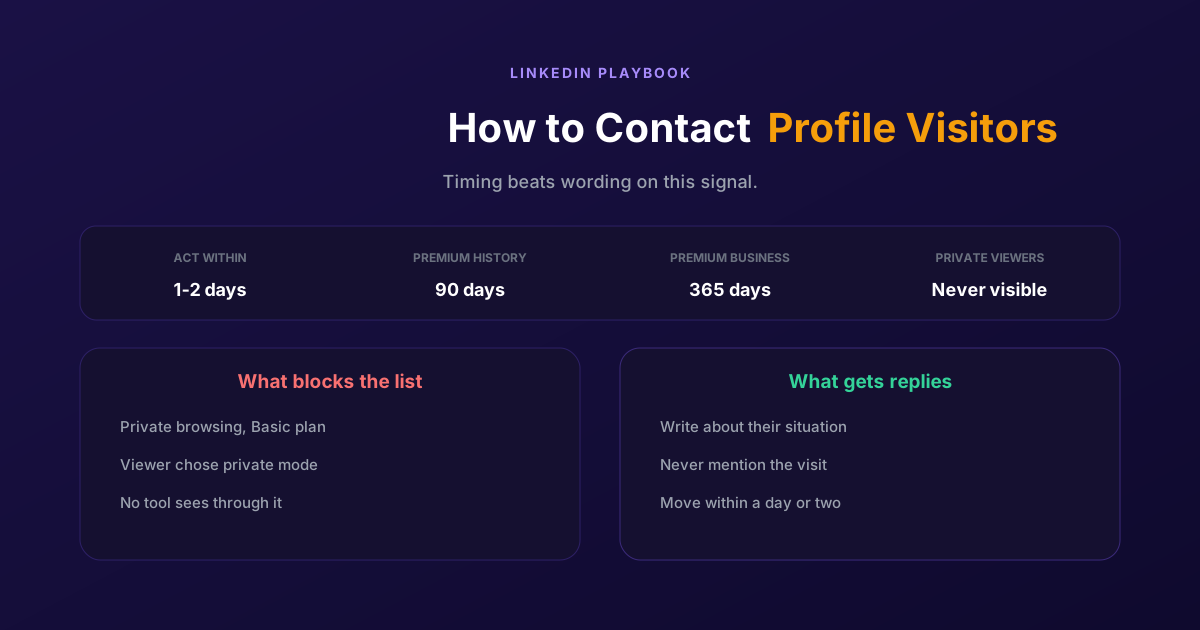
How to Contact LinkedIn Profile Visitors (2026 Guide)
A profile view is one of the warmest signals LinkedIn produces and one of the most wasted. Two settings decide whether you can see them at all, and the opening line decides whether it reads as noticed or surveilled.
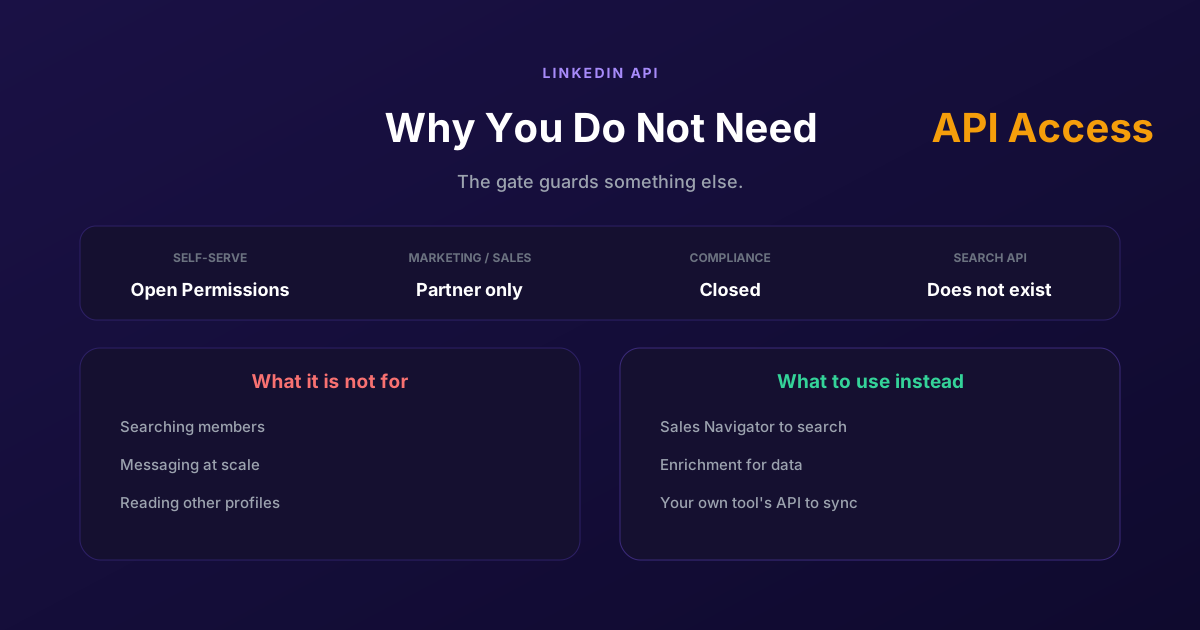
LinkedIn API Access: Why You Probably Do Not Need It
Self-serve access covers your own profile and posting as yourself. Marketing, Sales and Talent need partner approval, Compliance is closed, and none of them is a prospecting API, so approval would not deliver what most applicants want.
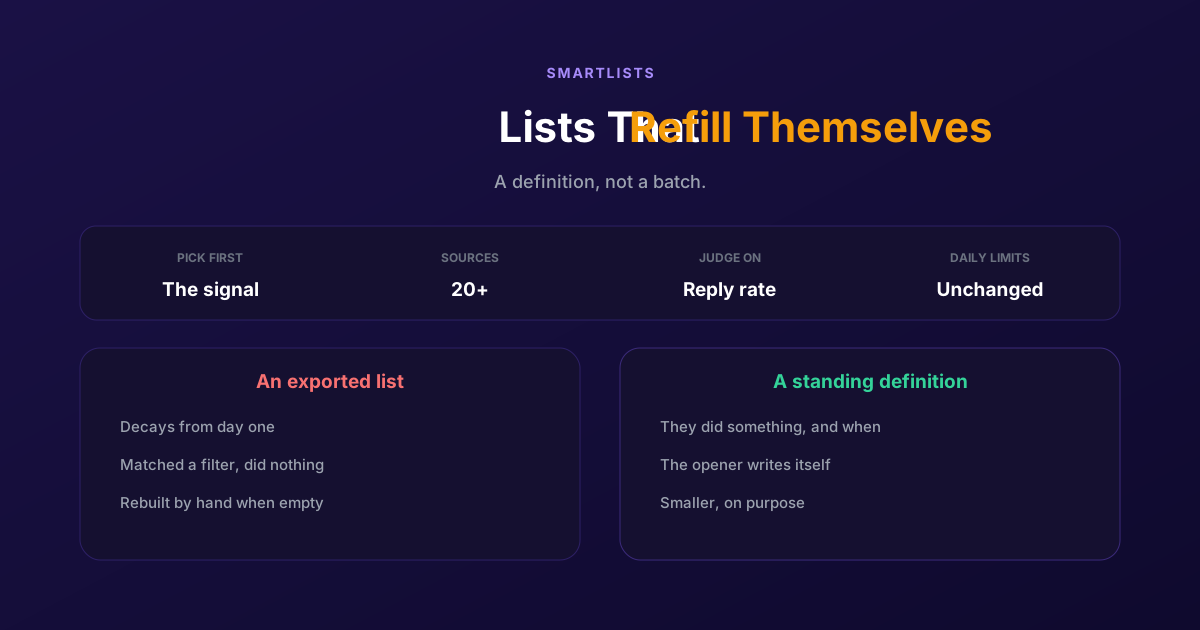
How to Generate LinkedIn Leads Continuously with SmartLists
An exported list is a photograph of a moment and decays from day one. A SmartList is a standing definition that fills itself, so people get contacted while the reason is still fresh.
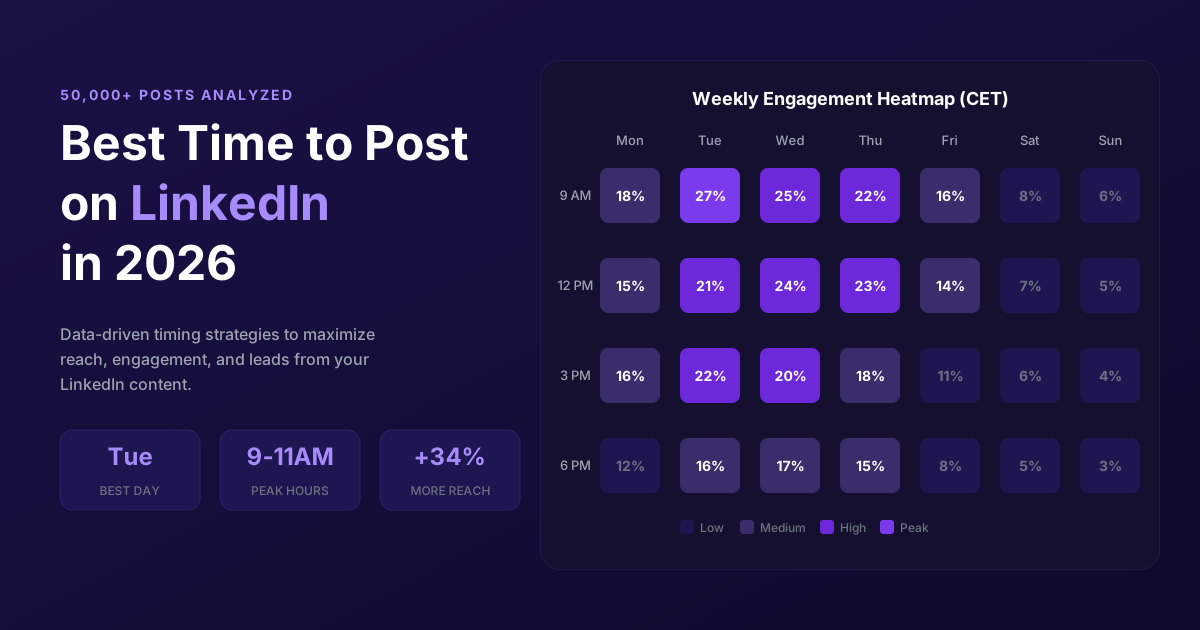
Best Time to Post on LinkedIn in 2026 (50,000+ Posts Analyzed)
When should you post on LinkedIn for maximum engagement? Analysis of 50,000+ posts reveals the best times, days, and strategies to maximize reach in 2026.