ReactIn vs Waalaxy (2026): Blast Campaigns or Intent-Based Outreach?
Waalaxy is built for mass LinkedIn campaigns. ReactIn is built for intent-based outreach with 20+ signal sources, AI columns, and campaign ponderation. Full comparison inside.
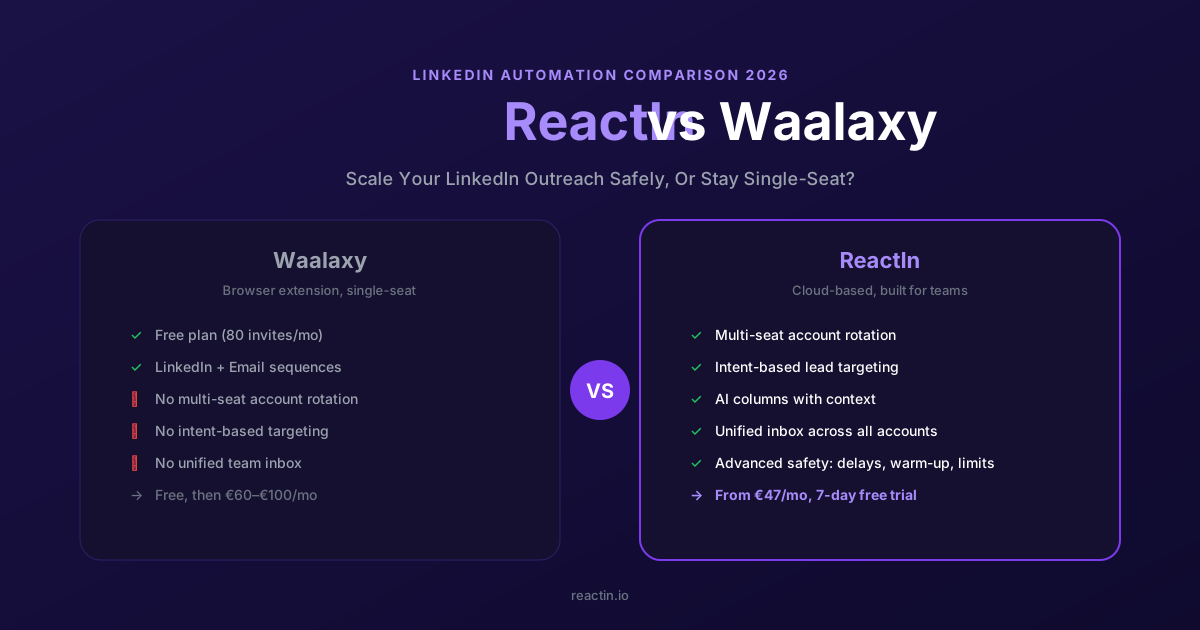
Waalaxy is one of the most popular LinkedIn automation tools on the market, especially in France. Built around ease of use and multichannel outreach (LinkedIn + email), it's helped thousands of sales reps and freelancers send connection requests and follow-up sequences at scale. If you need a straightforward blast tool to run volume-based LinkedIn campaigns, Waalaxy delivers a polished experience.
ReactIn takes a fundamentally different approach. Instead of blasting lists, it detects buying intent across 20+ signal sources - post engagement, job changes, webinar registrations, Stripe trials, Calendly bookings, and more - then triggers personalized outreach automatically. With AI enrichment columns, campaign ponderation, sender rotation, and a unified inbox, ReactIn is built for teams that want quality conversations, not just volume. The result: 27% average reply rates across 5,000+ campaigns.

| Feature | Waalaxy | ReactIn |
|---|---|---|
| Outreach approach | Blast-oriented (mass campaigns from imported lists) | Intent-based (trigger on buying signals automatically) |
| Intent signal detection | None | 20+ sources (LinkedIn, webinars, Stripe, Calendly, Tally, job changes...) |
| AI enrichment columns | No | Yes - generate icebreakers, score ICP fit, pull company data automatically |
| Campaign ponderation / weighting | No | Yes - prioritize high-intent leads across campaigns automatically |
| Unified multi-account inbox | No (one inbox per account, no cross-account view) | Yes - all conversations in one place with sender rotation |
| Sender rotation | No | Yes (Growth plan) - distribute outreach across multiple senders |
| Pricing (all features) | From EUR19/mo to EUR69/mo per user, features gated by tier. Annual billing around 50% off | $29/sender/mo (invitations) or $69/sender/mo (everything included), agency plan $999/mo up to 50 senders, 7-day free trial |
What Waalaxy does well
Waalaxy has earned its reputation as one of the most accessible LinkedIn automation tools available. The onboarding is genuinely smooth: install the Chrome extension, import a Sales Navigator search or CSV, build a sequence with their visual editor, and launch. For someone who's never run LinkedIn outreach before, Waalaxy removes a lot of friction. The interface is clean, the sequence builder is intuitive, and you can go from zero to sending connection requests within minutes.
The multichannel angle is a real differentiator in Waalaxy's grid. Their top tier combines LinkedIn actions with automated email sequences, letting you build workflows that follow up across both channels, and the email finder credits were raised sharply in 2026. For teams that want a single tool handling LinkedIn invites and email drips without stitching together multiple platforms, Waalaxy offers that out of the box, and it is the cheapest way to get there.
Waalaxy also benefits from a large community, especially in the French-speaking market. There's plenty of documentation, YouTube tutorials, and community support. For solo founders, freelancers, and early-stage sales reps doing their first prospecting campaigns, Waalaxy is a solid entry point into LinkedIn automation.
Where Waalaxy falls short
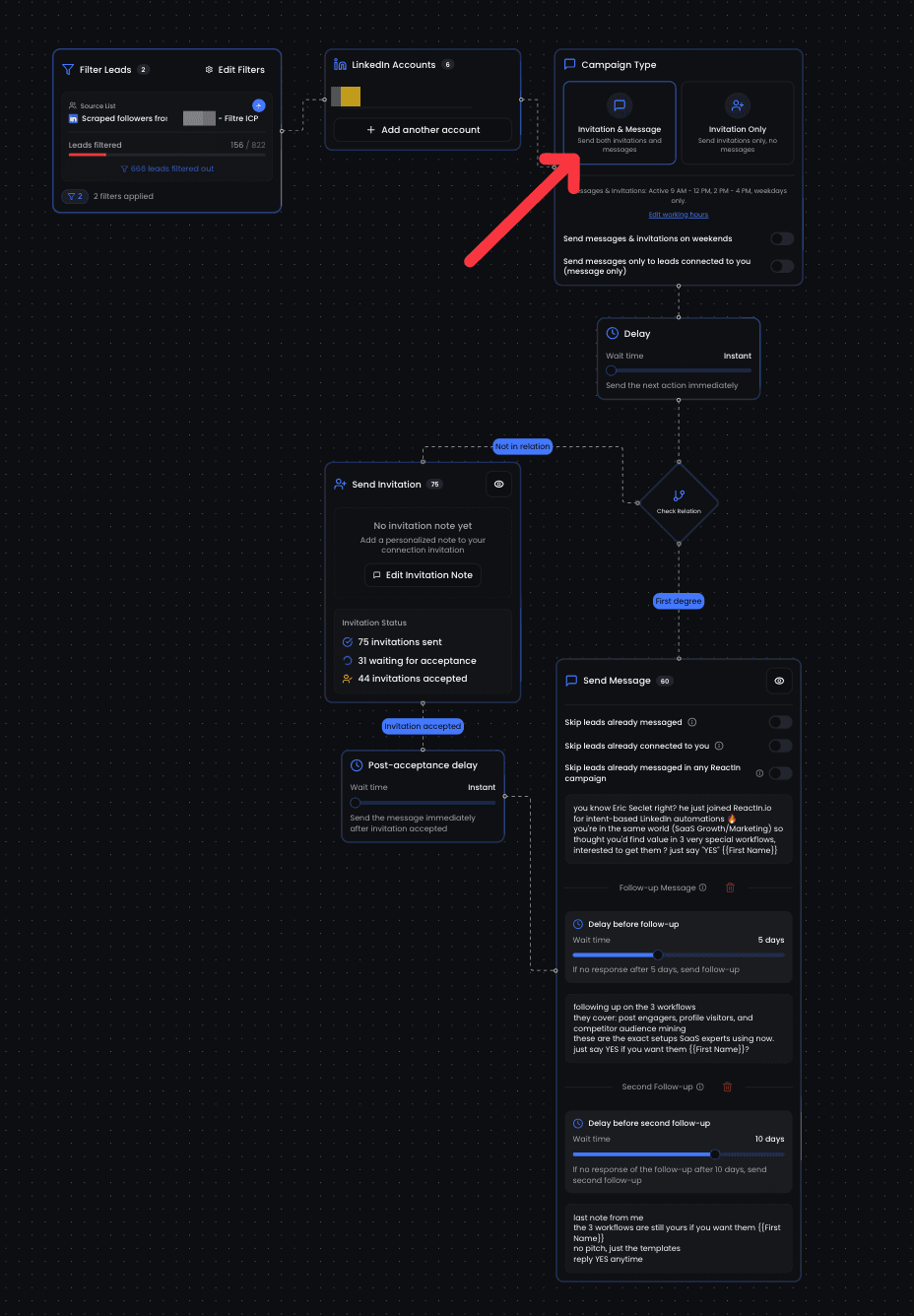
Waalaxy's biggest limitation is its blast-oriented philosophy. Every campaign starts the same way: import a static list, write a sequence, and send to everyone. There's no concept of intent detection - no way to automatically trigger outreach when a prospect likes a post, registers for a webinar, starts a trial on Stripe, books on Calendly, or changes jobs. You're always pushing messages to cold lists rather than reacting to real buying signals. In 2026, this spray-and-pray model produces declining reply rates as prospects grow numb to generic sequences.
There are no AI enrichment columns in Waalaxy. You can't generate contextual icebreakers from a prospect's recent activity, score ICP fit with AI, or add custom computed columns to your lead lists. Personalization in Waalaxy is limited to basic merge fields - first name, company name, job title. ReactIn's AI columns analyze a prospect's posts, company context, and job history to generate truly personalized openers that feel hand-written, even at hundreds of messages per week.
Campaign ponderation doesn't exist in Waalaxy either. When a prospect appears in multiple campaigns, there's no intelligent weighting system to decide which campaign gets priority or how to distribute outreach load. With ReactIn, campaign ponderation ensures high-intent leads are contacted through the most relevant campaign first, preventing overlap and maximizing conversion. Add to this Waalaxy's lack of a unified multi-account inbox and sender rotation - teams managing multiple LinkedIn accounts have to switch between separate dashboards, with no way to distribute sends across senders or manage all replies from one place.
Why sales teams choose ReactIn over Waalaxy
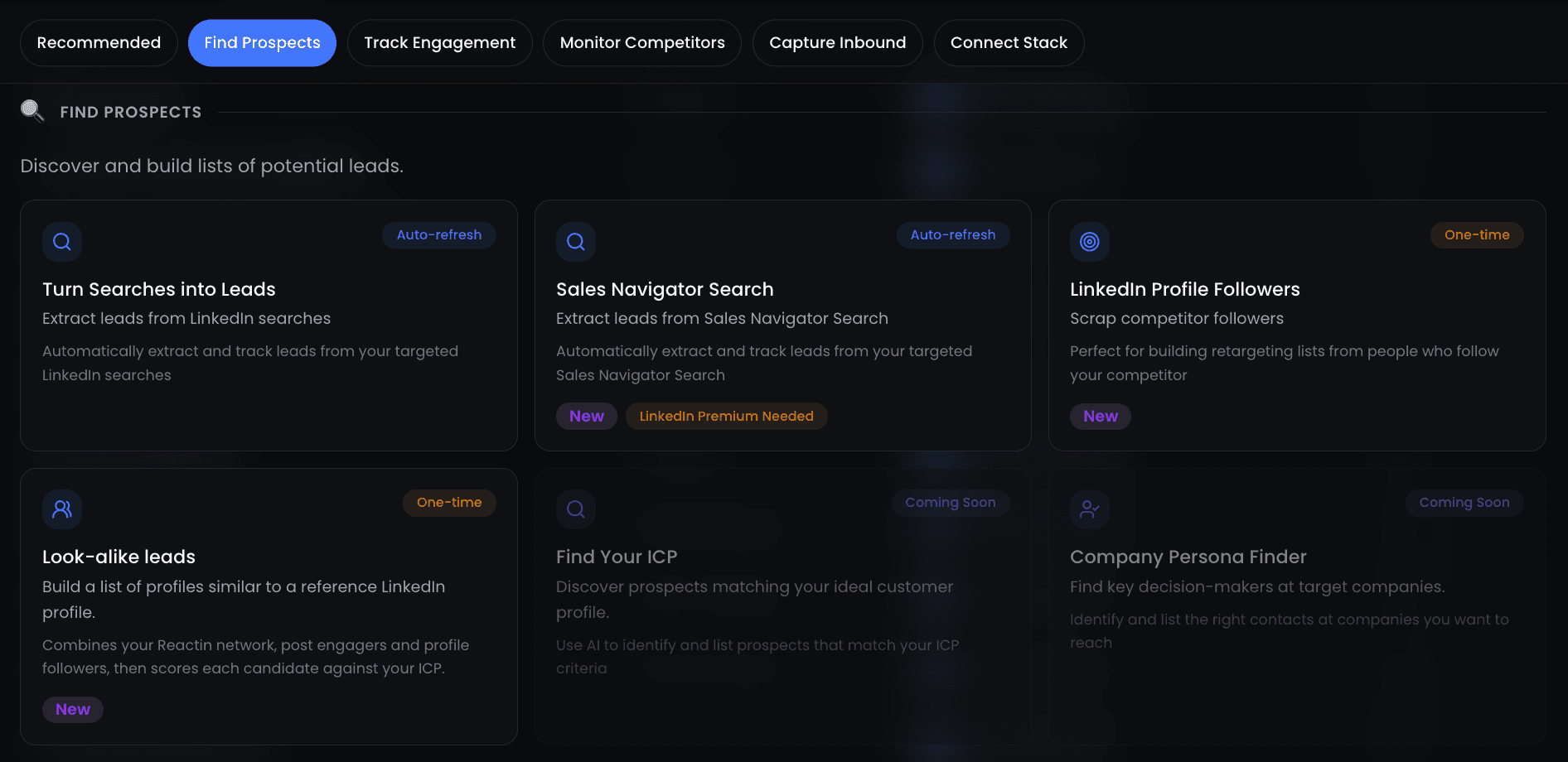
ReactIn flips the outbound model from push to pull. Instead of importing static lists and blasting sequences, you set up SmartLists powered by 20+ intent triggers - LinkedIn post engagers, event attendees, job changers, webinar registrants, Calendly bookings, Tally form submissions, Stripe trial starts, and more. When a signal fires, the lead enters your SmartList automatically, gets enriched by AI, and flows into the right campaign. No CSV exports, no manual imports, no stale data.
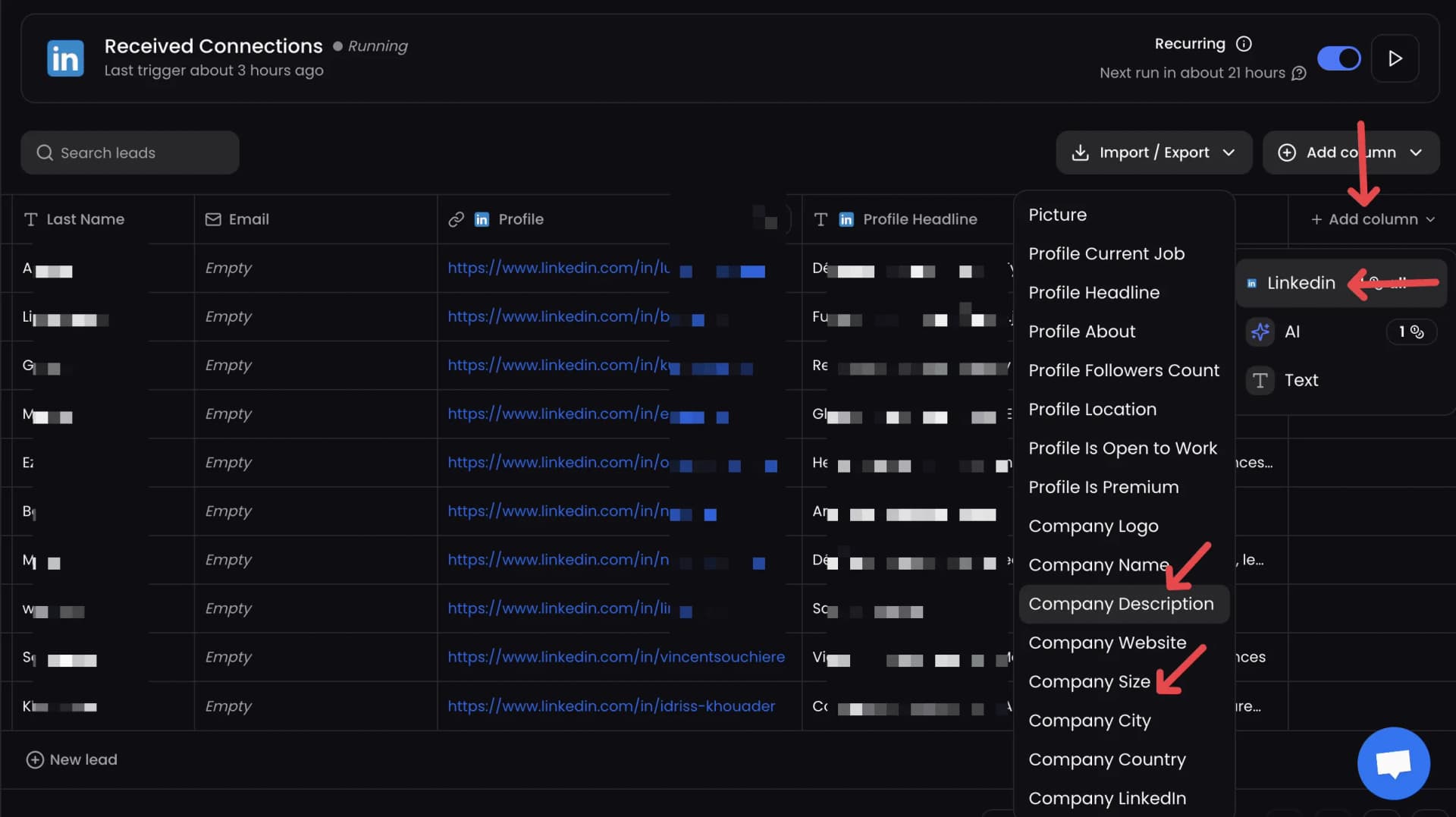
AI enrichment columns are a game-changer that Waalaxy simply doesn't have. Every lead in your SmartList can be automatically enriched with AI-generated columns: contextual icebreakers based on recent posts, ICP fit scores, company summaries, custom fields computed from any data point. This means your campaigns send messages that reference what a prospect actually cares about - not just their first name. Teams using ReactIn's AI columns consistently report reply rates 3-5x higher than generic template-based outreach.
Campaign ponderation and sender rotation solve the coordination problems that plague Waalaxy users running multiple campaigns or accounts. ReactIn's ponderation engine intelligently distributes leads across campaigns based on priority, intent strength, and sender availability. Sender rotation spreads outreach across multiple LinkedIn accounts, reducing per-account risk and increasing daily capacity. The unified inbox brings every conversation - across every sender - into one dashboard, so nothing falls through the cracks.
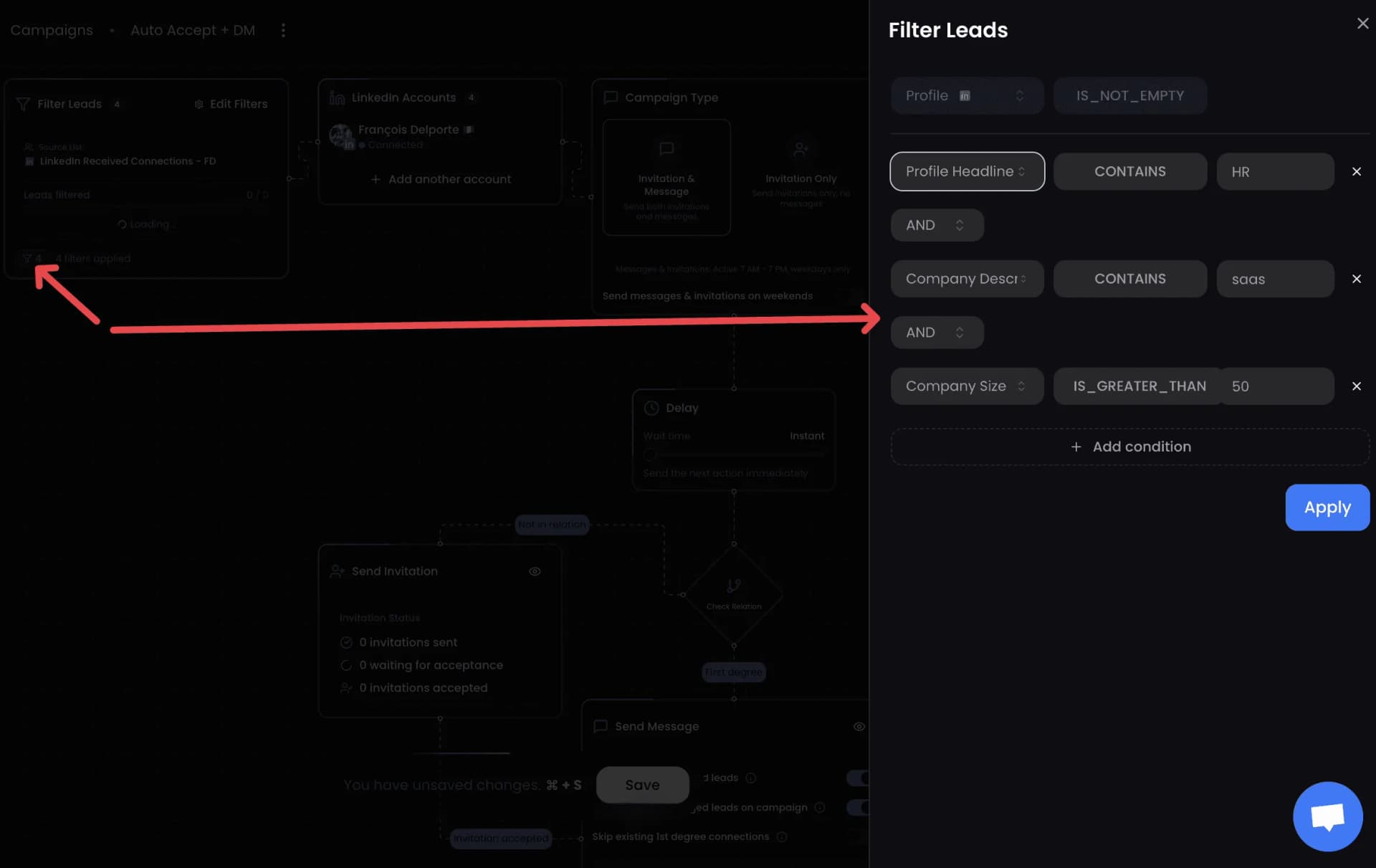
Pricing tells the story clearly. Waalaxy gates features across tiers, from around EUR19/month at entry to EUR49/month for the mid plan and EUR69/month for the full multichannel tier, per user, with roughly 50% off on annual billing. It is genuinely cheap, and even at the top tier you still don't get intent detection, AI columns, ponderation or sender rotation. ReactIn charges $29/sender/month for invitation campaigns and $69/sender/month for everything: all 20+ triggers, SmartLists, AI enrichment with 2,000 credits, campaign ponderation, unified inbox, sender rotation and unlimited automations, with an agency plan at $999/month for up to 50 senders. Pricing on both sides verified August 2026.
Account safety, side by side
Features decide which tool is nicer to use. Safety decides whether the account you built over eight years is still sending in March. It deserves its own section, because the two tools protect it in genuinely different ways.
Waalaxy's model is quota based. Daily caps per action, randomised delays between them, activity spread across the working day rather than fired in a burst. That is real protection and it works: the large majority of Waalaxy accounts never see a restriction. What it cannot change is the nature of what you are sending. A thousand identical openers to a filtered export is still a thousand identical openers, however politely they are spaced.
ReactIn applies the same quota discipline, and adds a structural difference: most of what it sends is a response to something that already happened. A message to someone who commented on your post this morning is an ordinary LinkedIn interaction, indistinguishable from one you would have sent by hand. A message to row 300 of a Sales Navigator export is not. The safety benefit is not a clever evasion, it is that the behaviour is genuinely closer to normal use.
The honest caveat: no tool makes automation invisible, and neither vendor can promise your account is safe. Volume is still your decision, and a brand new account pushed hard will get restricted on either platform. What differs is the baseline. On one, safety is a set of brakes applied to cold volume. On the other, the volume is warmer to begin with, and the brakes are still there.
The ramp schedule we use, and the signals that tell you to slow down, are in our guide to warming up a LinkedIn account.
Which one to choose
Neither tool wins outright, and the honest answer depends on where your leads come from today. Find your row.
| Your situation | Pick | Why |
|---|---|---|
| Your lists come from purchased CSVs or Sales Navigator exports | Waalaxy | Import is the workflow, and Waalaxy's is mature |
| Email sequences must live in the same tool as LinkedIn | Waalaxy | Multichannel in one seat, with a native CRM |
| You post on LinkedIn and people engage with it | ReactIn | That engagement is a list that refills itself |
| You run five or more LinkedIn accounts | ReactIn | Sender rotation and one inbox across every account |
| You already pay separately for a signal or enrichment tool | ReactIn | It absorbs that line rather than sitting next to it |
| You need a built-in CRM and no integrations | Waalaxy | ReactIn expects your CRM to live elsewhere |
The pattern under the table: Waalaxy is the better answer when the constraint is reaching more people, and ReactIn when the constraint is that the people you reach do not care. Most teams start with the first problem and end up with the second, which is why this comparison exists at all.
Migrating without losing a week
If you decide to move, do not switch everything on a Monday. Four steps, roughly a fortnight, and the decision is made on your numbers rather than on this article.
Export what already worked
Pull your Waalaxy campaign results before anything else, and note which sequences actually produced replies rather than acceptances. Those templates are the asset. Most of a migration is carrying them over, not rebuilding them.
Rebuild one list from a signal instead of a file
Take your best performing campaign and recreate its audience from behaviour: the people engaging with your posts, a competitor's engaged audience, your webinar attendees. Same ICP, different source. This is the part that feels unfamiliar, and it is the whole point of the move.
Run both for two weeks on the same ICP
Keep Waalaxy running on its existing campaigns and start ReactIn on the signal-built list. Same offer, same messaging, same person watching the inbox. Two weeks is enough to compare reply rate honestly and short enough that nobody has to defend the experiment.
Cut on the data, not the calendar
Compare replies and meetings booked, not messages sent. If the signal-built list wins, move the rest of the accounts across. If it does not, you have learned something specific about your market for the price of two weeks of overlap.
See how every tool stacks up in our complete ReactIn Alternatives & Comparisons guide for 2026.
Looking wider than a head-to-head? See the best Waalaxy alternatives for 2026, and the diagnosis of why Waalaxy reply rates fell.
Frequently Asked Questions
Sources & Further Reading
- See what real users say about Waalaxy's features and limitations on the Waalaxy G2 reviews page.
- LinkedIn has strict policies on automation and bulk messaging. Review the LinkedIn User Agreement to understand what is allowed and what puts your account at risk.
Related Articles
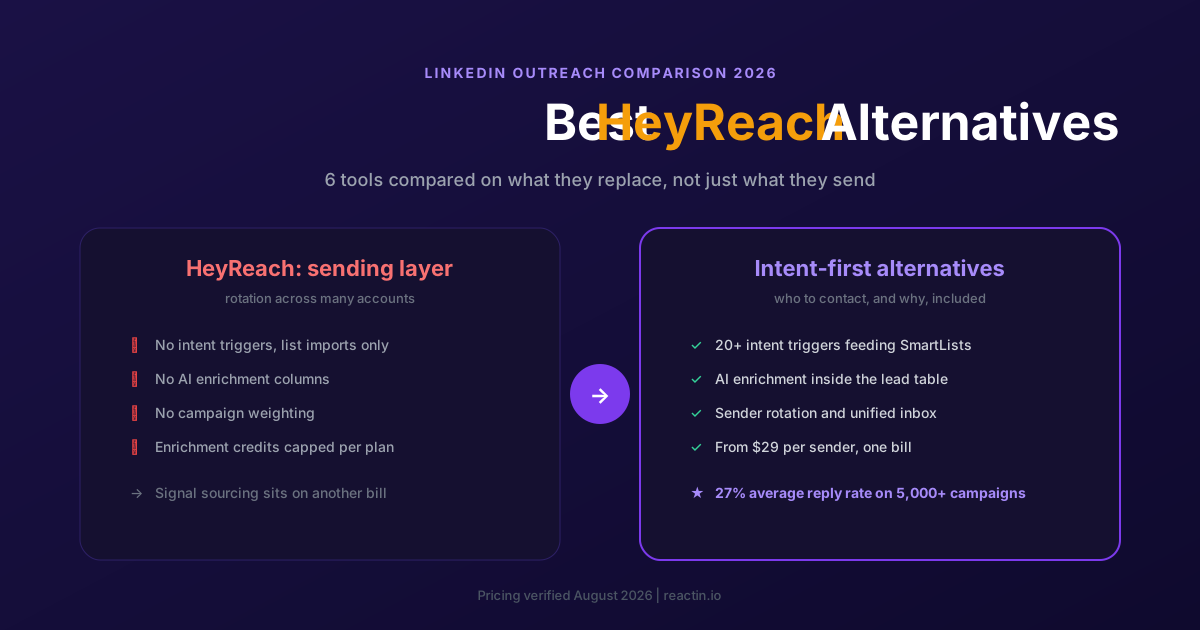
The 6 Best HeyReach Alternatives in 2026 (Priced and Compared)
HeyReach scales sending across many accounts, but it does not tell you who to contact. Here are the 6 best alternatives for 2026, with verified pricing and the cost of the stack HeyReach does not include.
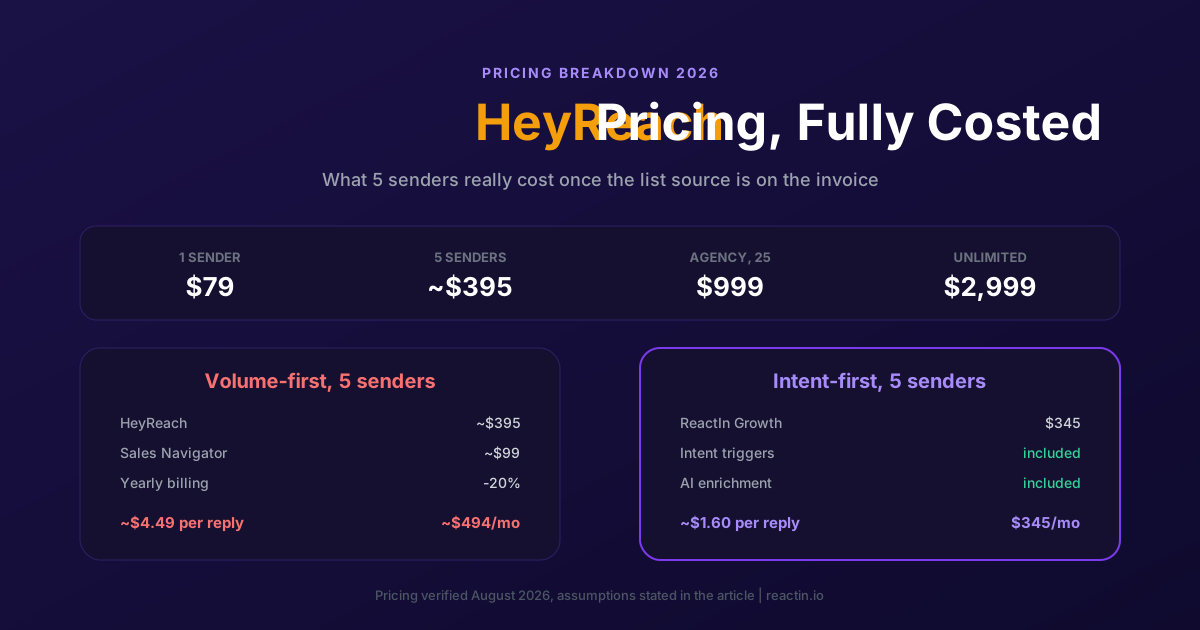
HeyReach Pricing in 2026: Real Cost per Sender and 5 Cheaper Alternatives
HeyReach Growth starts at $79 per sender, Agency is $999 for 25 senders and Unlimited is $2,999. Here is every plan, what the price includes and leaves out, and how to compare cost per reply instead of cost per seat.
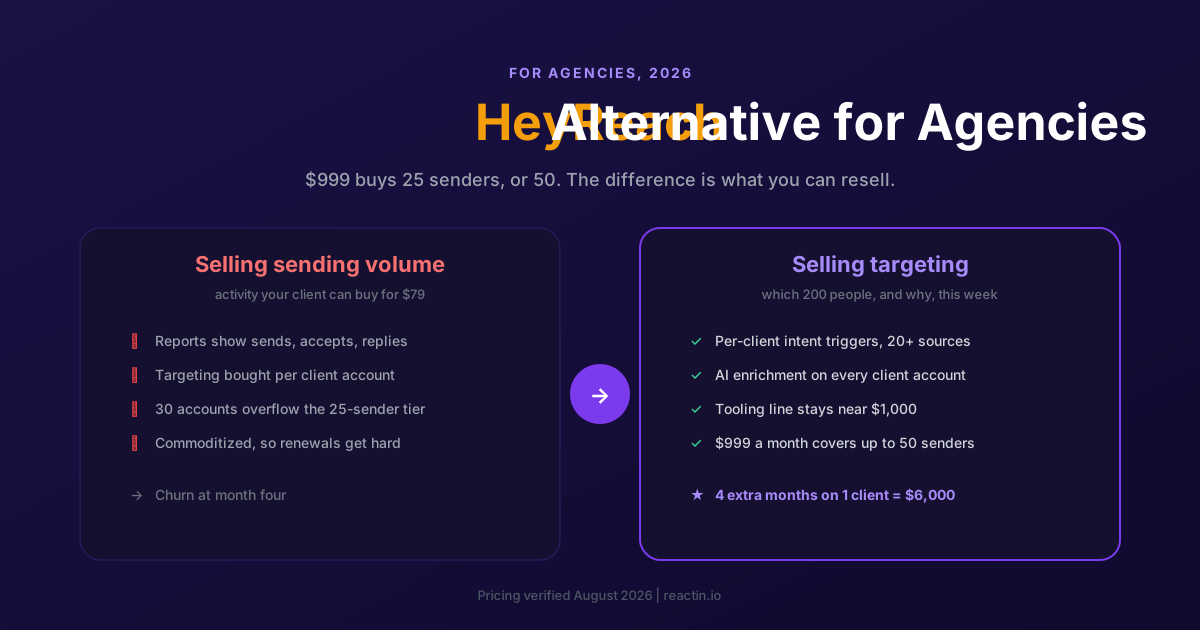
The Best HeyReach Alternative for Agencies in 2026 (5 Options Compared)
Agencies rarely leave HeyReach because the sending broke. They leave because volume services get commoditized. Here are 5 options compared on margin per client and months retained.
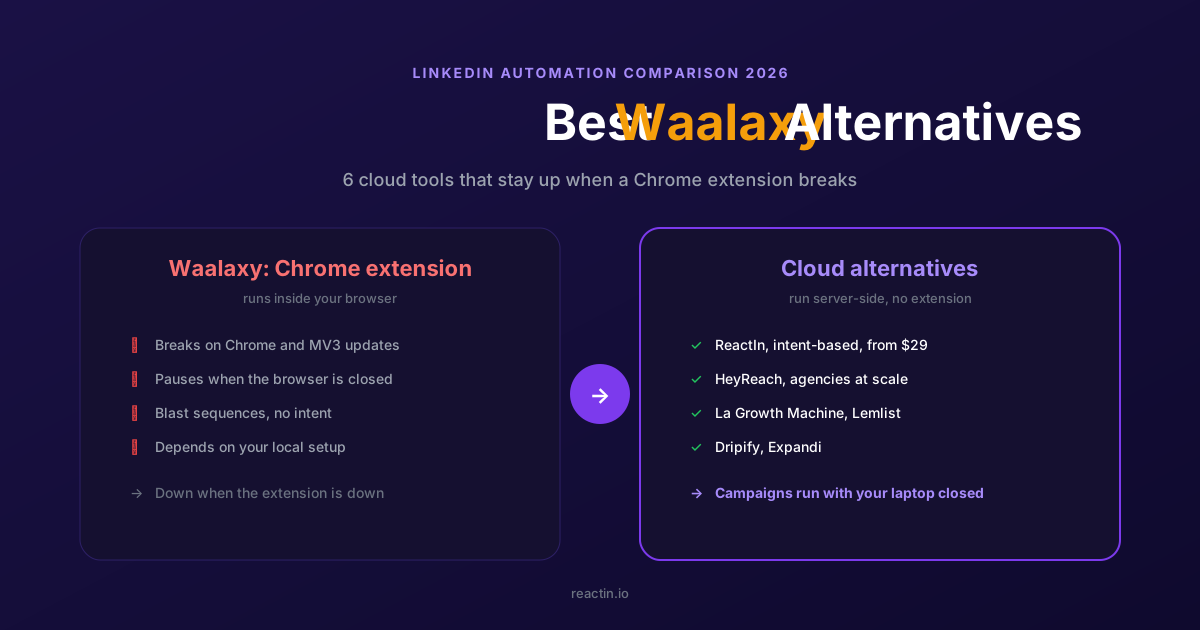
The 6 Best Waalaxy Alternatives in 2026 (Cloud Tools, No Extension)
Waalaxy runs as a Chrome extension that pauses when the browser breaks. Here are the 6 best cloud-based alternatives for 2026, with verified pricing and the right pick for your motion.