How to Fix lemlist Not Sending Emails (2026 Guide)
A sent count of zero is almost never deliverability. Leads in To review are parked in the Launch stage, a schedule carries a timezone, and a daily limit pushes the rest to tomorrow.
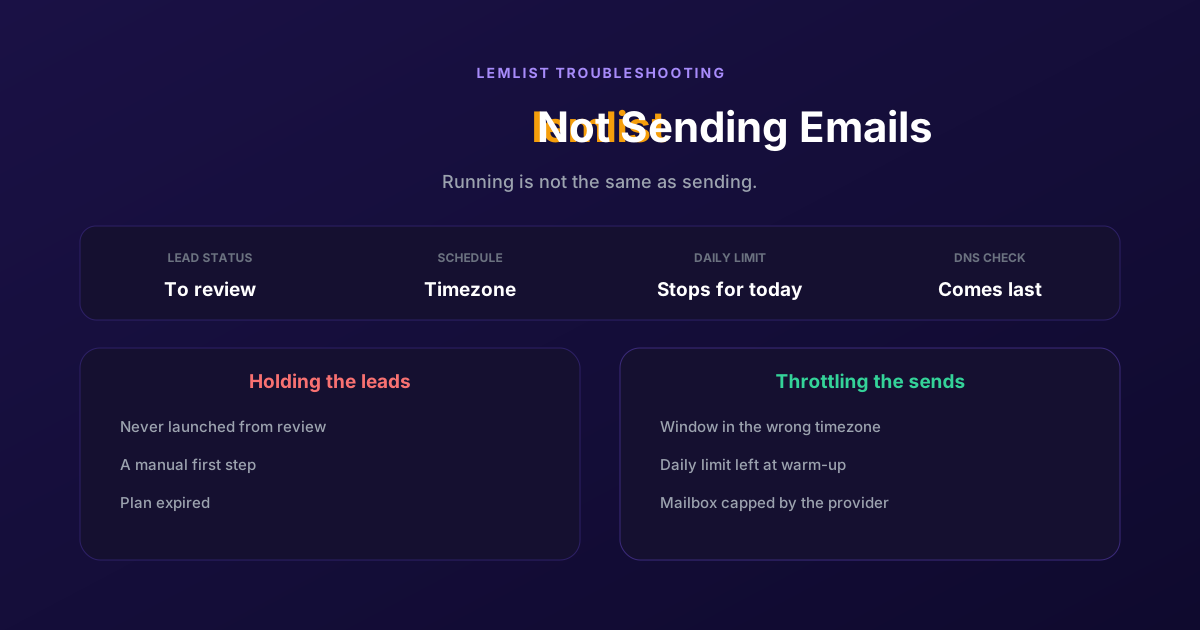
The campaign says it is running. The leads are imported, the sequence is written, the mailbox is connected, and after a day the sent count is still zero. There is no bounce, no error, no warning anywhere in the interface.
Almost everyone treats this as a deliverability problem and goes straight to SPF, DKIM and domain reputation. It usually is not. In most cases the emails were never handed to a mail server at all, because something upstream of sending is holding the leads, and the single most common holder is a stage you are supposed to click through yourself.
Running is not the same as sending
lemlist separates a campaign being active from its leads being released into the sequence, and separates both from the window in which sending is permitted. A campaign can be correctly configured, genuinely running, and still have nothing to send. These are the five states that produce a zero.
| Cause | How you recognise it | What to do |
|---|---|---|
| Leads still in To review | Leads are imported but none have entered the sequence | Launch them from the Launch stage |
| Schedule and timezone mismatch | Sending never starts, or starts at odd hours | Campaign settings, then Schedules and launch |
| Daily sending limit | A few go out, the rest stop for the day | Settings, then Sending limits |
| A manual first step | Tasks accumulate and the sequence never advances | Complete the manual tasks |
| Plan expired or downgraded | Launching is refused or silently does nothing | Check the subscription before anything else |
The first row is the one worth knowing by heart. The Launch stage is the last review step before a campaign goes live: leads wait there until you release them, and only then do they enter the sequence and start receiving emails. It is a deliberate safety gate, not a bug, which is exactly why it is easy to miss. Nothing in the campaign status tells you the leads are parked.
The schedule is the second. A sending window is stored with a timezone, and a window set to business hours in the wrong timezone can land entirely outside the hours you are watching. Combine that with a daily limit set low while you were warming the mailbox and you get a campaign that sends a trickle at times you never see, which reads as nothing at all.
The five checks, in order
Thirty seconds each. The first one resolves most of these outright.
Look at where the leads actually are
Open the campaign and read the lead statuses. Leads in To review have not entered the sequence: they are in the Launch stage waiting to be released. Go to the launch step and launch them, and the sequence begins from that moment. If you imported leads after the campaign started, the new ones land in the same place.
Check the schedule and its timezone
Open Campaign settings and Schedules and launch. Confirm a schedule is attached, that the days and hours are what you intended, and above all that the timezone matches the one you are reasoning in. A correct window in the wrong timezone is the version of this that takes longest to spot, because everything looks right.
Check the daily sending limit
Open Settings and Sending limits. When a campaign reaches its daily limit, sending stops and the remaining emails go out the following day rather than failing. A limit left at a warm-up value will look like a stall to anyone expecting the whole batch, and the fix is to raise it deliberately rather than to restart the campaign.
Check for a manual first step
If the first step of the sequence is a manual action, the campaign cannot advance until those tasks are done. The emails behind that step are not queued against a schedule, they are queued against you. Open the task list, clear it, and the automated steps after it start moving on their own.
Check the plan and the mailbox
A subscription that has expired or dropped to a free tier can block launching entirely, which produces the same silence as everything above. Then look at the connected mailbox on the provider side: a suspended account or a provider-level quota stops sending regardless of what lemlist thinks. Both are fast to rule out and easy to forget.
Campaigns that start when you press start
Four habits remove this class of problem.
- Set the timezone once, at the account level, and make every schedule agree with it. Mixed timezones across campaigns are how a team ends up sending cold email at three in the morning local time.
- Treat the Launch stage as part of importing, not as a separate task for later. Import, review, launch, in one sitting. Leads left unlaunched are the most common version of this failure and the easiest to prevent.
- Write the warm-up plan down, including when limits go up. A daily limit you set six weeks ago and forgot is indistinguishable from a bug once you stop remembering the number.
- Check the sent count the same day you launch, not a week later. The five causes here all show up within hours, and a campaign that has sent nothing by the end of its first sending window is telling you something.
Once sending does start, deliverability becomes the real subject, and it is a different set of problems with different causes.
Two worth having ready: the Google has blocked an outgoing email error and bounces on lemlist's default tracking links.
Where this sits next to LinkedIn
Worth being straight about the shape of this one. lemlist is an email sequencer and ReactIn is LinkedIn-first, so this is not a like-for-like swap. If sending cold email at volume is the job, lemlist does a job ReactIn does not, and no amount of framing changes that.
What does transfer is the design question underneath. A campaign that reports itself as running while its leads sit in a queue you have to remember to clear is a gap between the status and the reality, and every minute in that gap is a day of outreach you think is happening.
ReactIn has no separate launch gate. Lists are standing definitions fed by signals, over twenty intent sources, and people are contacted as they qualify, on our servers, without a batch waiting for release. Campaign ponderation decides who gets contacted first when several campaigns want the same person, rather than leaving it to the order of a queue.
The honest limit: LinkedIn's daily ceilings apply to ReactIn as they do to every tool, and we are not an email platform. Teams that run both usually keep email where it is and use LinkedIn for the people email does not reach.
For the side-by-side, see our ReactIn vs lemlist comparison.
A sent count of zero is an upstream problem, not a deliverability one. Find out where the leads are before you touch anything in DNS, because no mail server has had a chance to reject an email that never left.
Frequently Asked Questions
Sources & Further Reading
- lemlist documents the causes in emails aren't being sent from your lemlist campaign.
- The review gate itself is explained in understand the launch stage.
- For schedules, see set a sending schedule.
- For the daily cap, set your global daily send limit.
- And to confirm a campaign really started, verify your campaign has started.
Related Articles
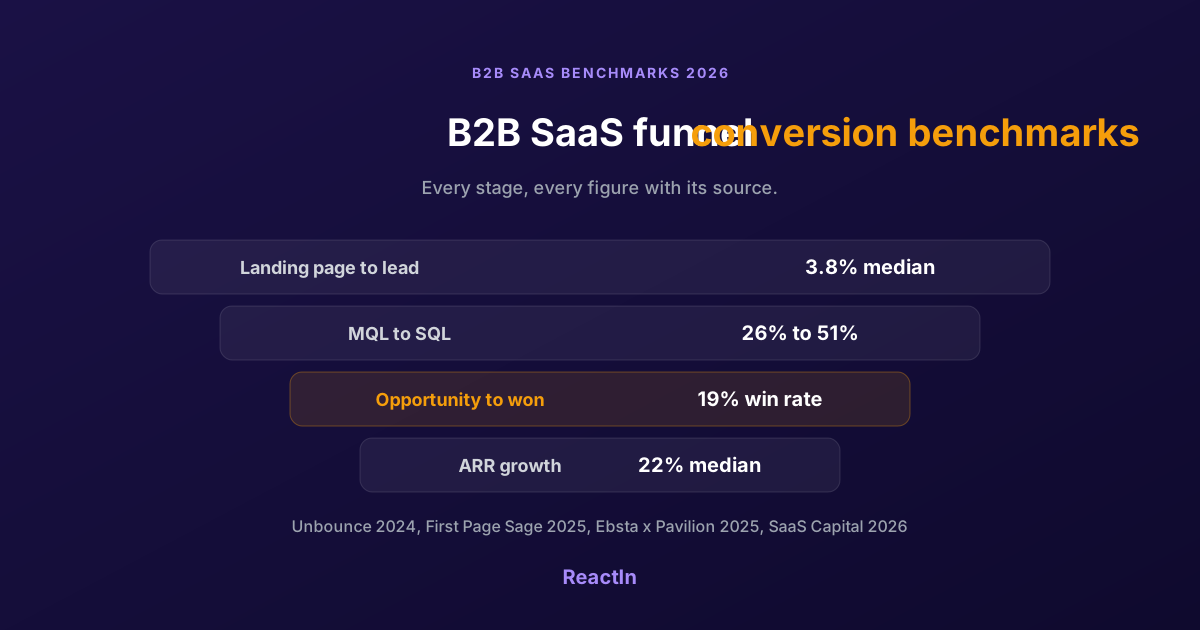
B2B SaaS Funnel Conversion Benchmarks 2026: Every Stage, With Sources
Sourced conversion benchmarks for each stage of the B2B SaaS funnel, from landing page to closed-won, plus growth and retention medians, and why the numbers you find online disagree.
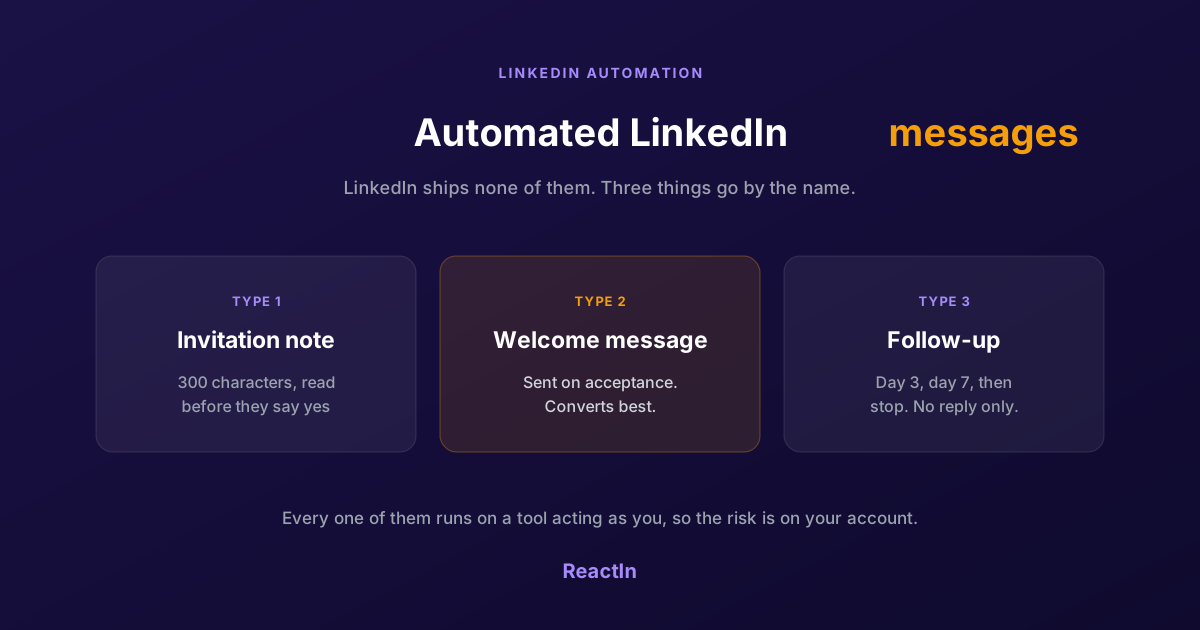
Automated LinkedIn Messages: How to Send Them Without Getting Restricted (2026)
LinkedIn ships no automated messaging at all. Here are the three things people call an automated LinkedIn message, how to set one up, what the terms actually say, and the three cases where writing by hand wins.
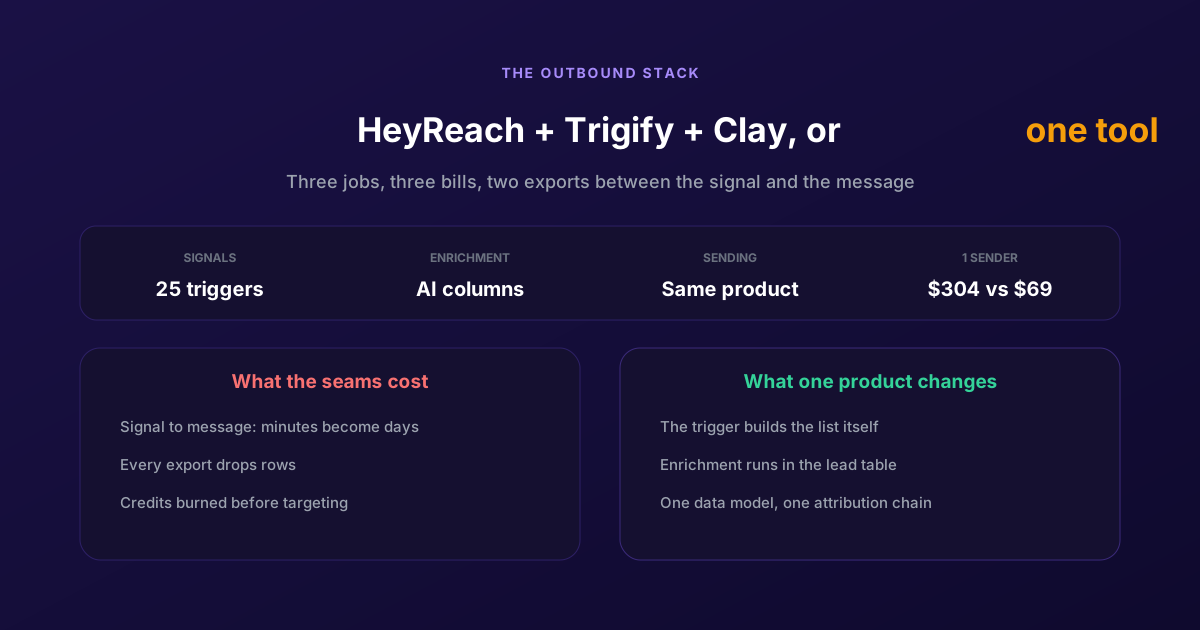
ReactIn = HeyReach + Trigify + Clay: One Tool for Cold and Warm Outreach
Three products, three bills, and two exports between the signal and the message. Here is what each tool owns, what the seams cost in latency and credits, and when keeping the stack is still the right call.
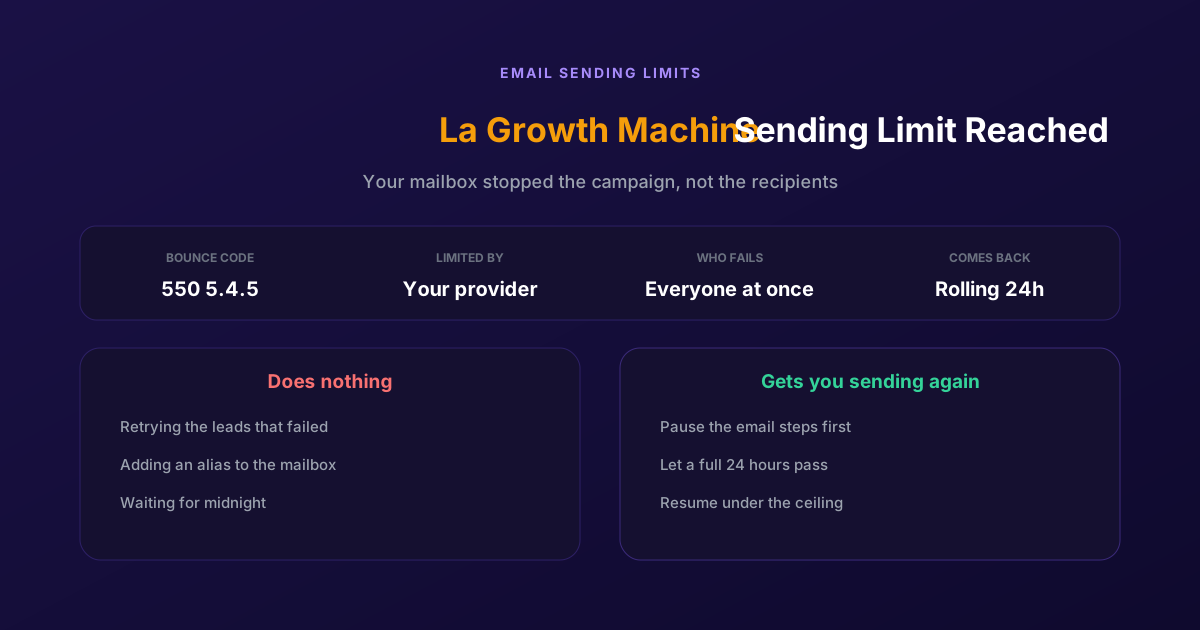
Fix "You Have Reached a Limit for Sending Mail" in La Growth Machine
The message belongs to your email provider, not to the tool. The mailbox has spent its daily allowance, every recipient fails at once, and capacity comes back on a rolling 24-hour window rather than at midnight.