How to Fix the lemlist "Google Has Blocked an Outgoing Email" Error
One message was flagged, not your account. Check SPF and DKIM before rewriting anything, strip the links back, and know the prerequisite most people skip: cold outreach needs a paid Workspace account.
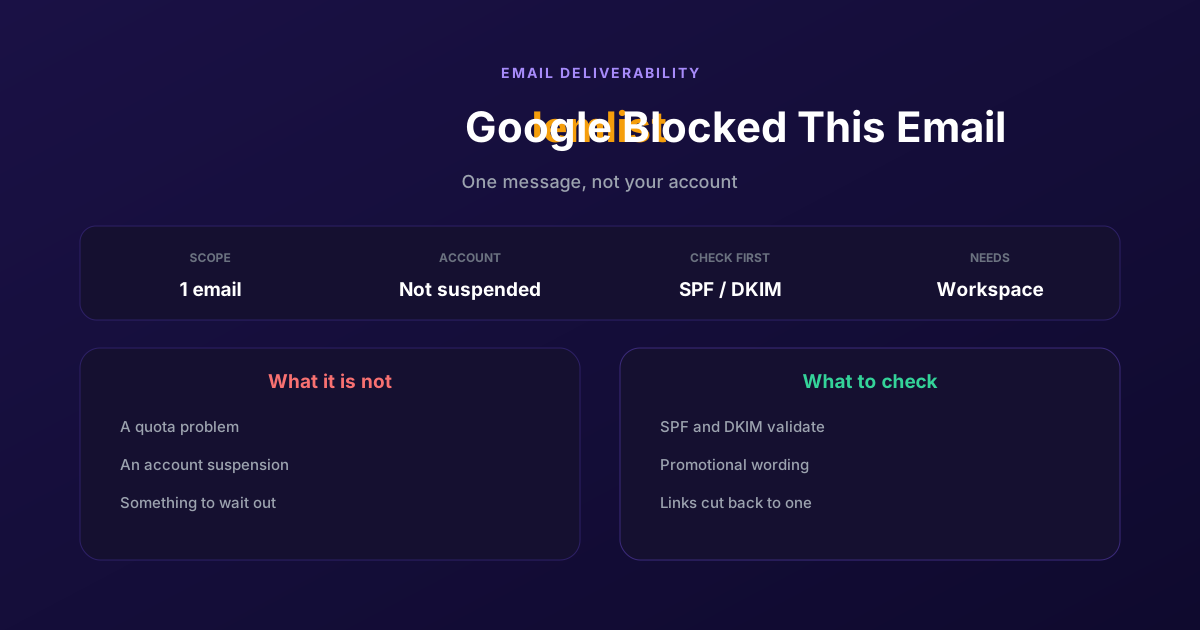
A step in the campaign fails and lemlist reports Google has blocked an outgoing email. Your daily allowance is nowhere near spent, the address is valid, and the message simply never left.
The most useful thing to know first is the scope: one email was flagged, not your account. Google blocks individual outgoing messages it reads as risky, which is unnerving but recoverable. The fix is in the message and in your authentication, and there is one prerequisite people skip that makes the whole problem far more likely.
What Google actually blocked
This is not a quota error, which is why checking your remaining allowance tells you nothing. Google inspected the outgoing message and decided it looked like something a recipient would not want. Four things push a message into that judgement.
| Trigger | What it looks like in the copy | Fix |
|---|---|---|
| Promotional or aggressive wording | Capitals, urgency, hard calls to action, sales language | Rewrite it as something a person would actually send |
| Suspicious or excessive links | Several URLs, shorteners, or an unfamiliar tracking domain | Keep one essential link, on a domain you own |
| Authentication not valid | Affects every message, not just this one | Fix SPF and DKIM on the sending domain |
| Weak sender reputation | Blocks increasing over weeks rather than appearing suddenly | Lower volume, improve targeting, warm the domain |
| Personal Gmail used for cold outreach | Problems from the start on a free account | Move to a paid Google Workspace account |
That last row is the prerequisite worth stating before any of the tuning. A personal Gmail account is not built to carry cold email volume, and lemlist says so directly. If you are running outreach from a free Gmail, no amount of copy editing makes this reliable, and every other fix on this page is working around the wrong foundation.
The authentication row deserves the same emphasis for a different reason: it is the one cause that is completely binary and completely under your control. SPF and DKIM either validate or they do not, and if they do not, you are asking Google to trust mail it cannot verify came from you. Check that before you rewrite a single sentence.
Unblock the message
Four steps, in the order that finds the cause fastest.
Check SPF and DKIM before touching the copy
Confirm both records validate for the sending domain. This takes two minutes and rules out the cause that affects every message rather than just this one. If authentication is broken, fixing the copy will produce a slightly better version of the same problem tomorrow.
Read the blocked message as a stranger would
Open the exact step that failed and look for promotional phrasing, capitals, urgency, hard calls to action and anything that reads as a template. The heuristics are looking for a message written to hundreds of people, so the question to ask is whether this could have been written to one.
Strip the links back to one
Multiple URLs, shorteners and unfamiliar tracking domains all add risk. Keep the single link the message genuinely needs, on a domain you control, and remove the rest. A first-touch email usually does not need a link at all.
Resend just that step
Once revised, resend the failed step rather than restarting the whole sequence. Restarting risks sending near-duplicate copy to people who already received the original, which creates a second problem on top of the first.
Stop it happening again
Four habits keep Google's filters on your side, and they are the same habits that improve reply rates.
- Send from a paid Workspace account on a domain built for outreach. This is the foundation, not an optimisation, and it removes the most common structural cause.
- Keep authentication verified. SPF and DKIM are not set-and-forget: they break when DNS changes, when a domain moves, or when someone tidies up records they did not recognise.
- Write to one person. Personalisation is a deliverability feature as much as a conversion one, because a message that reads as individual does not match the pattern the filters are looking for.
- Stagger the sending. Volume concentrated into a short window looks like a burst, and lemlist's scheduling exists precisely so you can spread it out. Keep daily volume within reasonable limits for the mailbox's age.
Notice how little of that is about clever wording. Deliverability is mostly infrastructure and pacing, and copy is the part people reach for first because it is the part they can see.
If the blocks come with content-related bounces on valid addresses, the tracking domain is often involved. We covered that in how to fix lemlist bounces on default tracking links.
A channel with no filter in the middle
Everything above is work you do to satisfy an intermediary. Google is not your customer and not your prospect: it is a third party deciding whether your message is allowed to reach the person you wrote it to, based on patterns it will not publish.
ReactIn runs outreach on LinkedIn, where there is no such intermediary. A message to a connection arrives as a notification, and whether it gets read is the recipient's decision rather than a filter's. There is no SPF, no DKIM, no sender reputation and no blocked-message state to recover from.
It also removes the maintenance around all of it: no domain to warm, no authentication to keep valid, no reputation to monitor. That is not a small saving on a stack where somebody currently owns those tasks.
The honest limit: ReactIn has no email at all, so if email is genuinely producing your pipeline, fix the block and keep lemlist, which is a strong product for cold email. The argument here is narrower. If you are spending real hours on deliverability to keep a channel functioning, that time is a cost to weigh against what the channel returns.
For how the two products compare across the board, see our ReactIn vs Lemlist comparison.
The block is Google telling you the message looked like bulk mail. Usually it is right, and the edit that satisfies the filter is the same edit that would have got a better reply.
Frequently Asked Questions
Sources & Further Reading
- lemlist documents this error directly in the Google has blocked an outgoing email article.
- For the account-level version of the problem, see prevent Google Workspace account blocking.
- lemlist's wider troubleshooting collection covers the adjacent delivery failures.
- Google sets out what its filters expect in its email sender guidelines, which is the authority worth reading before tuning anything else.
Related Articles
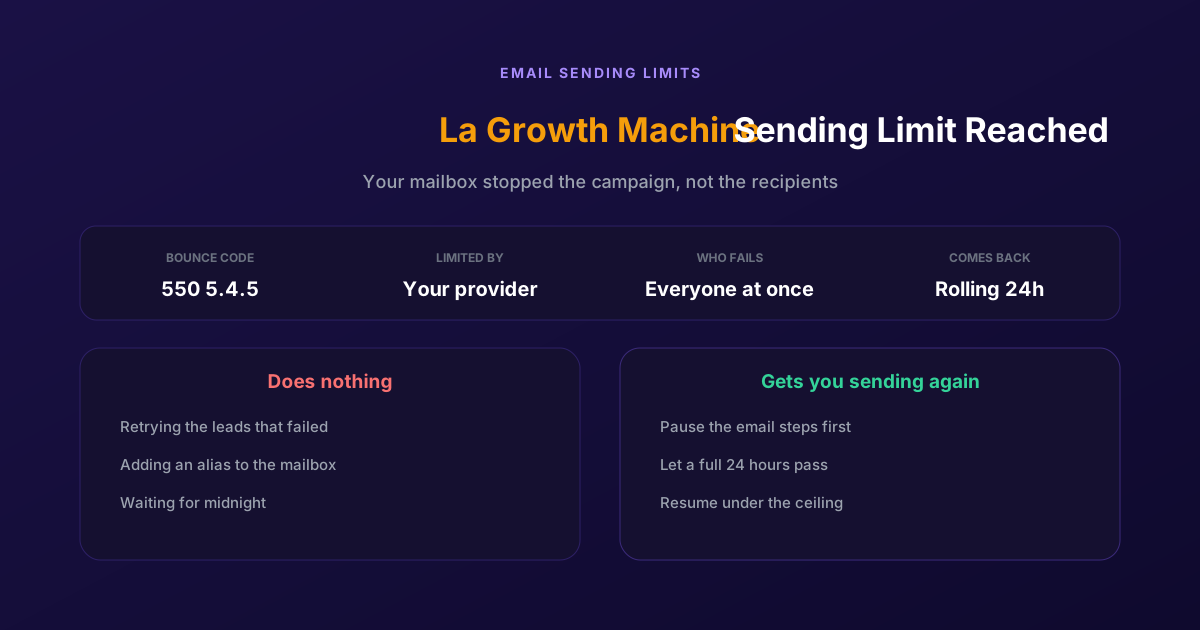
Fix "You Have Reached a Limit for Sending Mail" in La Growth Machine
The message belongs to your email provider, not to the tool. The mailbox has spent its daily allowance, every recipient fails at once, and capacity comes back on a rolling 24-hour window rather than at midnight.
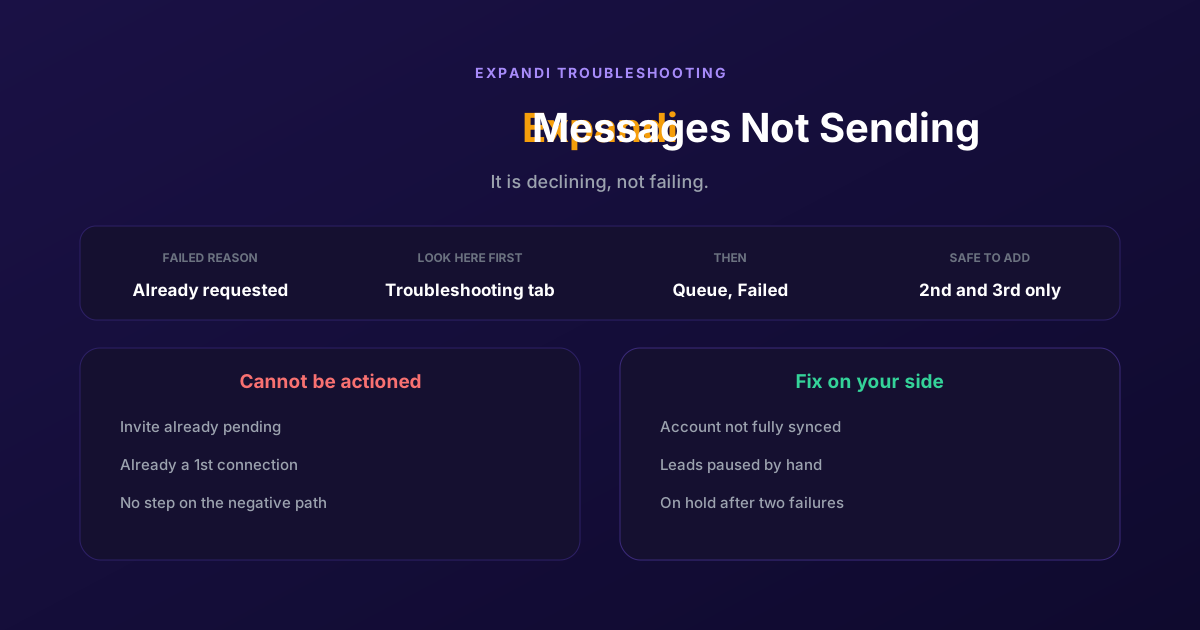
How to Fix Expandi Messages Not Sending (Pending Invites)
A connector campaign opens with a connection request, and a lead who already has one pending cannot receive a second. So the campaign has nothing it is allowed to do, and it says so in a tab most people never open.
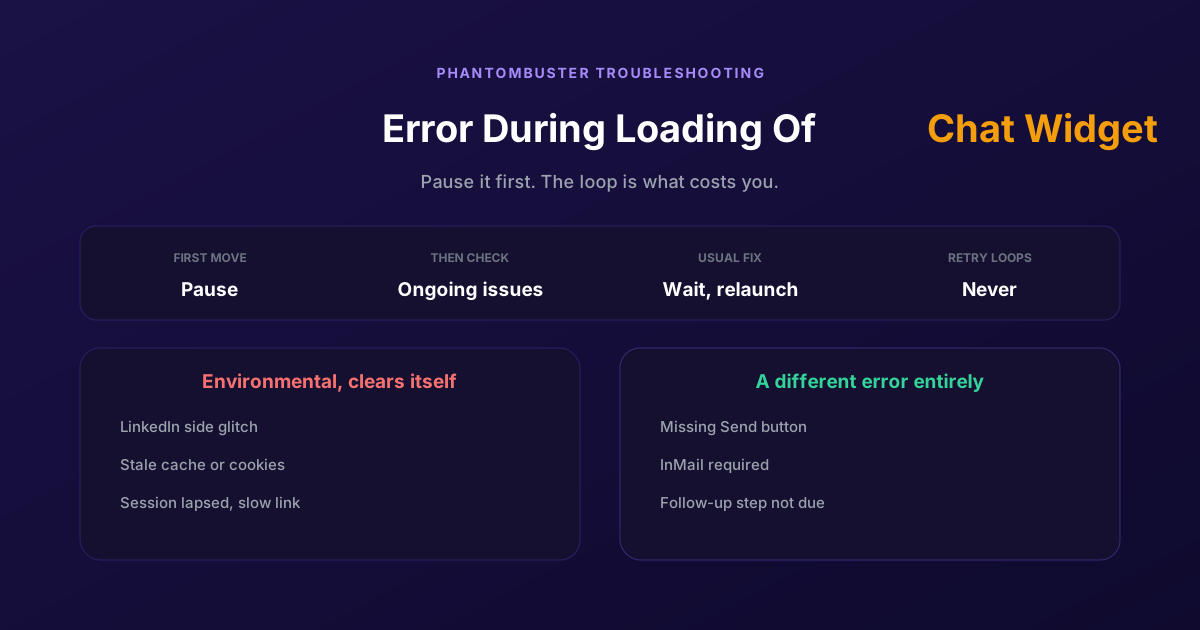
How to Fix Phantombuster "Error During Loading of Chat Widget"
Phantombuster documents this one, and the documented fix is mostly to wait. The expensive part is a Phantom left looping against it, burning execution time on attempts that cannot succeed.
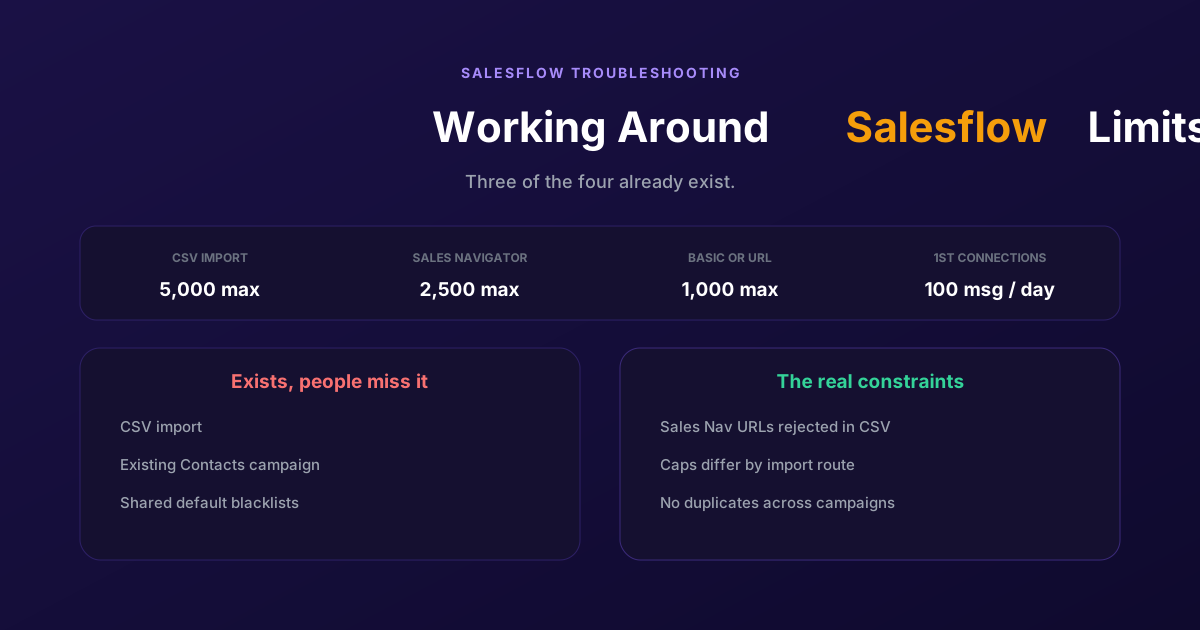
Working Around the Limitations on Salesflow (2026 Guide)
CSV import exists, so does a campaign type for contacts you already hold, and so do shared blacklists. The constraints that actually bite are narrower: rejected Sales Navigator URLs, per-route caps, and a deliberate block on duplicates.