Fix "You Have Reached a Limit for Sending Mail" in La Growth Machine
The message belongs to your email provider, not to the tool. The mailbox has spent its daily allowance, every recipient fails at once, and capacity comes back on a rolling 24-hour window rather than at midnight.
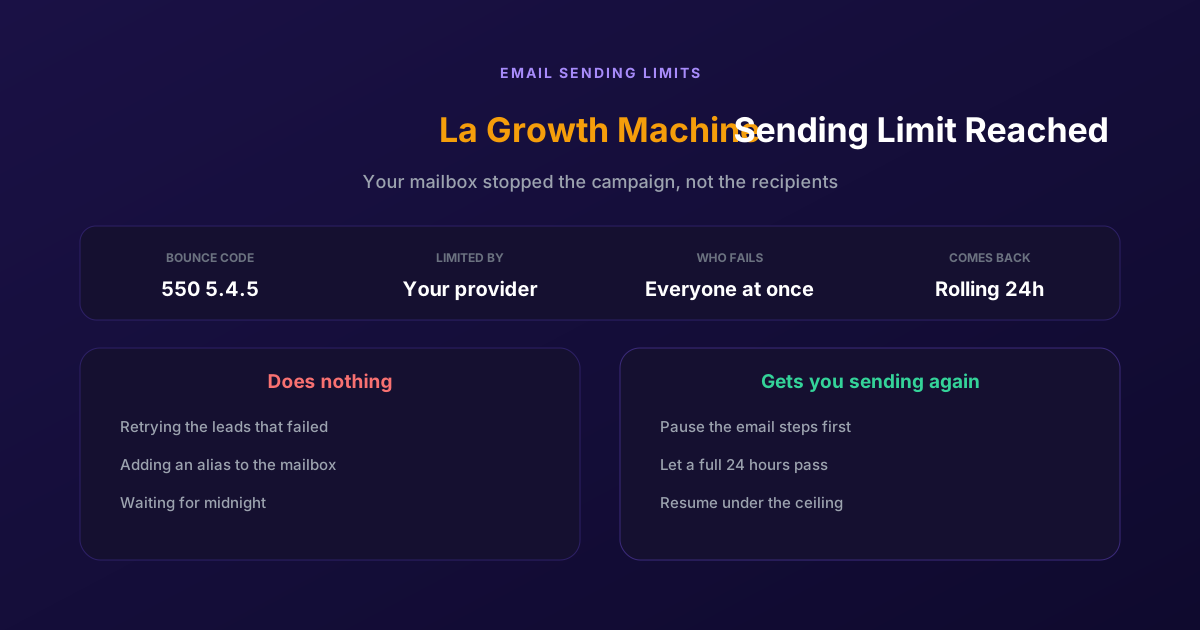
The campaign stops, the sent counter freezes, and La Growth Machine shows you the reason your mailbox gave it: You have reached a limit for sending mail. The sequence is fine, the leads are fine, the addresses are fine. Something upstream of all three said no.
That sentence is not La Growth Machine's. It belongs to your email provider, is passed through unchanged, and describes your account rather than anyone you were writing to. Which is why every fix that lives inside the campaign, relaunching it, re-enrolling the failed leads, rewriting the sequence, changes nothing at all.
Whose limit you actually hit
La Growth Machine does not own a mail server. It signs in to the mailbox you connected to the identity and sends as you, which is what makes the emails look like ordinary mail and what makes your provider's rules apply in full. When Google or Microsoft decides the account has sent enough for now, it refuses the handoff, and LGM reports what it was told. No campaign setting sits above that decision.
| The question | The usual assumption | How the provider counts it |
|---|---|---|
| The unit | Emails this campaign sent | Recipients, across every message the mailbox sent |
| The scope | The campaign that stopped | The whole account: replies, internal threads, other tools |
| The reset | Midnight, or the start of the working day | A rolling 24-hour window from when you spent it |
| The sender | Each sending address has its own allowance | Aliases and send-as addresses share the user's allowance |
| The remedy | Retry the leads that failed | Lower the volume, then let the window pass |
The number of failing recipients tells you which error you have, and it takes ten seconds to check. Everything failing from one moment onward is your own cap. A single address failing while the rest deliver is the opposite problem, the recipient's server throttling mail to that one person, and the two fixes pull in opposite directions.
The rolling window is the detail that costs people a second day. Capacity is restored gradually from the point at which it was spent, so a campaign that emptied its allowance at four in the afternoon is not whole again at midnight. Advice that tells you to wait for tomorrow is describing a reset that does not happen.
Getting sending again today
In order. The first two steps cost nothing and stop the situation getting worse, which matters more than it sounds: retrying is the most common way a one-day pause becomes a two-day one.
Pause the email steps before anything else
Every retry is another attempt against a ceiling that has already been reached. It cannot succeed, it holds the counter at the limit, and a burst of refused attempts is exactly the pattern a provider reads as a compromised account. Pause the campaign, or at least its email steps, and let the LinkedIn steps keep running if the sequence allows it.
Count how many recipients failed
Open the failures and look at the spread rather than at the first line. Every recipient failing from a given timestamp onward is your cap. One address failing while the rest went out is the per-contact throttle, and pausing an entire campaign for it would be the wrong call.
Read the response your mailbox returned
The interface text is a summary, the SMTP response is the diagnosis. 550 5.4.5 is the daily sending limit. 550 5.2.1 is the recipient's server rate limiting that address. A 5.7.x response is an authentication or policy rejection and has nothing to do with volume, so treating it as a limit problem means sending less for a week and fixing nothing.
Wait out the window, then come back lower
Give it a full 24 hours from the moment sending stopped rather than waiting for the date to change. When you resume, resume under the ceiling: capacity returns into the same limit you hit, so an identical daily volume produces an identical error tomorrow, and a second consecutive block on one account is treated less kindly than the first.
Set the daily volume on what is left, not on the headline number
Your provider's published figure is the total for the account, and the account is already spending part of it on replies, internal threads and anything else connected to it. Subtract that before you set the number in La Growth Machine, then leave a margin on top. A campaign that ends the day at ninety per cent of the ceiling survives a busy Tuesday; one that ends at a hundred does not.
Settings that keep you under the ceiling
Reaching the cap once is a configuration problem rather than bad luck. Four habits keep the ceiling out of your way.
- Set La Growth Machine's daily email volume below your provider's limit rather than at it. The margin absorbs everything the mailbox sends that no campaign counts.
- Treat a new mailbox as a small one. A freshly created user or a recently added domain starts well below the headline figure and earns its way up over weeks. It cannot inherit an established sender's volume on day one.
- Keep one mailbox to one sending tool. Where a CRM, a newsletter platform or a second sequencer shares the address, the allowance is shared but no tool reports the total, and the first symptom is this error at a volume that looked safe in every dashboard.
- Spread sending across the working day. Volume fired into a single morning hour reaches the ceiling before lunch and blocks the afternoon, even when the daily total would have been comfortable.
None of that raises the ceiling, and that is the honest limit of tuning. Past a certain volume the answer is more sending identities, each with its own mailbox and its own warm-up, which is a budget and a calendar rather than a setting you change this afternoon.
If it turns out that only one or two addresses failed, you have the other error entirely: a contact is getting too much mail, where the recipient's server is throttling and the fix is to pause that person rather than your campaign.
Outreach with no mail quota
Step back from the error and the structure is the real subject. Email capacity is rented. Your provider decides how much you may send, the recipient's provider decides how much it will accept, and neither decision takes any account of how good the sequence is or how relevant the message was. The ceiling arrives mid-campaign, as a refusal, on a day you did not pick.
ReactIn runs outreach on LinkedIn, where the constraint has a different shape. There is no daily mail quota, no recipient-side throttle and no bounce code, because no mail server stands between you and the person. LinkedIn's own action limits still exist and still deserve respect, but they are known in advance and they belong to an account you can see, rather than to a pool shared with every other tool on the mailbox.
It also changes what the volume question is for. Writing to people who just engaged with a post, a competitor's page or a job change is a smaller list by definition, and a smaller list that converts does not need a two-thousand-a-day ceiling to work. The limit stops being the thing you plan the week around.
The honest version: this is not an argument against email. If your buyers live in their inbox and your domain is healthy, email works, and ReactIn does not replace it, since it does no email sequencing at all. The case here is narrower. If the reason you are reading this is that your mailbox stopped a campaign you had already paid to build, a channel with no mailbox in it is worth a look.
The side-by-side is here: ReactIn against La Growth Machine, including what each one does when a channel runs out of capacity.
The limit is not a bug and it will not be lifted for you. It is the price of sending through a mailbox you rent, and the only two real levers are sending less per identity or running more identities.
Frequently Asked Questions
Sources & Further Reading
- Google publishes the current figures for Workspace accounts on its Gmail sending limits page, and they change, so plan volume against the page rather than against a number you remember.
- Microsoft documents the equivalent for Exchange Online in its published service limits, where the ceiling is expressed in recipients rather than in messages.
- On the code itself, how to fix 550 5.4.5 daily sending limit exceeded walks through the sender-side version of this refusal.
- If you are unsure how to read what came back, this guide to email bounce codes maps the common responses to what actually caused them.
- And Google's email sender guidelines set out the expectations that sit behind these limits for anyone sending in volume.
Related Articles
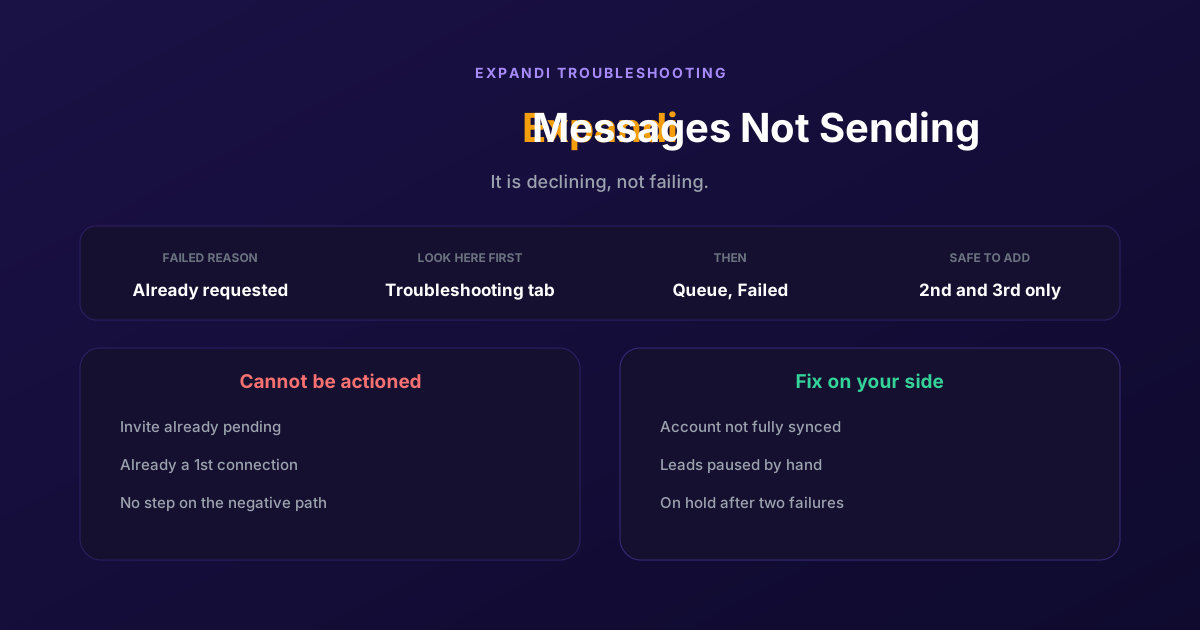
How to Fix Expandi Messages Not Sending (Pending Invites)
A connector campaign opens with a connection request, and a lead who already has one pending cannot receive a second. So the campaign has nothing it is allowed to do, and it says so in a tab most people never open.
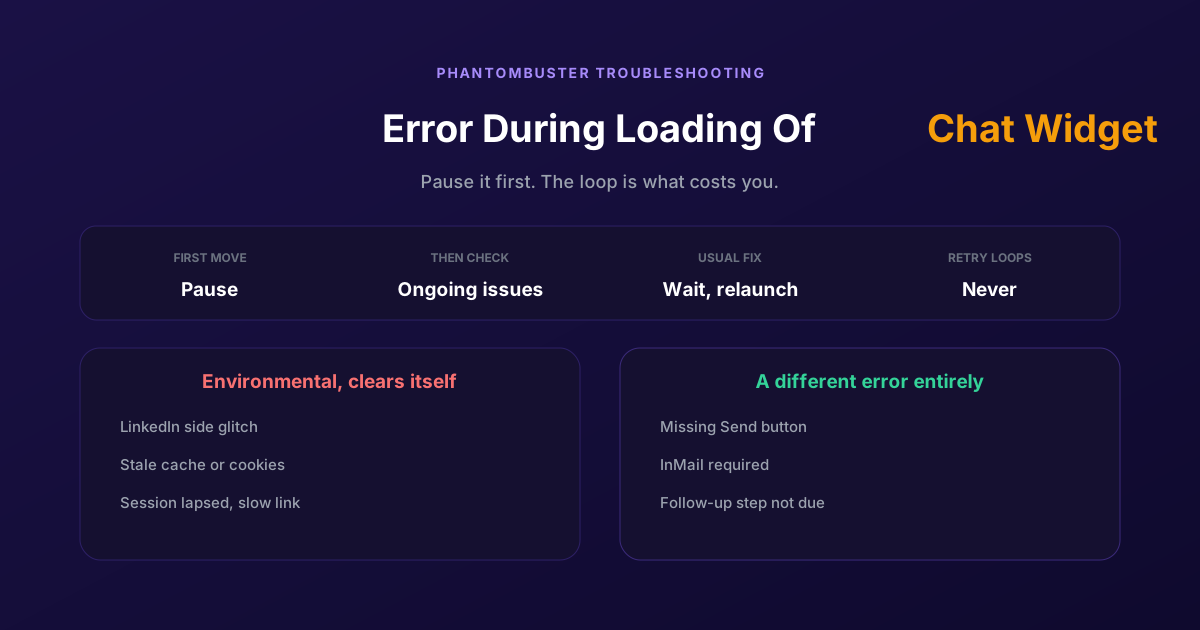
How to Fix Phantombuster "Error During Loading of Chat Widget"
Phantombuster documents this one, and the documented fix is mostly to wait. The expensive part is a Phantom left looping against it, burning execution time on attempts that cannot succeed.
Working Around the Limitations on Salesflow (2026 Guide)
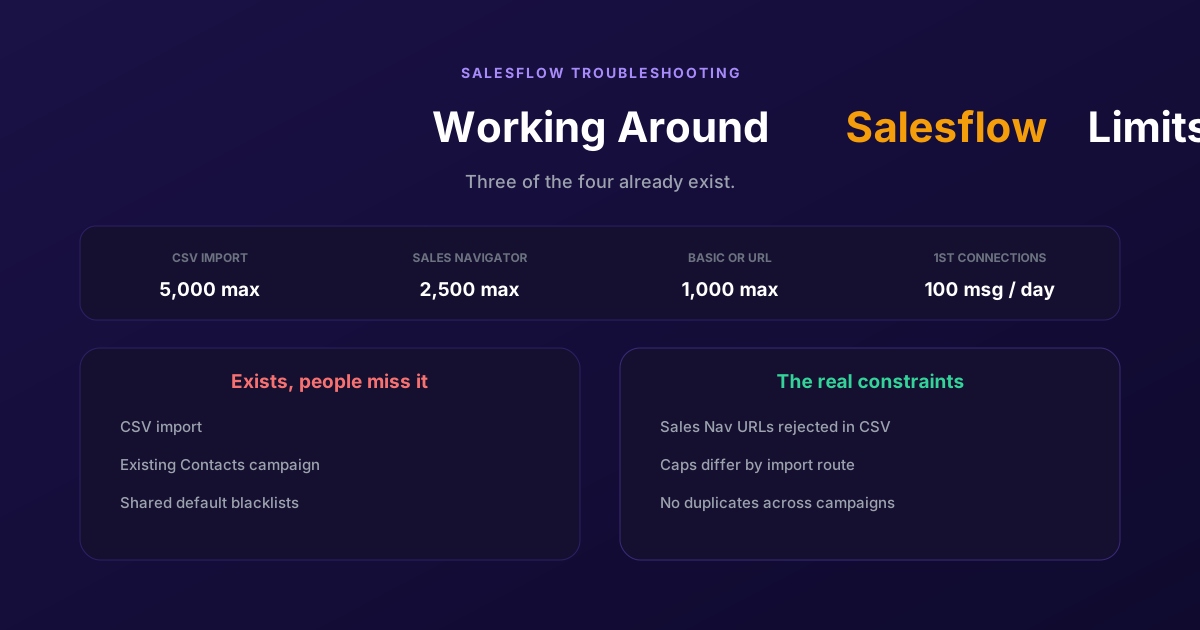
CSV import exists, so does a campaign type for contacts you already hold, and so do shared blacklists. The constraints that actually bite are narrower: rejected Sales Navigator URLs, per-route caps, and a deliberate block on duplicates.
How to Fix Dripify Lead Collection Stalls (2026 Guide)
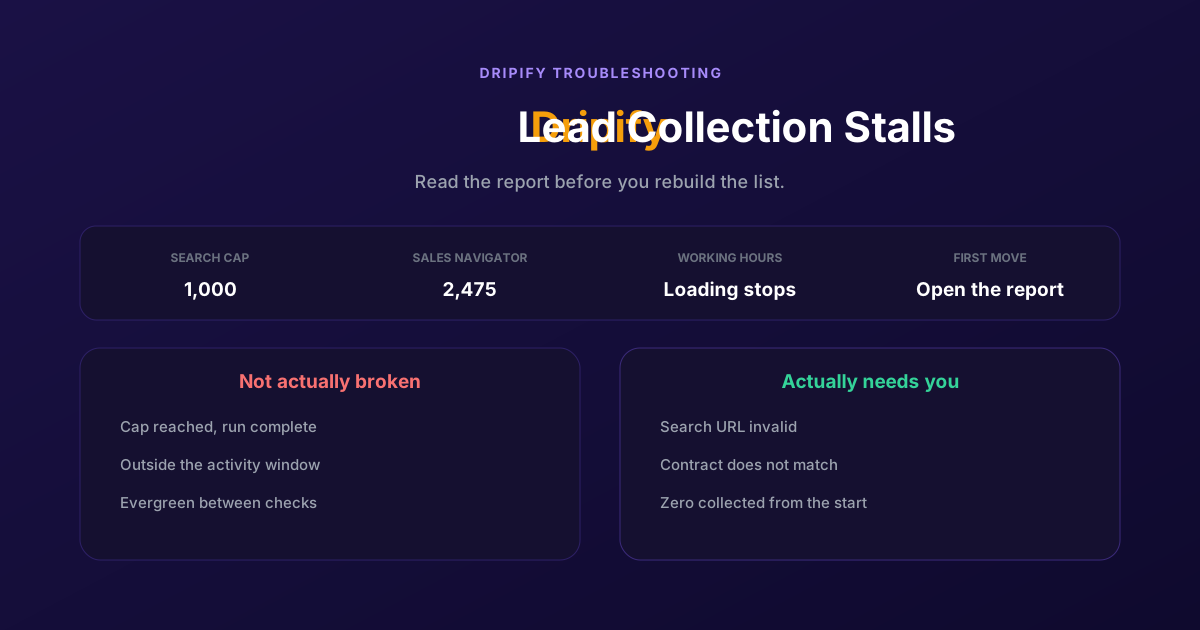
Most stalled collections have finished or are waiting. The Lead Collection Report names the cause, the search cap ends runs silently, and working hours suspend lead loading as well as sending.