How to Fix Clay AI Enrichments Returning Zero Results (2026 Guide)
A Clay AI column that comes back empty has seven possible causes, and the shape of the blanks tells you which one you have. Here is the triage order that recovers most rows in ten minutes, plus the credit rule that changed in 2026.
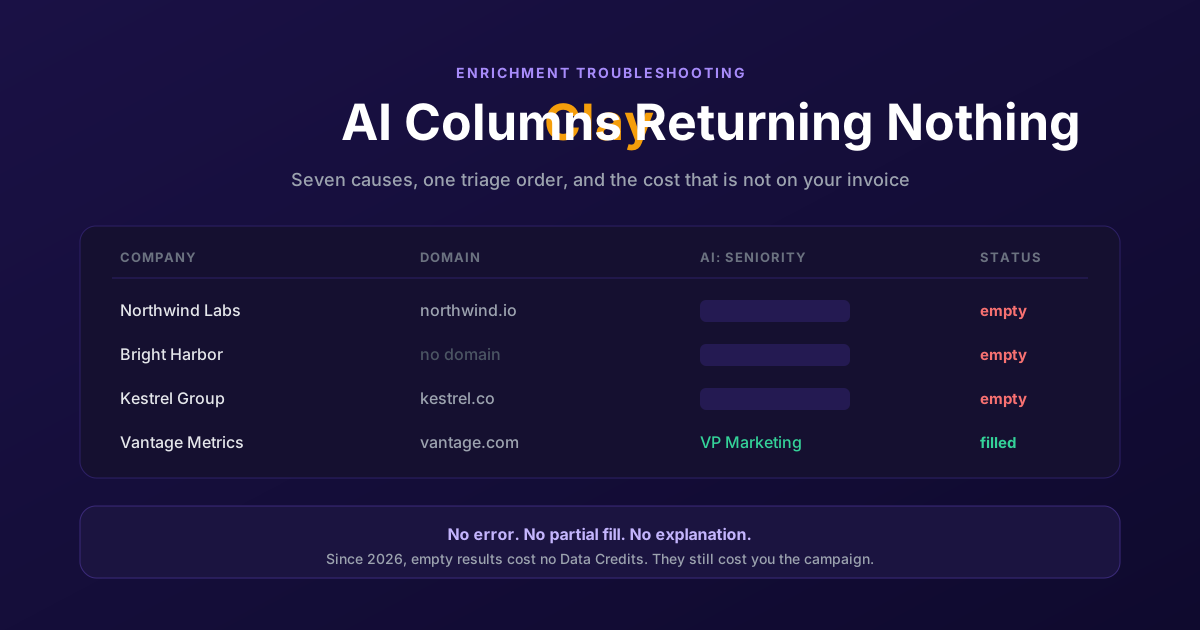
Your enrichment finishes. 400 rows in, 400 blank cells out. No red error, no partial fill, no explanation. Just a column of nothing where the job titles, domains and headcounts were supposed to land.
Clay does not shout when an enrichment finds nothing. It writes an empty cell and moves on. That silence is the real problem, because you cannot fix what the table will not tell you. This guide covers why a Clay AI enrichment returns zero results, the triage order that recovers most rows in under ten minutes, and how to build a list that does not depend on a lookup landing in the first place.

Why Clay AI enrichments return zero results
There is no single cause, and that is why the guessing takes so long. Seven failure modes produce the same empty cell. Each one leaves a different fingerprint in the table, so the shape of the blanks tells you which one you are looking at.
| Cause | What the table looks like | First move |
|---|---|---|
| No usable identifier on the row | Blanks only on rows missing a domain, work email or LinkedIn URL | Backfill the identifier first, enrich second |
| Run stopped, or the column edited mid-run | A contiguous block of blanks, everything before it filled | Duplicate the column and run it on the empty rows only |
| Provider rate limit on a large batch | Blanks clustered near the end of a few thousand rows | Split the run into smaller batches |
| Waterfall exhausted | Scattered blanks, every provider marked as tried | Add a provider or loosen the match condition |
| Expired integration credential | The whole column goes blank at once, from a given moment | Re-authenticate the provider in Settings, then re-run |
| Prompt asks for a claim the model will not invent | Blanks on the rows with the thinnest source text | Point the prompt at a source column instead of the open web |
| Front-end lag | Cells look empty, the job is still queued | Hard refresh before you change anything |
Two of these are worth separating carefully, because teams confuse them constantly. An AI column and an enrichment provider column fail for different reasons. A provider column is a lookup: it either matches a record or it does not. An AI column is a generation step: it reads what is already in the row and writes a conclusion. If the AI column has nothing to read, it returns nothing, and no amount of re-running will change that.
The 10-minute triage, in order
Work top to bottom and stop as soon as the rows fill. The order matters: each step is cheaper than the one after it, and the first three resolve the large majority of cases.
Hard refresh before you touch anything
Queued enrichments can render as empty cells while the job is still running. Press Ctrl and Shift and R on Windows, or Cmd and Shift and R on Mac. If a batch of cells fills in, nothing was ever broken and you just saved yourself an hour.
Read the run log on one blank row
Open a single empty cell and look at what the step actually reported. No match found is a data limit. Nothing at all means the step never executed. Auth or 401 means a credential. This single check tells you which of the remaining steps to run and which to skip.
Check the inputs, not the output
Sort the table by the identifier the enrichment depends on. If the blanks line up with rows that have no company domain, no work email or no LinkedIn URL, the enrichment is behaving correctly and the list is the problem. Backfill the identifier and the column fills itself.
Re-authenticate the provider
In Settings and Integrations, confirm the key for the provider behind the column is still connected. Keys rotate, trials lapse and workspace owners change. A dead credential blanks an entire column from one moment onward, which is the easiest fingerprint to spot and the fastest to fix.
Re-run on the empty rows only
Do not re-run the whole table. Duplicate the AI column, filter the original for is empty, and run the duplicate on that filtered subset. Then use merge columns to fold the two into one source of truth. This is Clay's own recommended recovery for a column that was edited or interrupted mid-run.
Cut the batch size
If the blanks reappear at the same point on every attempt, you are hitting a provider rate limit rather than a data limit. Split a few thousand rows into runs of a few hundred. Slower on the clock, but the column completes instead of half completing.
What a zero-result row actually costs you
The usual advice on this topic warns about burned credits. That advice is now out of date, and it matters, because it sends people chasing the wrong problem.
Clay's current policy is explicit: if an enrichment returns no result, you are not charged Data Credits or Actions. That holds for a full waterfall too. If every provider in the waterfall comes back empty, nothing is consumed. Clay did charge for empty results in the past, which is why so much of the writing on this still tells you to count your losses in credits.
So the real cost is not on the invoice. It is that a half-enriched list still looks finished. Six hundred rows go into a sequence, four hundred carry the seniority filter you segmented on and two hundred do not, and the two hundred quietly get the generic version of your message. Your reply rate drops and the enrichment column is the last place anyone thinks to look.
The second cost is sequencing. A blocked enrichment column blocks every step downstream of it: the scoring formula, the conditional message path, the export. One silent column can hold a campaign for a day, and nothing in the interface is red.
Stop the blanks coming back
Every recurring blank-column problem traces back to a list that was never checked before it was enriched. Five habits remove most of them permanently.
- Validate before you enrich. Run a cheap check for the required identifier on every row and quarantine the rows that fail it. Enriching a row with no domain will never work, no matter how good the provider is.
- Batch anything over a thousand rows. Rate limits are a throughput problem, not a data problem, and batching costs you nothing but patience.
- Give AI columns a source to read. A prompt pointed at a scraped bio, an About page or a post body returns an answer. A prompt pointed at nothing returns nothing, and correctly so.
- Set a fill-rate alarm. If a column comes back under fifty percent filled, you want to know inside the hour, not when a sequence underperforms three weeks later.
- Re-check credentials on a schedule. Provider keys, trial plans and workspace seats all expire quietly. A monthly look at the integrations page prevents the single most abrupt version of this failure.
None of this is exotic. It is the same discipline you would apply to any pipeline that can fail silently, and an enrichment table is exactly that.
If enrichment is one of several tools you are paying for separately, it is worth looking at the whole bill at once. We broke that down in our B2B SaaS GTM stack guide for 2026.
Start from rows that cannot come back empty
Every fix above is downstream of one decision: you built a list first and went looking for data about it afterwards. Reverse that and most of the failure modes stop existing.
ReactIn builds lists from actions instead of exports. Someone comments on your post, follows a company, attends your webinar, submits your form or books a call. That person arrives with a LinkedIn profile already attached, which is the identifier the enrichment needed in the first place. There is no row with a missing domain, because the row was created by a real event.
Enrichment then runs server side rather than in a browser tab, with a fallback across sources, so a single provider having a bad afternoon does not blank a column. And because the list refreshes as new signals land, a partly enriched batch resolves on the next pass instead of sitting there half done.
To be straight about the trade: this is not a like-for-like replacement for Clay. Clay is a general purpose data workbench and it does things ReactIn does not try to do. If your work is enriching arbitrary CSVs from anywhere, keep it. The point here is narrower. If your enrichment exists to feed LinkedIn outreach, starting from intent signals removes the class of problem this article is about, rather than giving you a better way to recover from it.
The mechanics of building a list from behaviour rather than a filter are covered in our guide to intent-based marketing automations.
The pattern behind all of it is simple. Enrichment fails quietly, so build the thing that makes it fail loudly, and stop feeding it rows that were never enrichable.
Frequently Asked Questions
Sources & Further Reading
- Clay states the current credit rule in its FAQ on unsuccessful searches and Data Credits, which is worth re-checking before you plan a budget around it.
- The distinction between Actions and Data Credits is documented in Clay's Actions and Data Credits reference.
- Clay's community support covers handling null outputs in AI enrichment columns in more depth.
- The duplicate-and-merge recovery for partly blank columns is described in Clay's guide to AI columns outputting blank results.
Related Articles
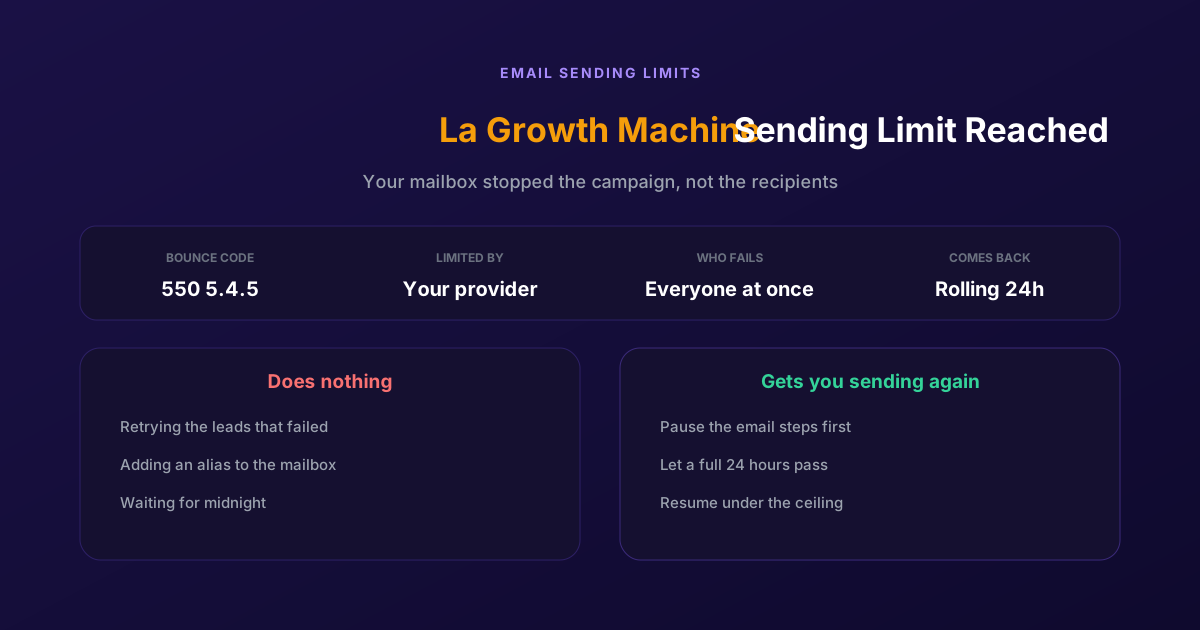
Fix "You Have Reached a Limit for Sending Mail" in La Growth Machine
The message belongs to your email provider, not to the tool. The mailbox has spent its daily allowance, every recipient fails at once, and capacity comes back on a rolling 24-hour window rather than at midnight.
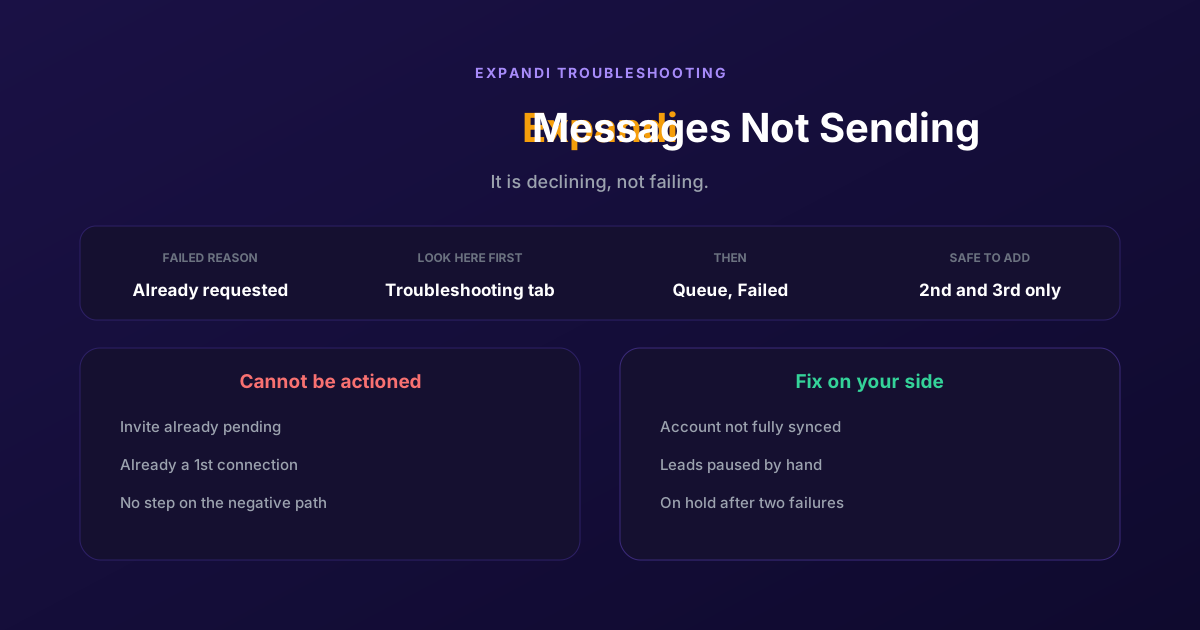
How to Fix Expandi Messages Not Sending (Pending Invites)
A connector campaign opens with a connection request, and a lead who already has one pending cannot receive a second. So the campaign has nothing it is allowed to do, and it says so in a tab most people never open.
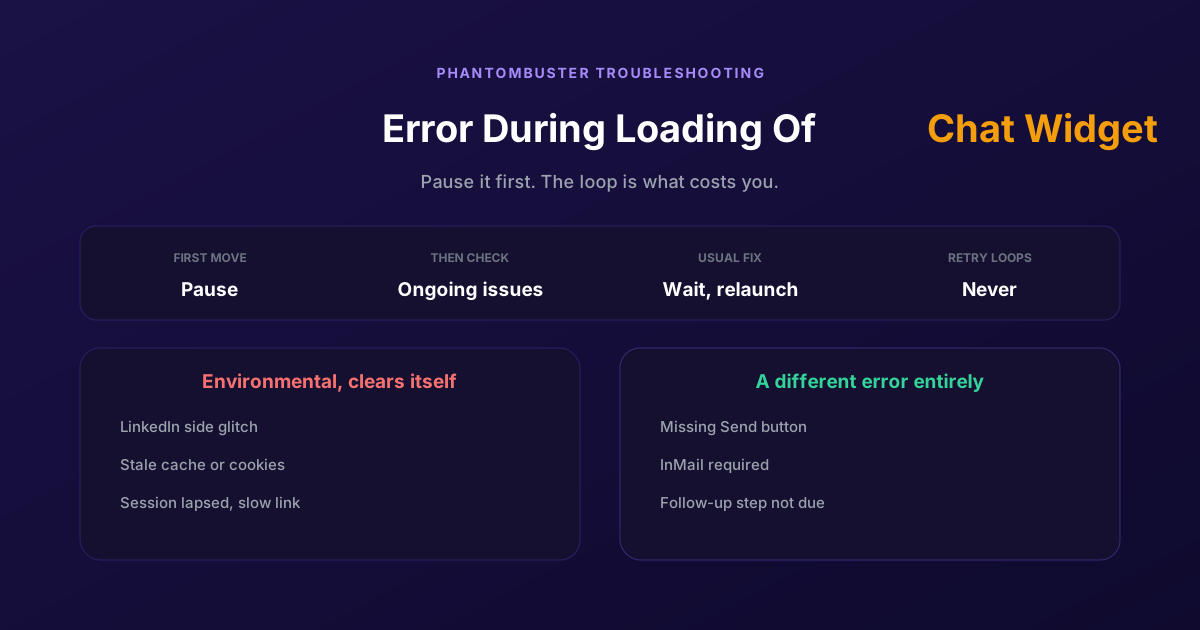
How to Fix Phantombuster "Error During Loading of Chat Widget"
Phantombuster documents this one, and the documented fix is mostly to wait. The expensive part is a Phantom left looping against it, burning execution time on attempts that cannot succeed.
Working Around the Limitations on Salesflow (2026 Guide)
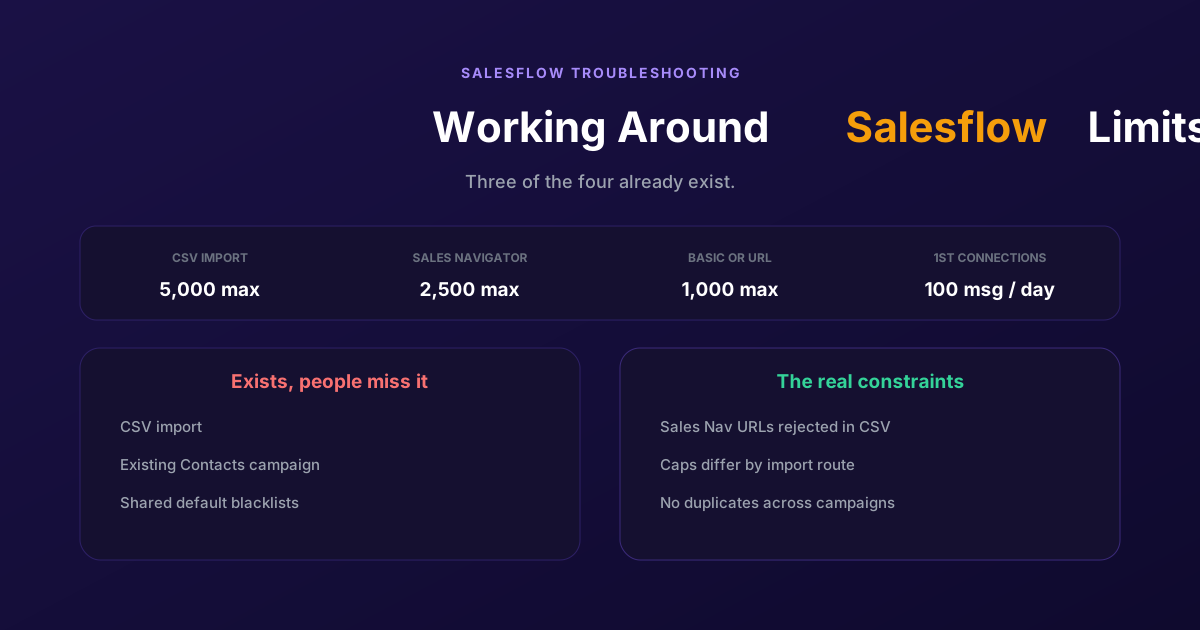
CSV import exists, so does a campaign type for contacts you already hold, and so do shared blacklists. The constraints that actually bite are narrower: rejected Sales Navigator URLs, per-route caps, and a deliberate block on duplicates.